FD35‑RT
Rough Terrain Forklifts
Rated load capacity: 3,500 kg
Maximum lift height: 4,500 mm
Consult now






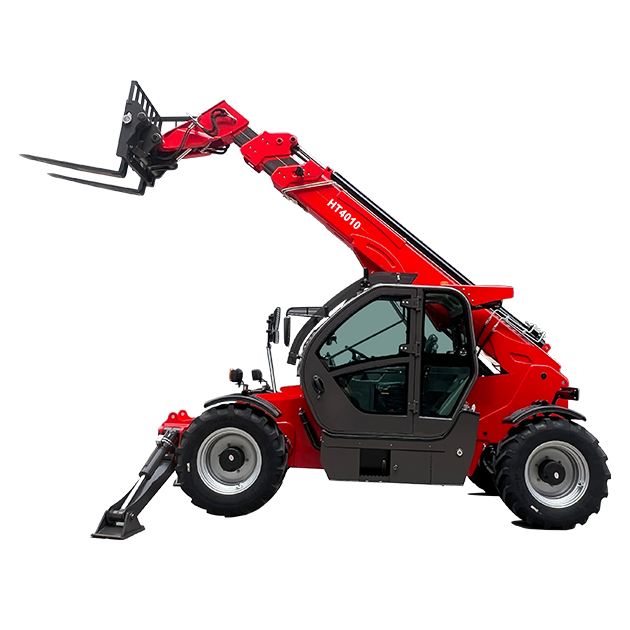
Every minute lost to inefficient material handling quietly increases project costs and pressure on your crews. HAMAC telehandlers and rough terrain forklifts are engineered to eliminate those losses—delivering safer, faster and more versatile handling from ground level to multi-story structures.
On many construction sites, up to 60% of onsite labor time is spent simply moving materials rather than installing them. HAMAC telehandlers turn this challenge into an opportunity by combining lifting, reaching and transport in one highly adaptable machine.
Typical applications for HAMAC telehandlers include:
When properly configured with the right attachments, a single HAMAC telehandler can replace multiple conventional machines and significantly shorten project timelines.
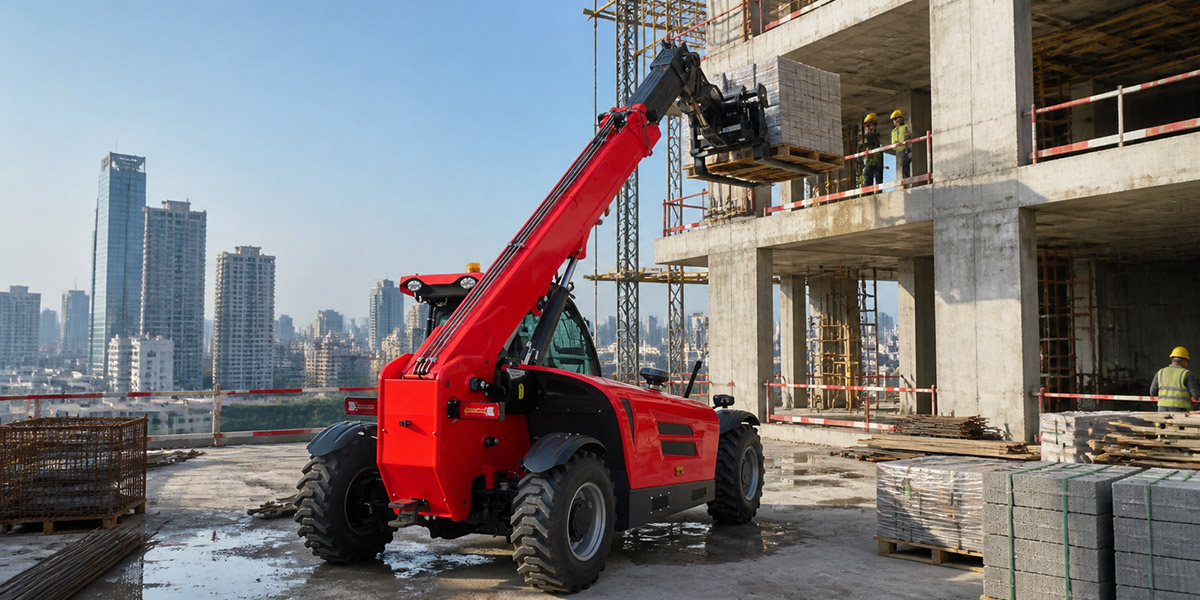
The true power of a telehandler lies in its attachment system. HAMAC offers a full range of work tools so you can tailor each machine to the exact task and material type.
Common HAMAC telehandler attachments include:
Selecting the correct attachment for each task directly impacts productivity—using the wrong tool can easily double handling time and increase safety risk.
Exceeding rated capacity remains one of the primary causes of telehandler incidents worldwide. HAMAC telehandlers are designed around clear load charts, robust structures and operator-friendly controls to keep your crews safe while working efficiently.
Key safety and control features include:
Our recommended best practices mirror industry standards: keep loads centered on the forks, tilt pallets slightly back against the carriage, reduce speed on soft or uneven ground, and perform daily checks on hydraulics and attachment locking systems before operation.
As buildings grow upwards, telehandlers have become essential for elevation work and precision placement. HAMAC telehandlers are configured to serve low- and mid-rise construction, mixing reach, capacity and stability for demanding jobsites.
Typical elevation tasks include:
We recommend verifying building bearing capacity before operating near structures, maintaining clearances from overhead hazards, and respecting reduced capacities at maximum extensions—especially in high winds and tight urban environments.
Material deliveries sit on the critical path of most projects. With smart site planning, HAMAC telehandlers can cut truck turnaround times by up to 75% compared to manual methods, keeping materials flowing and crews productive.
Best practices we promote include:
Ensuring telehandler routes remain clear of pedestrians and other machines further improves safety and efficiency during peak delivery times.
HAMAC telehandlers also excel beyond pure lifting and logistics by supporting earthwork, cleanup and demolition phases. With the right buckets and grapples, they become powerful tools for removing debris, grading surfaces and sorting materials.
Typical configurations include:
In challenging terrain, telehandlers with all-wheel steering and wide tracks help maintain productivity and reduce the risk of sinking or losing traction.
Modern construction methods depend on accurate, repeatable placement of structural elements. HAMAC telehandlers are well suited to truss, beam and prefabricated component installation where controlled movements and clear communication are vital.
Recommended practices include:
Our guidance follows industry experience: keep loads within a few inches of their final position before manual handling, use ground guides when visibility is limited, and ensure lighting is positioned to support, not blind, operators during night work.
For structural assembly projects under roughly 60 feet, telehandlers are often a more cost-effective choice than cranes. They set up in minutes, move loads over distance and handle repetitive lifts without the overhead of full crane operations.
Typical advantages include:
For heavier lifts, extreme heights or work above occupied structures, cranes remain necessary—but for everyday material handling and medium-height assembly, HAMAC telehandlers deliver excellent value and flexibility.
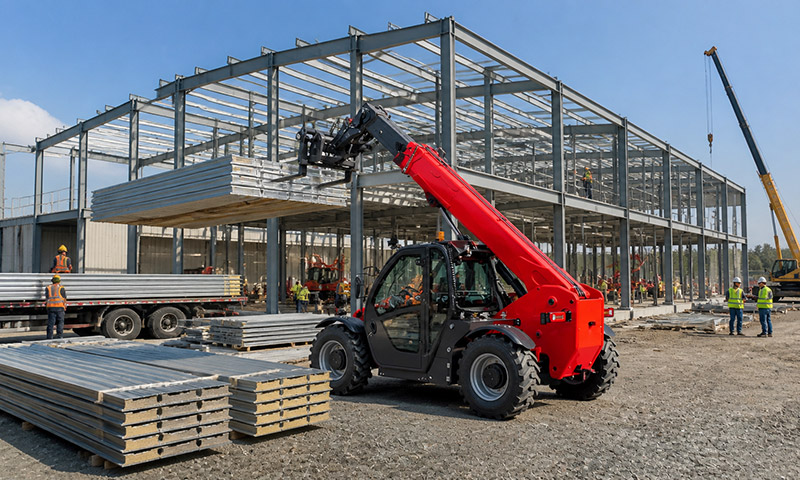
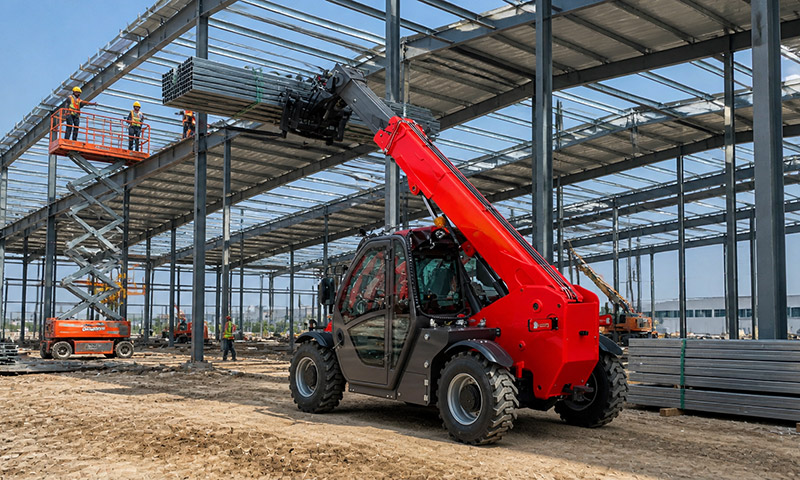
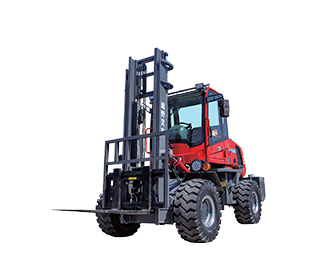
Where standard industrial forklifts stop, HAMAC rough terrain forklifts keep working. They are designed for mud, gravel, uneven ground and steep grades commonly found on construction sites, quarries, ready-mix plants and agricultural operations.
Key benefits of HAMAC rough terrain forklifts:
On many projects, rough terrain forklifts handle ground-level logistics—feeding lay-down areas and moving materials from storage to work zones— while telehandlers manage vertical and long-reach lifting.
HAMAC combines telehandlers and rough terrain forklifts into integrated jobsite solutions rather than isolated machines. Our team can help you:
From lifting steel beams to third-story floors to clearing demolition debris and feeding concrete pours, HAMAC telehandlers and rough terrain forklifts are ready to support your next project with reliable, high-performance equipment.
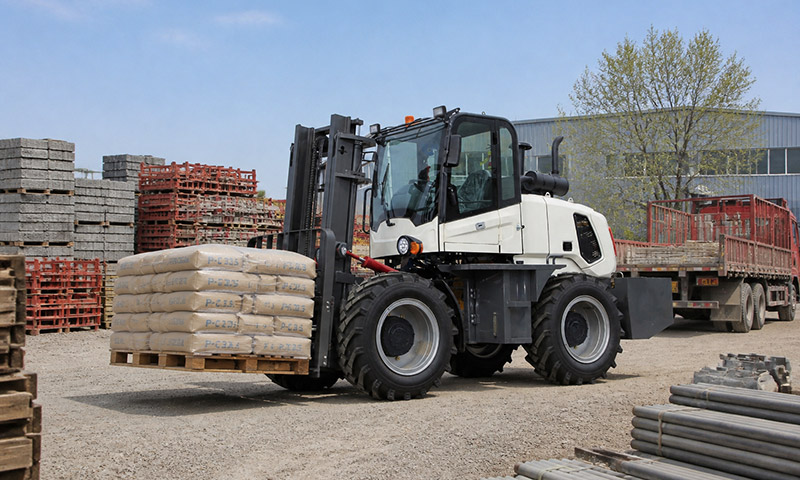
FD60‑RT 6 ton rough terrain forklifts are used in a precast concrete yard to move and stage heavy b
Free Consultation >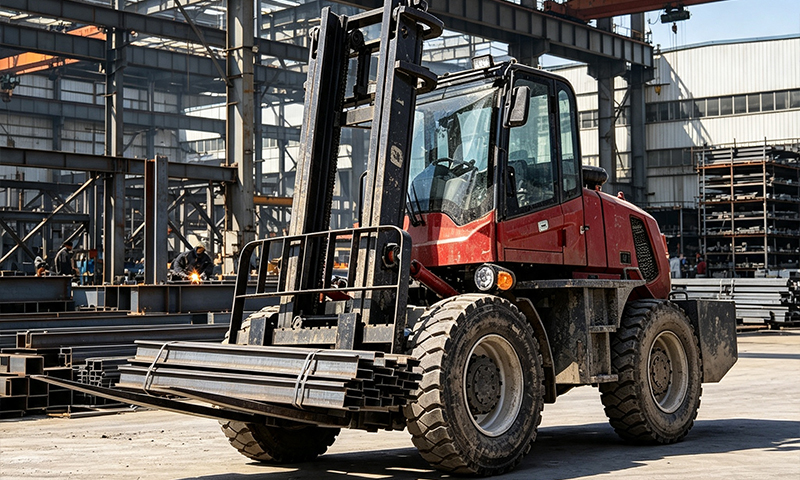
In a steel fabrication plant, a rough terrain forklift is used to move steel beams, plates and heavy
Free Consultation >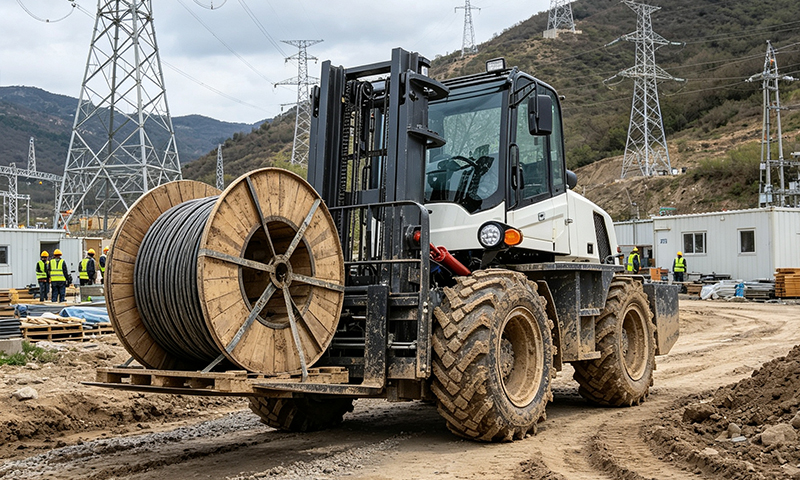
On remote infrastructure and utility projects, a HAMAC FD60-RT 6 ton rough terrain forklift is used t
Free Consultation >Please fill out the form, and we can satisfy any of your needs including equipment selection, scheme design, technical support, or after-sales service. We will contact you as soon as possible.