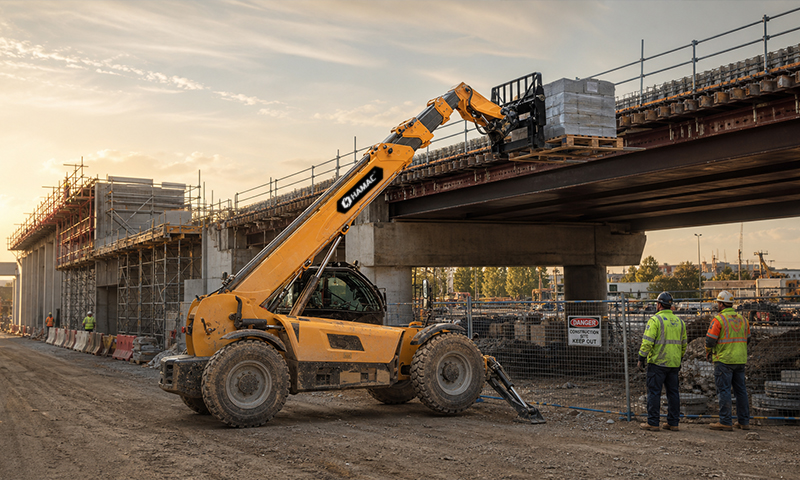
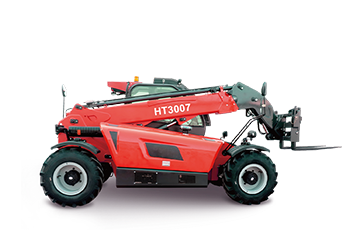
Elegir la manipuladora telescópica adecuada no es simplemente cuestión de seleccionar la mayor capacidad de elevación. La mejor manipuladora telescópica para tu proyecto depende del peso real de la carga, la altura de elevación necesaria, el alcance hacia delante, las condiciones del terreno, las necesidades de implementos y el espacio de trabajo disponible.
Esta guía de selección de manipuladores telescópicos compara los modelos más populares de HAMAC, desde máquinas compactas de 2,5 toneladas hasta manipuladores telescópicos de alta resistencia para terrenos difíciles de 5 toneladas. Está diseñada para ayudar a contratistas, empresas de alquiler, proveedores de materiales de construcción, explotaciones agrícolas, patios industriales y proyectos de infraestructura a seleccionar una máquina práctica para la manipulación segura y productiva de materiales.
Respuesta rápida: ¿Qué manipulador telescópico es el adecuado para su trabajo?
Elija un modelo compacto, como el HT2506, cuando necesite una manipulación eficiente de palés y una altura de elevación moderada en zonas de trabajo más reducidas. Seleccione un modelo de gama media, como el HT3510, HT4007, HT4010 o HT4014, cuando su proyecto requiera un equilibrio entre capacidad de elevación, alcance, maniobrabilidad y coste de funcionamiento. Elige un modelo de alta resistencia, como el HT5010, HT5014 o HT5018, cuando necesites levantar hasta 5.000 kg y colocar materiales a mayor altura en grandes obras de construcción, instalaciones industriales o de infraestructuras.
Lo más importante es consultar la tabla de carga nominal para conocer la altura de trabajo y el alcance hacia delante exactos que se requieren. La capacidad nominal máxima de una manipuladora telescópica se mide normalmente con la pluma retraída; la capacidad de elevación disponible disminuye a medida que la pluma se extiende hacia arriba o hacia delante.
Paso 1: Define tus necesidades reales de carga
Empiece por la carga más pesada que necesite manipular, incluyendo palés, horquillas, implementos, accesorios de elevación y embalajes. Evite seleccionar una máquina basándose únicamente en su capacidad máxima anunciada. En su lugar, elija un manipulador telescópico que ofrezca la capacidad suficiente a la altura y el alcance reales que requiera su aplicación.
-
Manipulador telescópico de 2,5 toneladas: Adecuado para palés de ladrillos, cemento en sacos, encofrados, madera y materiales de construcción generales de baja altura.
-
Manipulador telescópico de 3,5 toneladas: Una opción versátil para obras de construcción de carga media, explotaciones agrícolas y aplicaciones de alquiler.
-
Manipulador telescópico de 4 toneladas: Ideal para palés más pesados, materiales relacionados con el hormigón, componentes de acero y proyectos de construcción de varios niveles.
-
Manipulador telescópico de 5 toneladas: Diseñado para obras exigentes, manipulación de materiales industriales, productos prefabricados, grandes obras de construcción y trabajos de infraestructura.
Paso 2: Adapta la altura de elevación y el alcance delantero a la zona de trabajo
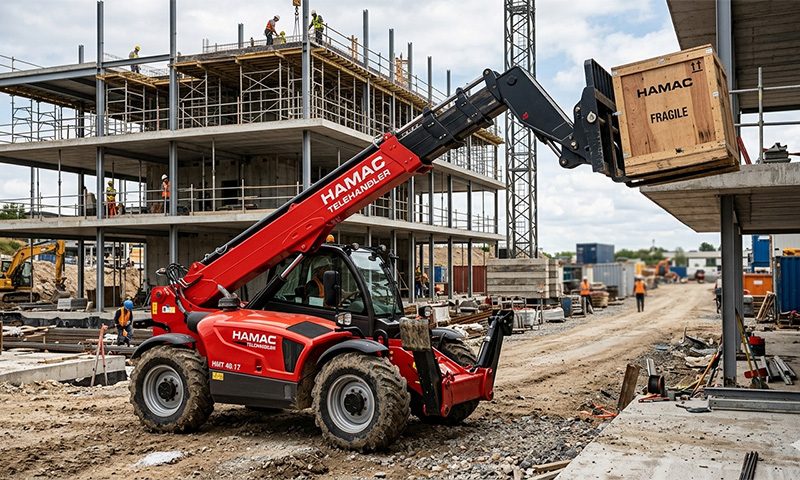
La altura de elevación determina hasta qué altura la máquina puede colocar una carga. El alcance frontal determina hasta qué distancia puede extenderse la pluma desde la parte delantera del manipulador telescópico. Ambos aspectos son importantes a la hora de cargar en plantas superiores, trabajar junto a andamios, colocar materiales por encima de obstáculos o alcanzar el interior de camiones y zonas de almacenamiento.
Por ejemplo, un manipulador telescópico de 6 m puede ser una solución eficaz para la manipulación a nivel del suelo y en edificios de baja altura, mientras que uno de entre 10 m y 14 m resulta más adecuado para la construcción de edificios de varias plantas y la colocación de materiales en altura. Para aplicaciones de gran alcance, una manipuladora telescópica de 18 m ofrece un mayor acceso vertical, pero los operadores deben seguir siempre la tabla de cargas aplicable y los procedimientos de seguridad de la obra.
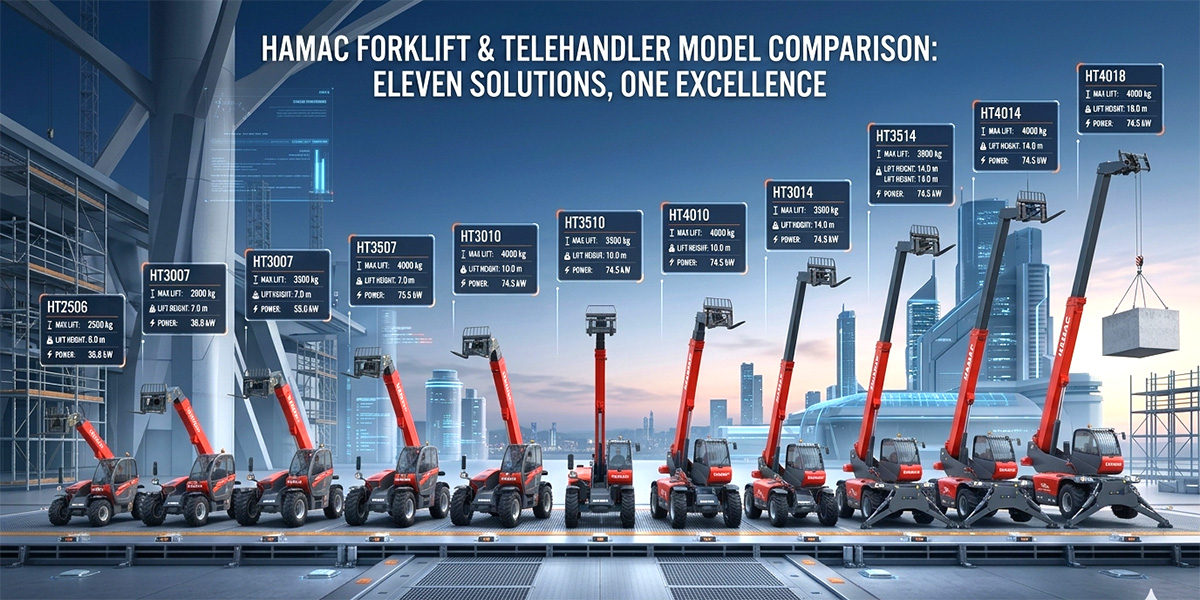
Comparativa de modelos de manipuladores telescópicos HAMAC
La siguiente tabla ofrece un punto de partida práctico para comparar los diferentes tamaños de manipuladores telescópicos. La selección final siempre debe confirmarse consultando las especificaciones técnicas más recientes, la tabla de cargas, la configuración de los implementos y las condiciones de funcionamiento locales.
|
Modelo |
Capacidad nominal |
Altura máxima de elevación |
Aplicaciones más adecuadas |
Por qué elegirlo |
|
HT2506 |
2.500 kg |
6 m |
Construcción de baja altura, manipulación de palés, almacenes de materiales de construcción, explotaciones agrícolas |
Compacta y práctica para las tareas diarias de elevación en las que no se requiere una altura extrema. |
|
HT3510 |
Clase de 3.500 kg |
Clase de 10 m |
Construcción comercial, encofrados, albañilería, trabajos generales de alquiler |
Una opción equilibrada para contratistas que necesitan más altura y capacidad que los modelos compactos. |
|
HT4007 |
4.000 kg |
7 m |
Movimiento de palés pesados, patios industriales, almacenes con acceso al exterior |
Prioriza la fuerza de elevación para tareas de manipulación pesada a media altura. |
|
HT4010 |
Clase de 4.000 kg |
Clase de 10 m |
Construcción de altura media, carga, materiales de hormigón, manipulación de acero |
Combina una gran capacidad con una altura de trabajo útil para un uso versátil en la obra. |
|
HT4014 |
4.000 kg |
13,8 m |
Hormigón, estructuras de acero, colocación de materiales en plantas superiores |
Una solución de 4 toneladas de gran alcance para proyectos que requieren una colocación en altura sin tener que pasar a la clase de 5 toneladas. |
|
HT5010 |
5.000 kg |
Aproximadamente 10 m |
Materiales de construcción pesados, productos prefabricados, carga industrial |
Ideal cuando la gran capacidad de elevación es más importante que el alcance vertical máximo. |
|
HT5014 |
5.000 kg |
Aproximadamente 14 m |
Construcción de varios pisos, infraestructuras, estanterías altas, cargas pesadas en altura |
Ofrece una potente combinación de 5 toneladas de capacidad, 14 m de altura de elevación, tracción a las cuatro ruedas y dirección en las cuatro ruedas. |
|
HT5018 |
5.000 kg |
18 m |
Colocación de materiales en altura, estructuras industriales altas, grandes proyectos de infraestructura |
Ideal para proyectos en los que se deben colocar cargas pesadas a una altura considerable. |
Cómo seleccionar una manipuladora telescópica según la aplicación
1. Manipuladores telescópicos para la construcción de edificios
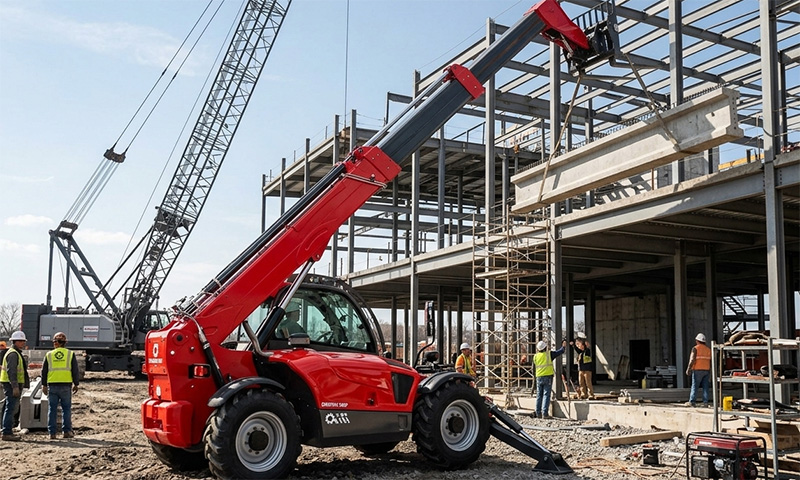
Para la construcción residencial y comercial, hay que empezar por tener en cuenta el peso de los palés, la altura del edificio, la disposición de los andamios y la distancia entre la máquina y el punto de colocación. El modelo HT2506 es una opción práctica para la manipulación de materiales en edificios de baja altura. Para proyectos de altura media, los modelos HT3510, HT4010 y HT4014 ofrecen mayor altura y flexibilidad. Para hormigón pesado, acero, encofrados o colocación a gran altura, los modelos HT5014 y HT5018 ofrecen mayor capacidad y alcance.
2. Manipulador telescópico para terrenos accidentados y superficies irregulares
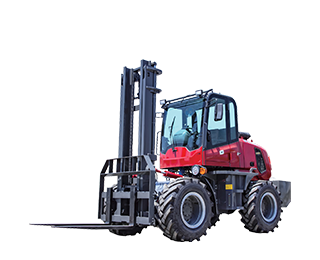
Una manipuladora telescópica para terrenos difíciles debe configurarse en función de la obra, no solo de la carga. Para barro, grava, pendientes y superficies de construcción sin acabar, busca tracción a las cuatro ruedas (4WD), neumáticos todoterreno, una distancia al suelo adecuada, un diseño de chasis estable y modos de dirección adecuados para espacios reducidos. La dirección en las cuatro ruedas puede mejorar la maniobrabilidad y ayudar a los operadores a colocar los materiales con mayor precisión en zonas de trabajo con poco espacio.
3. Manipulador telescópico para patios industriales y logísticos
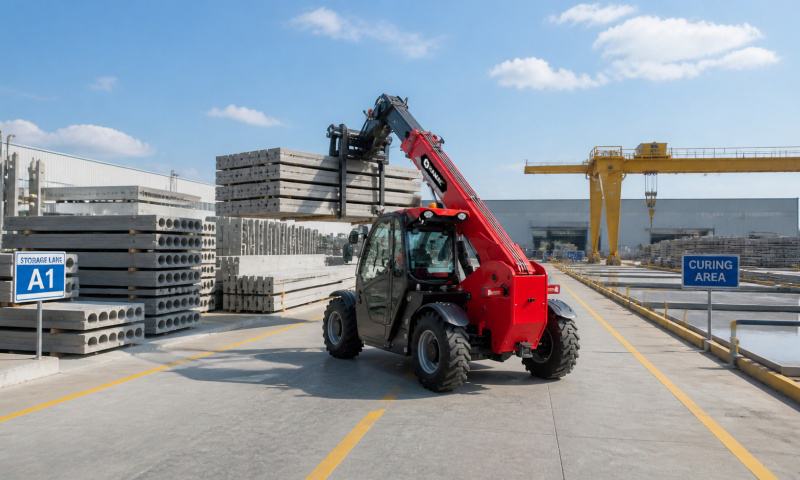
Los usuarios industriales suelen dar prioridad a la manipulación de palés pesados, la carga de camiones, el almacenamiento al aire libre y un funcionamiento diario fiable. Los modelos HT4007 y HT5010 son adecuados cuando la capacidad de elevación es más importante que un alcance muy elevado. Si los materiales deben colocarse en plataformas elevadas o en niveles de almacenamiento altos, los modelos HT4014 o HT5014 pueden ofrecer un mejor equilibrio.
4. Manipulador telescópico para proyectos agrícolas y rurales
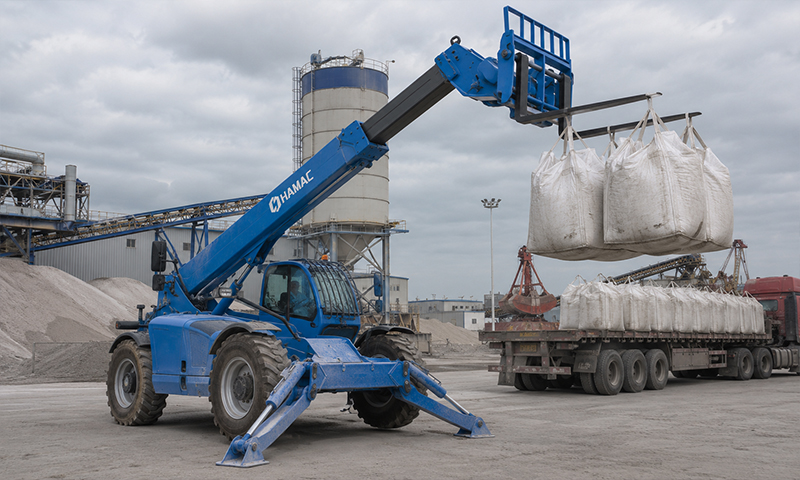
Las explotaciones agrícolas, los corrales de engorde y las operaciones rurales de manipulación de materiales se benefician de una manipuladora telescópica con gran tracción, controles sencillos y versatilidad en los implementos. Las horquillas pueden utilizarse para palés y fardos, mientras que las cucharas compatibles permiten la manipulación de material a granel. Elige un modelo que se adapte a la altura de las zonas de almacenamiento, los graneros, las operaciones de alimentación y los puntos de carga.
Paso 3: Ten en cuenta el terreno, la maniobrabilidad y el acceso a la obra
Una manipuladora telescópica debe poder alcanzar la carga, además de levantarla. Antes de seleccionar un modelo, evalúe el acceso por carretera, las condiciones del terreno, la pendiente, el espacio para girar, la anchura de las puertas, la altura libre en interiores y los requisitos de transporte.
-
Capacidad todoterreno con tracción a las cuatro ruedas (4WD): Importante para grava, tierra, barro y superficies de construcción irregulares.
-
Dirección en las cuatro ruedas: Ayuda a mejorar la maniobrabilidad en zonas de trabajo estrechas o congestionadas.
-
Dirección en modo «cangrejo»: Útil cuando el movimiento diagonal ayuda a alinear la máquina con las cargas u obstáculos.
-
Dimensiones de la máquina: Comprueba la anchura, la altura, el radio de giro y las dimensiones de transporte antes de la compra o el alquiler.
-
Distancia al suelo y neumáticos: Importantes para la estabilidad, la tracción y para reducir el riesgo de quedarse atascado en terrenos accidentados.
Paso 4: Selecciona los implementos adecuados para la manipuladora telescópica
Una manipuladora telescópica gana en versatilidad cuando se equipa con el implemento adecuado. Sin embargo, los implementos pueden modificar el peso operativo, el centro de carga, la visibilidad y la capacidad de elevación. Utiliza siempre implementos homologados y sigue la tabla de cargas correspondiente a la configuración específica.
-
Horquillas para palés: Para palés de ladrillos, cemento, bloques, mortero en sacos, madera y materiales embalados.
-
Cuchara: Para arena, áridos, tierra, pienso y materiales a granel.
-
Pluma de elevación: Para cargas suspendidas y tareas de elevación especializadas, siempre que la configuración esté homologada y se cumplan las normas de la obra.
-
Plataforma de trabajo: Solo para personal cuando la máquina, la plataforma, la normativa local y los procedimientos de seguridad lo permitan.
-
Pinza o accesorio para pacas: Para materiales agrícolas, cargas irregulares y tareas industriales específicas.
Paso 5: No elija basándose únicamente en la capacidad máxima
El error más común a la hora de seleccionar un manipulador telescópico es elegir una máquina basándose únicamente en la capacidad nominal máxima que figura en el folleto. Un manipulador telescópico de 5 toneladas no levanta necesariamente 5 toneladas con la pluma totalmente extendida o a la altura máxima. La capacidad varía en función del ángulo de la pluma, la extensión, el tipo de implemento, el centro de gravedad de la carga, la configuración de los estabilizadores y las condiciones del terreno.
Antes de realizar el pedido, elabore un perfil sencillo del trabajo: peso máximo de la carga, dimensiones de la carga, altura de elevación necesaria, alcance hacia delante, tipo de terreno, requisitos del implemento y ciclo de trabajo habitual. A continuación, compare ese perfil con la tabla de carga oficial y los datos técnicos del modelo de manipulador telescópico seleccionado.
Por qué los manipuladores telescópicos HAMAC están diseñados para una manipulación versátil de materiales
Los manipuladores telescópicos HAMAC están diseñados para realizar una amplia gama de tareas de elevación y colocación en los sectores de la construcción, las operaciones industriales, la agricultura, los centros logísticos y los proyectos de infraestructura. Desde modelos compactos de 2,5 toneladas para el movimiento diario de materiales hasta manipuladores telescópicos de 5 toneladas de gran alcance para trabajos en altura exigentes, la gama ayuda a los clientes a adaptar el tamaño de la máquina a sus necesidades operativas reales.
Elegir el modelo adecuado puede mejorar la eficiencia de la carga, reducir la manipulación manual, minimizar los pasos de traslado de materiales y ayudar a los equipos de proyecto a colocar los materiales más cerca del punto de uso. Para obtener los mejores resultados, consulte con el proveedor para confirmar la configuración necesaria, los implementos, el servicio de mantenimiento, los requisitos de envío y las necesidades de cumplimiento normativo locales.
Preguntas frecuentes sobre la elección de un manipulador telescópico
¿Qué tamaño de manipulador telescópico necesito?
Elija el tamaño en función de su carga más pesada, la altura de elevación necesaria, el alcance hacia delante y el terreno. Un modelo de entre 2,5 y 3,5 toneladas puede ser adecuado para la manipulación general de materiales, mientras que las manipuladoras telescópicas de entre 4 y 5 toneladas son más adecuadas para cargas industriales y de construcción más pesadas.
¿Cuál es la diferencia entre un manipulador telescópico de 10 m, 14 m y 18 m?
La principal diferencia radica en la altura máxima de elevación y el área de trabajo. Un modelo de 10 m es adecuado para muchas tareas generales de construcción, un modelo de 14 m permite la colocación en plantas más altas y un modelo de 18 m está pensado para proyectos que requieren un gran alcance. La capacidad real a altura debe verificarse en la tabla de cargas correspondiente.
¿Es una manipuladora telescópica de 5 toneladas siempre mejor que una de 4 toneladas?
No siempre. Una manipuladora telescópica de 5 toneladas ofrece mayor capacidad de elevación, pero puede tener mayores costes de adquisición, transporte, combustible y funcionamiento. Un modelo de 4 toneladas puede ser una opción más eficiente cuando cumple plenamente con los requisitos de carga, altura y alcance.
¿Necesito tracción a las cuatro ruedas (4WD) para un manipulador telescópico?
Se recomienda encarecidamente la tracción a las cuatro ruedas (4x4) para terrenos irregulares, tierra, grava, barro, pendientes y la mayoría de entornos de construcción al aire libre. Para suelos lisos en interiores o patios pavimentados, la configuración final debe seleccionarse de acuerdo con las condiciones de funcionamiento locales y las recomendaciones del fabricante.
¿Cómo puedo comparar la capacidad de elevación de un manipulador telescópico a su alcance máximo?
Consulte la tabla de carga oficial, no solo la capacidad nominal máxima. La tabla muestra la carga admisible a diferentes alturas de la pluma y distancias de extensión, lo que le ayudará a determinar si el manipulador telescópico puede realizar con seguridad la elevación prevista.
¿Necesita ayuda para elegir un manipulador telescópico?
Indíquenos el peso de la carga, la altura de elevación, el alcance hacia delante, el terreno de la obra y el implemento que prefiere. Nuestro equipo puede ayudarle a comparar las opciones de manipuladores telescópicos HT2506, HT3510, HT4007, HT4010, HT4014, HT5010, HT5014 y HT5018, y recomendarle una configuración adecuada para su proyecto.