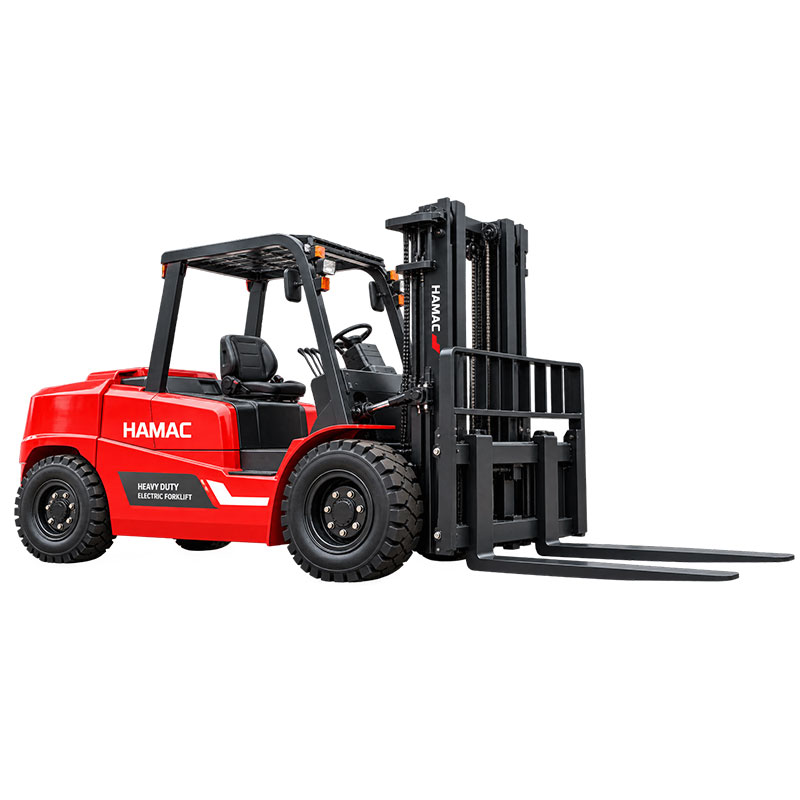
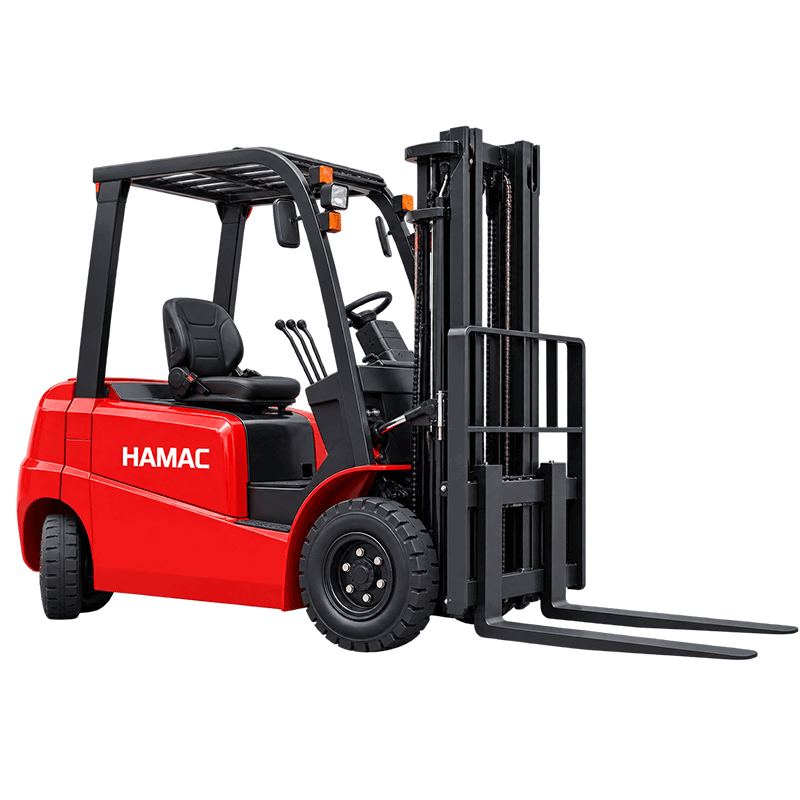
3-Wheel Electric
Electric Forklifts
Rated Capacity:1500–2,000 kg
Maximum Lift Height:3000–6500 mm
Consult now






In a quarry, the heaviest daily lifting jobs are often not stone—they are crusher liners, screen decks and conveyor components. When the crushing and screening line stops, production stops with it. The faster wear parts and tools move from storage to the machine, the shorter the downtime.
A heavy-duty rough terrain forklift supports both of a quarry's material flows: moving stone products through the yard, and moving the equipment, spare parts and consumables that keep the plant running. Selecting the machine and its attachments together is what turns a forklift into a maintenance tool.
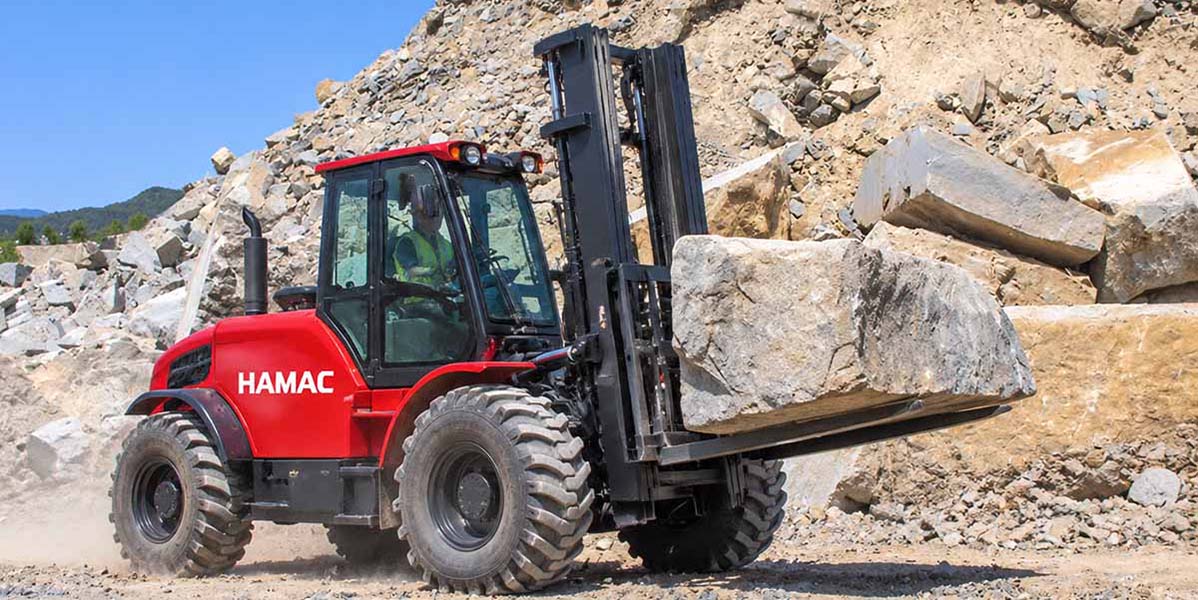
| Quarry Condition | Equipment Requirement |
|---|---|
| Rugged quarry roads, uneven floors, loose stone | 4WD rough terrain drive, deep-tread off-road tires, high ground clearance |
| High dust around crushers and screens | Protected air filtration and shortened filter service intervals |
| Gradients between quarry face, plant and stockpiles | Verified gradient capability and loaded downhill braking |
| Heavy wear parts with offset centers of gravity | Rated capacity at a 600 mm load center, correct forks or approved attachments |
| Remote location, long parts lead times | Wear-parts kit planning and daily inspection discipline |
A warehouse forklift that works on smooth concrete will struggle on the same loads at a quarry. Conversely, buying capacity the site never uses adds cost without reducing downtime. Match the machine to the floor, the dust and the heaviest part.
Every quarry runs two logistics lines in parallel. The production line moves stone from the face and cutting line through stockpiles to trucks. The maintenance line moves wear parts and consumables from the store to the crushers, screens and conveyors that generate the revenue. The attachment is what matches the machine to each task.
| Scenario | Attachment | How It Is Used |
|---|---|---|
| Stone blocks and slabs from cutting line to storage or loading | Heavy-duty forks or block clamp | Slabs travel upright on extended forks or gripped by the clamp, so thin panels are not cracked by laying them flat; fork length matches slab width |
| Loading aggregate bags onto trucks | Forks with side shift | Bag loops hang on the forks, then side shift aligns each bag over the truck bed—fewer repositioning cycles on sloped loading ground |
| Clearing spillage and sorting scrap steel | Bucket or grapple | Levels spillage under the screening plant and loads scrap, reducing the need to keep a wheel loader standing by |
Production-line attachment choice is shape-driven: rigid but irregular stone is supported or clamped, never balanced; stable bags need precise placement, which is where side shift pays for itself; loose spillage needs a bucket or grapple that forks cannot handle at all.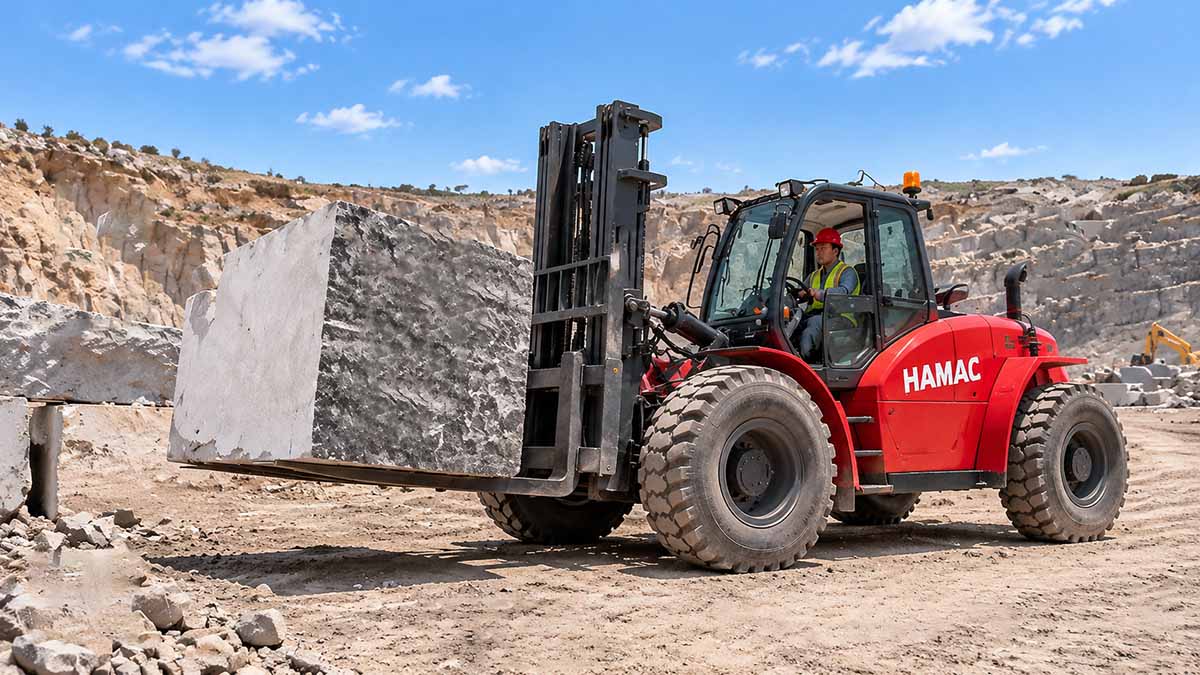
| Scenario | Attachment | How It Is Used |
|---|---|---|
| Crusher liner change-outs | Approved lifting jib with certified slings | The jib extends the multi-ton, offset-gravity liner over the crusher for change-out positioning under a lifting supervisor; capacity is checked against the jib-specific load chart, not the bare truck rating |
| Screen mesh panel replacement | Forks with vertical panel rack | Large, thin panels travel upright on a dedicated rack to prevent bending; forks carry the rack base, never the mesh, and sharp edges are never hand-guided |
| Conveyor roller and idler transfer | Forks with tiered rack | Rollers move in boxed or racked batches to the conveyor line, avoiding loose rolling loads |
| Conveyor belt roll handling | Drum clamp | The clamp grips the roll core and places the multi-ton roll at the conveyor change position, where a released roll would otherwise run away |
| Fuel and lubricant drum transfer | Drum clamp | Single or twin clamps carry standard drums upright; spearing drums on forks causes the leaks and slips that quarries see every week |
| Wheel loader and excavator tire changes | Tire handler | The handler grips multi-ton tires and extends them onto tire stands or assists fitting alignment, replacing manual rolling of heavy tires |
The maintenance line follows one pattern: the attachment converts an unstable load into a controlled one. Liners, screen edges, drums, belt rolls and tires all have documented accident histories, so in a quarry the attachment case is a safety decision first and a speed decision second.
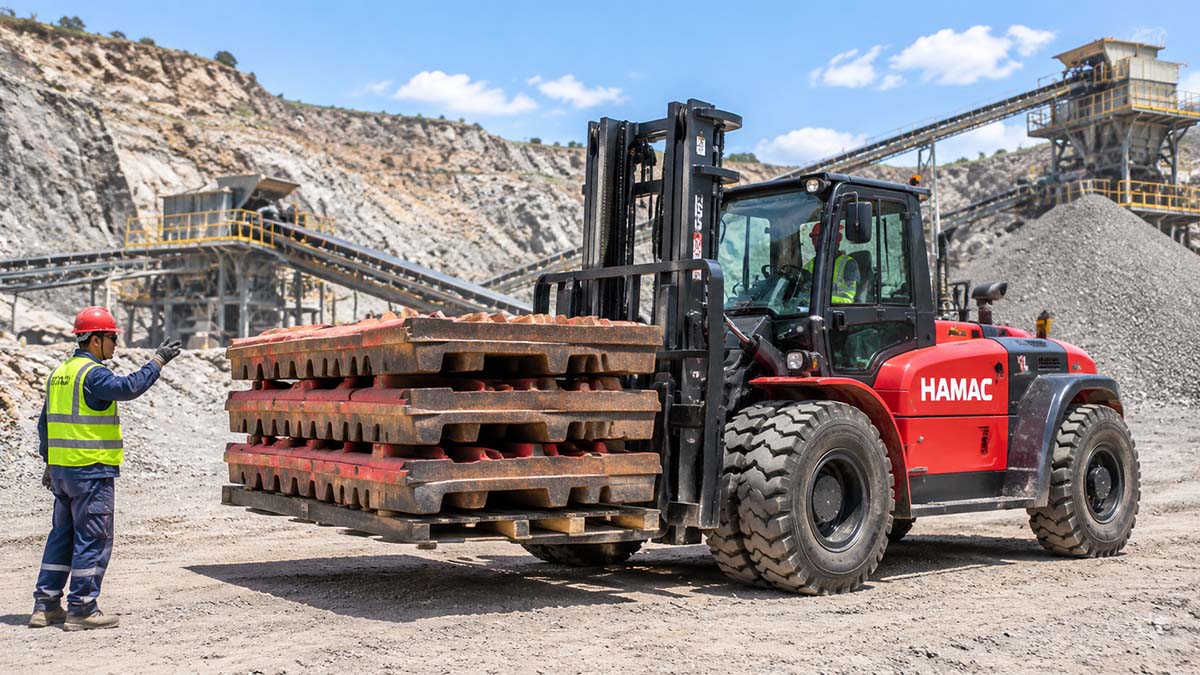
Start your selection from the maintenance line: list the ten heaviest routine handling tasks with actual weights, dimensions, center-of-gravity offsets and delivery points. The crusher liner usually decides the capacity class—not the average pallet.
| Handling Task | Model to Evaluate | Published Basis |
|---|---|---|
| Stone products, aggregate bags, screen panels, drum and roller runs | FD60-RT | 6,000 kg rated capacity at a 600 mm load center, 4WD, stone market and heavy pallet applications |
| Stone blocks, crusher liners, equipment tires, heavy components | FD100-RT | 10,000 kg rated capacity, 3–5 m mast options, 4WD, designed for quarry floors, dust and rugged roads |
| Light tools, consumables, small pallet runs | FD series 3–5 ton models | Lower-cost daily transfer between store and plant |
HAMAC has applied rough terrain forklifts in quarries for stone block and equipment handling—see HAMAC mining and quarry cases. Rated capacity applies only within the load chart at the actual load centre, mast height and attachment configuration. A 10-ton rating does not permit a 10-ton lift at full mast height, with a jib fitted, or with an offset liner. And delivery point matters as much as weight: many buyers choose a machine with enough capacity, then discover the collapsed mast will not pass the crusher building door.
| Attachment | Quarry Use |
|---|---|
| Heavy-duty pallet forks | Palletized wear parts, tools and consumables; fork size matched to liner and block dimensions |
| Side shift / fork positioner | Aligning with pallet openings and truck beds on uneven ground |
| Lifting jib (approved) | Positioning liners and components during change-outs, under the site lifting procedure |
| Drum and round-material clamps | Belt rolls, cable drums and similar round loads |
Wear parts demand respect: liners have offset centers of gravity, screen panels have sharp edges, and no one works under a raised or suspended component. Follow the MSHA best practices for blocking equipment against motion and your site lockout procedures during every change-out.
Operators should complete the daily inspection checklist before every shift, with extra attention to tires, forks, hydraulics and cooling in dusty quarry conditions.
Send HAMAC your ten heaviest routine handling tasks with weights and dimensions, quarry floor photos and your destination country. Request a configuration, attachment confirmation, wear-parts kit options and an itemized quotation.
Request a Quarry Forklift Recommendation and Quote
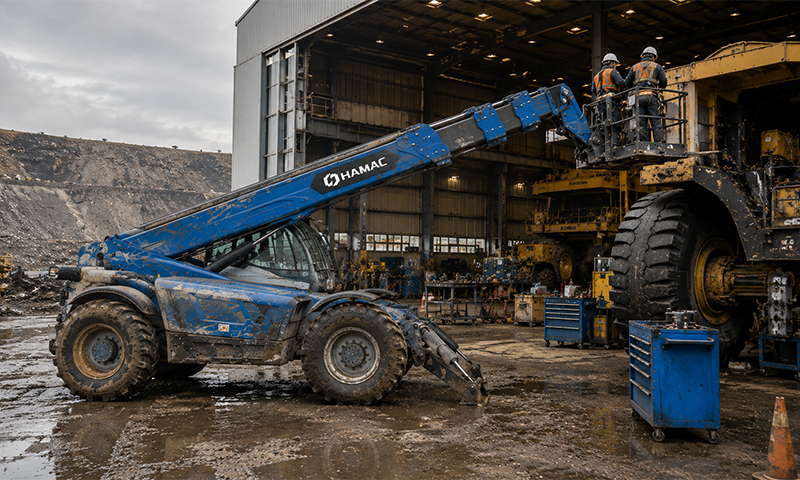
At an open-pit mine workshop, a HAMAC HT5018 telehandler is used to handle heavy parts, tools and sup
Free Consultation >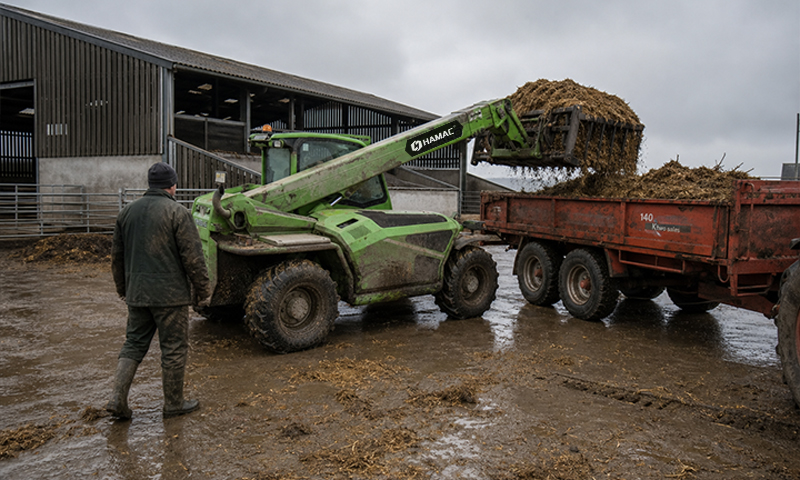
On livestock farms, an agricultural telehandler is used to move manure, load silage, clean feed yards
Free Consultation >
At a construction waste sorting facility, a HAMAC HT5018 telehandler is used to handle mixed C&D wast
Free Consultation >Please fill out the form, and we can satisfy any of your needs including equipment selection, scheme design, technical support, or after-sales service. We will contact you as soon as possible.