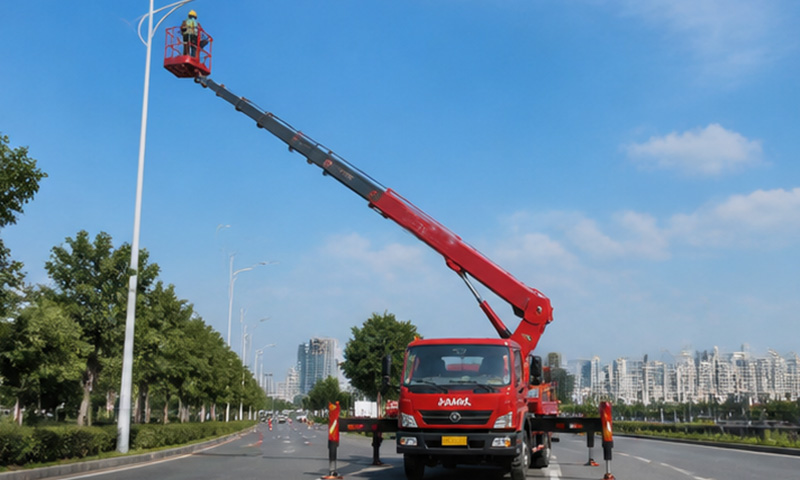
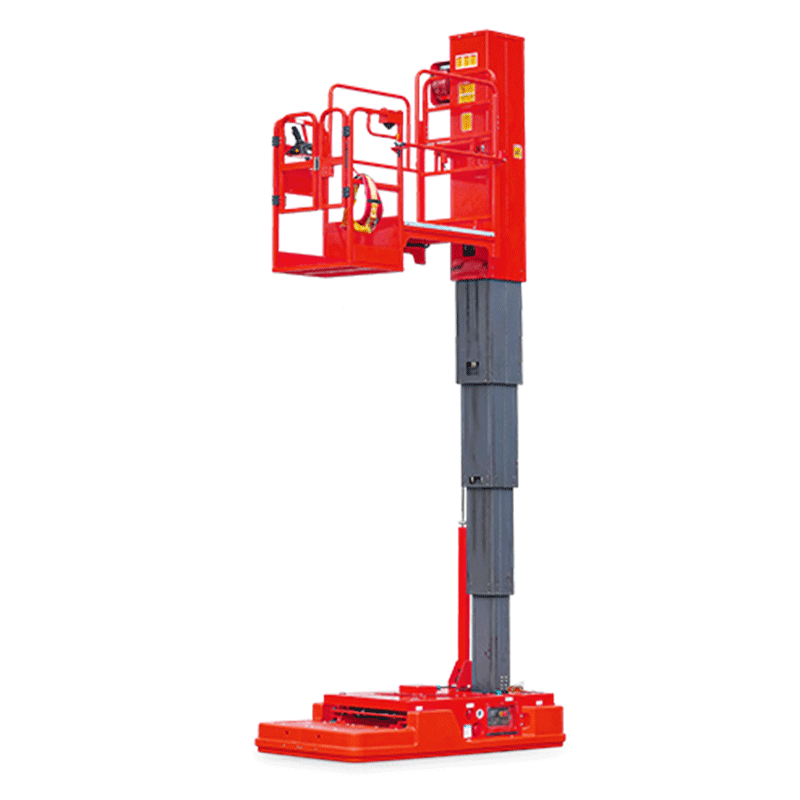
When ladders and simple access methods can no longer support safe working at height, buyers start looking for professional aerial work platform solutions. A truck mounted aerial work platform combines road mobility and lifting performance in one machine, making it especially valuable for utility, municipal and service contractors who move between different job sites every day.
According to the reference content, global demand for mobile elevated platforms continues to grow, driven by urban infrastructure upgrades, stricter safety regulations and fleet modernization programs. For overseas buyers, choosing the right aerial work platform type directly influences operating safety, daily efficiency and total fleet cost over the equipment lifecycle.
HAMAC Aerial Work Platform Product Families
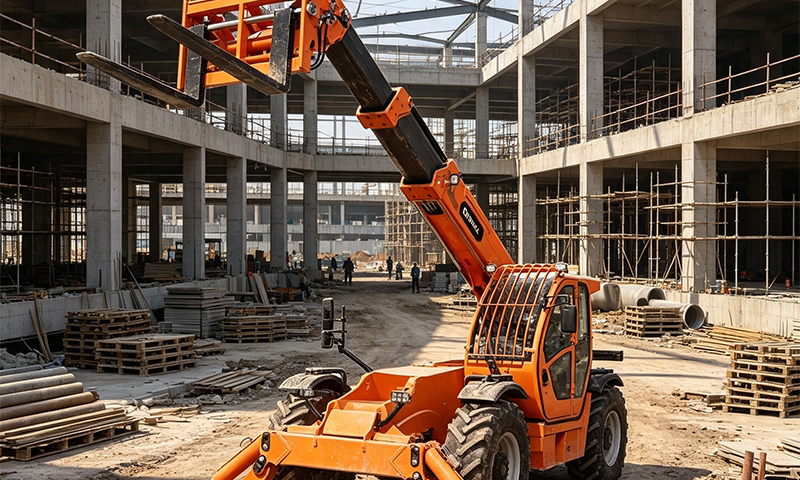
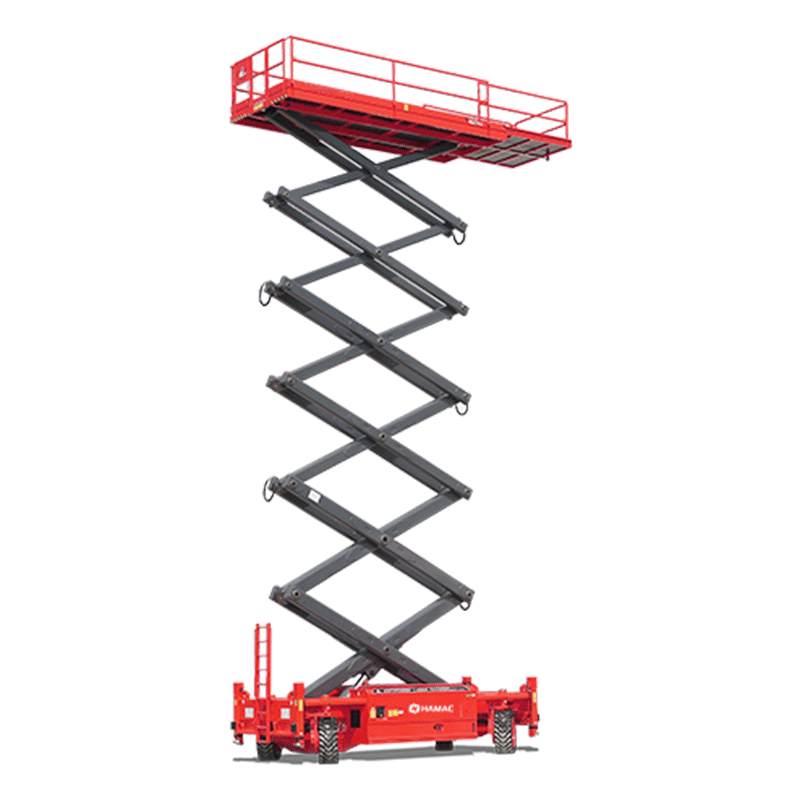
HAMAC offers different aerial access solutions to match diverse project environments. Beyond truck mounted aerial work platforms, customers can also choose self-propelled boom lifts, scissor lifts and other aerial work platforms depending on how often they need to relocate, what kind of surfaces they work on and how complex the access conditions are.
The following comparison helps buyers understand the differences between truck mounted aerial work platforms and other typical aerial equipment solutions used on construction sites, industrial plants and municipal projects.
Overview Table: Major Aerial Work Platform Types
|
Aerial Platform Type |
Main Mobility Mode |
Typical Working Height Range |
Best Application Scenarios |
Key Strengths |
|
Truck Mounted Aerial Work Platform / Bucket Truck |
Road-legal truck chassis, high-speed relocation between sites |
Approx. 12–35 m (model dependent) |
Utility line maintenance, streetlight service, municipal repair, telecom work, signboard installation, facade access |
Strong mobility, fast setup, integrated chassis + boom system, ideal for multi-stop daily operations |
|
Self-Propelled Telescopic / Articulated Boom Lift |
Self-propelled on site, limited road travel (transport by trailer) |
Approx. 16–45 m (depending on boom type) |
Construction sites, industrial plants, shipyards, steel structure projects |
Wide working envelope, flexible outreach, strong performance inside large job sites |
|
Scissor Lift (Electric or Diesel) |
Self-propelled platform, short-distance site movement |
Approx. 6–16 m |
Indoor warehouse maintenance, low-rise building finishing, ceiling work, industrial workshops |
Compact footprint, vertical lifting, excellent for flat ground and indoor tasks |
|
Trailer-Mounted Aerial Platform |
Towed by a vehicle, separated transport and lift unit |
Approx. 10–28 m |
Occasional high-altitude tasks, mixed fleets, rental applications |
Lower transport weight, flexible storage, suitable for users with towing vehicles |
|
Vertical Mast Lift / Small Aerial Work Platform |
Self-propelled or pushed manually on flat surfaces |
Approx. 6–12 m |
Retail stores, small warehouses, indoor maintenance, narrow corridors |
Very compact, easy to pass through standard doors, ideal for confined spaces |
How a Truck Mounted Aerial Work Platform Is Structured
Structurally, a truck mounted aerial work platform is a lifting system installed directly on a truck chassis, integrating boom structure, work basket, hydraulic system, stabilizer outriggers and control modules into one complete vehicle. This configuration allows the machine to drive to the job site, deploy outriggers, raise the boom and carry out aerial work without separate transport equipment.
The reference article describes in detail the core components: telescopic and articulated boom sections, slewing bearing, articulation joints, hydraulic cylinders, work basket design, load sensing systems, outriggers and control stations. These elements work together to provide a stable working envelope at height, with sensors and interlocks protecting operators when load limits or tilt angles are approached.
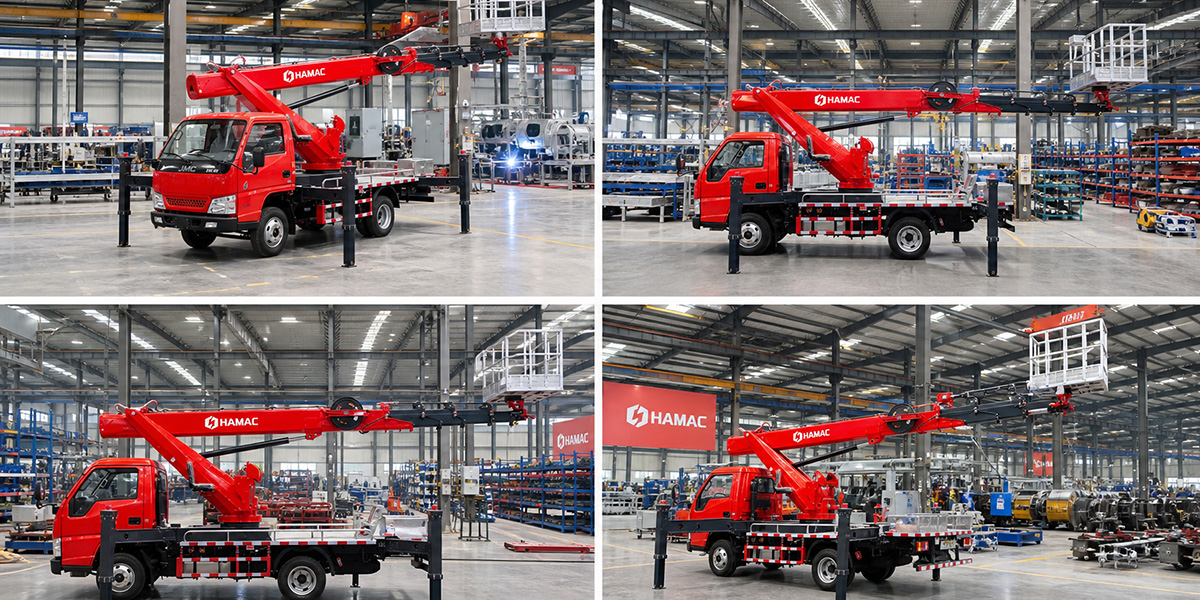
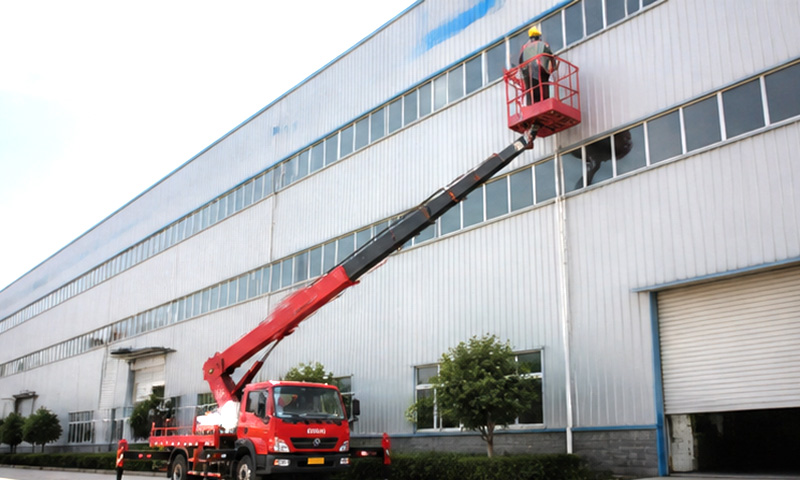
Truck mounted aerial work platform in modern factory workshop scenes
Component-Level Comparison: Truck Mounted vs. Self-Propelled Boom Lifts
|
Component / System |
Truck Mounted Aerial Work Platform |
Self-Propelled Boom Lift |
|
Chassis / Undercarriage |
Road-legal truck chassis, higher travel speed, designed for public roads and mixed terrain |
Dedicated self-propelled undercarriage, optimized for jobsite maneuvering, slower travel speed |
|
Boom Structure |
Telescopic or articulated boom installed on truck frame, outreach designed for roadside and building access |
Telescopic or articulated boom with wide working envelope, optimized for internal site coverage |
|
Stabilizer Outriggers |
Heavy-duty outriggers deployed before elevation, designed to manage ground pressure from truck weight |
Outriggers or stabilizing systems tuned to the self-propelled base and typical construction ground conditions |
|
Mobility Pattern |
Multiple sites per day, rapid road travel between urban or industrial locations |
Longer stays on one site, frequent repositioning inside the same project area |
|
Typical Buyer Profile |
Utility and municipal maintenance teams, telecom contractors, signboard and lighting service companies |
Construction contractors, steel structure installers, industrial maintenance departments |
Application Scenarios for Truck Mounted Aerial Work Platforms
Truck mounted aerial work platforms are chosen when crews need both high-altitude access and frequent relocation in one working day. Common application scenarios include utility line repair, streetlight installation, telecom service work, building facade access and municipal maintenance tasks across a city or region.
The reference content also highlights how correct stabilizer deployment, electrical inspections and fall protection system checks are critical when operating near live lines or elevated structures. These practical steps turn the truck mounted aerial work platform into a safe and efficient partner instead of a simple lifting tool.
Typical Working Scenarios Table
|
Scenario |
Project Type |
How Truck Mounted Aerial Work Platform Helps |
Key Configuration Focus |
|
Urban Streetlight Maintenance |
Municipal lighting service in city streets and residential areas |
Fast relocation from one street to another, quick setup with outriggers, stable basket for lamp and wiring work |
Working height, compact outrigger footprint, basket capacity, lighting and electrical connectors |
|
Utility Line Repair |
Power distribution and overhead line maintenance |
Precise boom positioning near lines, insulated basket options, strong stabilizers on uneven ground |
Insulated boom or basket, safety interlocks, load sensing system, fall protection anchor points |
|
Telecom and Data Cabling Work |
Telecom line installation, antenna work and data cable routing |
Flexible outreach around poles and building corners, tool storage in basket, repeat moves between sites |
Articulated boom sections, basket tool tray design, hydraulic smoothness, chassis size for narrow streets |
|
Building Facade Cleaning and Repair |
Low to mid-rise building maintenance and signage installation |
Safe access to windows, cladding, signs and facade elements without installing fixed scaffolding |
Working envelope around building, basket dimensions, working height, stabilizer pad system |
|
Industrial Plant Maintenance |
Factory piping, ventilation, overhead structures and lighting |
Access to elevated equipment around industrial structures, flexible daily planning for multiple areas |
Boom reach, chassis maneuverability, basket load, hydraulic control precision |
Key Benefits for Contractors and Fleet Managers
For contractors and fleet managers, a truck mounted aerial work platform offers several practical advantages: high-speed relocation between work sites, integrated vehicle and lifting system, reduced need for separate transport equipment and straightforward deployment with stabilizers and sensors supporting safe operation.
The reference article emphasizes how hydraulic response, load sensing systems, corrosion-resistant coatings, control modules and material selection all contribute to long-term reliability, lower maintenance cost and more predictable operation. These factors are important for buyers who manage multiple machines over many years.
Performance and Safety Considerations Table
|
Aspect |
What Buyers Look At |
Impact on Daily Operation |
|
Hydraulic System |
Pump and valve quality, cylinder performance, reservoir capacity, filtration |
Smoother boom movement, reduced vibration, more precise positioning |
|
Load Sensing & Safety Interlocks |
Overload protection, tilt sensors, basket capacity monitoring, emergency stop logic |
Higher operator safety, reduced risk of unsafe movements, easier compliance with regulations |
|
Chassis and Outriggers |
Truck frame strength, suspension, braking system, outriggers and pads design |
Stable working base, better behavior on uneven ground, safer road transport |
|
Materials and Coatings |
High-strength steel and aluminum selection, corrosion-resistant coatings, welding quality |
Longer structural life, better performance under repeated cycles, lower maintenance frequency |
|
Control Panels and Wiring |
Joystick sensitivity, indicator layout, wiring harness protection, sensor integration |
Easier training, more intuitive operation, simpler diagnosis and servicing |
How to Choose Between Different Aerial Work Platform Types
Buyers rarely fail because there are too few aerial platform options; they fail because it is hard to compare which structure truly matches their working height, task type, budget and operating environment. This is why understanding working scenarios, equipment configuration and purchase goals is more important than simply comparing height numbers.
Truck mounted aerial work platforms are ideal when mobility between sites is the main priority. Self-propelled boom lifts fit better when the focus is coverage inside a single job site. Scissor lifts and mast lifts serve indoor tasks and low-rise work on flat surfaces. Trailer-mounted platforms suit mixed fleets where towing vehicles are already available.
Simple Decision Guide
|
Main Priority |
Recommended Platform Type |
Typical Buyer Profile |
|
Maximum road mobility, many sites per day |
Truck mounted aerial work platform / bucket truck |
Utility companies, municipal departments, telecom service contractors |
|
Large jobsite coverage, complex structures |
Self-propelled boom lift |
Construction contractors, steel structure and industrial maintenance teams |
|
Indoor tasks, low to mid height, flat floor |
Scissor lift or vertical mast lift |
Warehouse, logistics, industrial workshop and retail facility operators |
|
Occasional high-altitude tasks, cost-sensitive fleets |
Trailer-mounted aerial platform |
Rental companies, smaller contractors, mixed transport fleets |
HAMAC Support for Export Buyers
For international buyers, HAMAC can help plan configurations based on target working height, job type and destination market requirements. This includes matching chassis options, boom structures, basket sizes, safety systems and corrosion protection to local regulations, terrain and climate.
Whether the customer needs a cost-effective entry model, a fleet-standard configuration or a customized export specification, the goal is always to provide an aerial work platform solution that fits real project conditions instead of generic catalogue data.
FAQ: Truck Mounted Aerial Work Platform and Other Aerial Solutions
Q1: What is the main difference between a truck mounted aerial work platform and a self-propelled boom lift?
A truck mounted aerial work platform is built on a road-legal truck chassis, allowing fast travel between different sites every day, while a self-propelled boom lift is designed mainly for moving inside the same construction or industrial jobsite with slower travel speed and a wider working envelope on site.
Q2: When should I choose a truck mounted aerial work platform instead of a scissor lift?
Choose a truck mounted aerial work platform when your team needs to work outdoors at higher elevations and must move quickly between multiple locations, such as streetlight repair or utility line maintenance. A scissor lift is more suitable for indoor or flat-ground projects where the working height is lower and mobility is limited to a single site.
Q3: What are the key safety features I should look for in a truck mounted aerial work platform?
Important safety features include stabilizer outriggers with proper pads, load sensing and anti-tilt systems, emergency stop buttons, fall protection anchor points, slip-resistant basket floors, leveling sensors and clearly visible indicators on the control panel. Together, these systems help prevent unsafe movements and protect operators at height.
Q4: How often should hydraulic and electrical systems be inspected?
Inspection frequency depends on local regulations and usage intensity, but many fleets follow a regular schedule for hydraulic components (pump, valves, cylinders, hoses, filters) and electrical elements (wiring harness, circuit breakers, indicator lights, safety interlocks). Daily visual checks combined with periodic detailed inspections help keep the truck mounted aerial work platform reliable.
Q5: Can HAMAC customize truck mounted aerial work platforms for different markets?
Yes. HAMAC can configure working height, boom type, basket layout, chassis selection, safety features and coatings according to project requirements and destination market standards, helping distributors and end users receive aerial work platform solutions that match their local operating conditions.