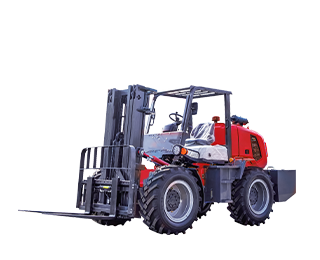
FD35‑RTS
Rough Terrain Forklifts
Rated load capacity: 3,500 kg
Maximum lift height: 4,500 mm
Consult now






Platform capacity is one of the most important specifications when choosing a scissor lift. A machine may have the correct working height, but it is not suitable if the platform cannot safely carry the required number of operators, tools, materials, cables, equipment, and approved accessories.
Buyers should never select a scissor lift by height alone. The correct model must provide enough working height, platform space, rated capacity, extension deck capacity, terrain capability, and access dimensions for the actual project. This is especially important for installation, HVAC, electrical, ductwork, steel work, warehouse maintenance, façade work, and construction applications where workers need to carry materials onto the platform.
Platform capacity is a strict limit. It is the maximum combined weight permitted on the platform under the manufacturer’s specified conditions. Exceeding this limit can affect machine stability, overload structural components, reduce safety margins, and create unsafe working conditions.
Scissor lift platform capacity is the maximum total weight that the elevated platform can safely carry. It is sometimes called rated load capacity, platform load capacity, rated platform capacity, or safe working load.
The total platform load includes every item placed on the platform. It is not only the weight of the operator. Buyers and operators must include workers, personal protective equipment, toolboxes, power tools, cable trays, lighting fixtures, pipes, brackets, fasteners, panels, spare parts, and other approved materials.
| Included in Platform Capacity | Examples |
|---|---|
| Operators | All workers standing on the platform. |
| Personal protective equipment | Safety helmet, harness where required, tools belts, gloves, boots, and other PPE. |
| Hand tools | Drills, wrenches, screwdrivers, grinders, measuring devices, and toolboxes. |
| Power tools and cables | Power tools, batteries, extension cords, welding accessories, and cable reels. |
| Installation materials | Light fixtures, cable trays, brackets, pipes, ducts, panels, fasteners, and fittings. |
| Approved accessories | Manufacturer-approved equipment and accessories installed or carried on the platform. |
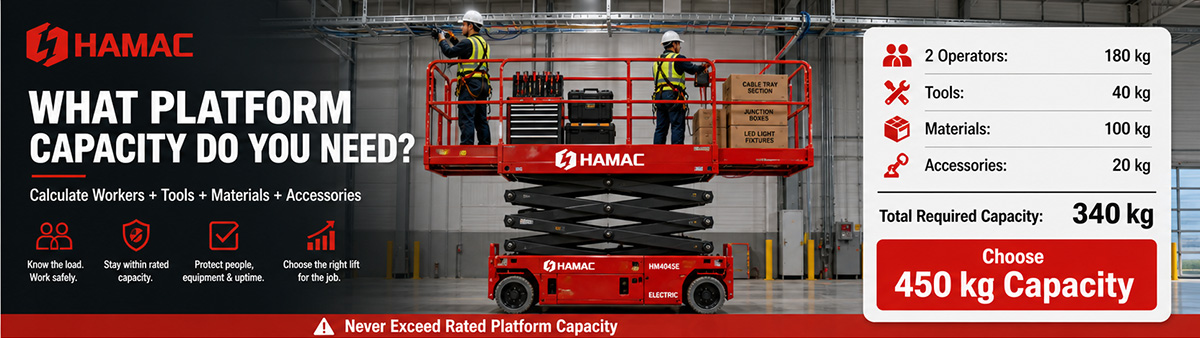
The simplest way to select the correct capacity is to calculate the maximum expected weight that will be on the platform at one time. Use the heaviest realistic operating condition, not an average estimate.
Total Required Platform Capacity = Operators + PPE + Tools + Materials + Accessories
After calculating the estimated total, select a scissor lift with sufficient rated capacity. Do not select a machine with a capacity equal to or lower than the estimated working load. A practical margin helps account for changing tools, additional materials, and daily jobsite needs, but the manufacturer’s rated capacity remains the absolute maximum permitted limit.
| Example Load Item | Example Weight |
|---|---|
| Operator 1 with PPE | 90 kg |
| Operator 2 with PPE | 90 kg |
| Toolbox and hand tools | 30 kg |
| Power tools and cables | 25 kg |
| Cable tray, brackets, and installation materials | 110 kg |
| Approved accessories | 20 kg |
| Total Estimated Platform Load | 365 kg |
In this example, a 230 kg or 320 kg scissor lift would not be suitable. The buyer should consider a machine with a higher rated platform capacity, such as 450 kg or more, after checking the exact model specifications, platform extension limits, maximum permitted occupants, and load-distribution requirements.
Scissor lift capacities vary by machine size, platform width, working height, power source, terrain design, and intended application. Compact electric lifts usually carry lighter loads, while wide-deck and rough terrain scissor lifts often provide larger platforms and higher capacities.
| Scissor Lift Type | Typical Platform Capacity Range | Typical Application |
|---|---|---|
| Compact electric scissor lift | Approximately 230 kg to 300 kg | One or two operators, inspection, lighting, low-level maintenance, and warehouse tasks. |
| Standard electric scissor lift | Approximately 230 kg to 450 kg | Warehouse maintenance, factory work, electrical installation, and indoor construction. |
| Wide-deck electric scissor lift | Approximately 350 kg to 550 kg | Multiple operators, HVAC work, cable trays, ducts, panels, and larger installation materials. |
| Rough terrain scissor lift | Approximately 350 kg to 750 kg or more | Outdoor construction, façade work, steel installation, industrial projects, and heavy materials. |
| Heavy-duty rough terrain scissor lift | Approximately 750 kg to 1,000 kg or more | Large construction projects, multiple workers, heavy installation materials, and demanding outdoor tasks. |
Capacity values vary by model, working height, platform size, extension deck configuration, and local product version. Always confirm the rated capacity shown in the official technical data sheet and on the machine capacity label before operation.
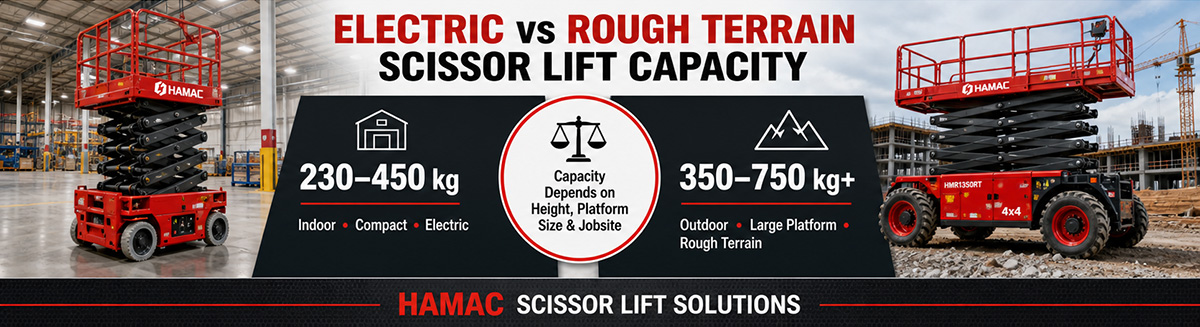
Electric scissor lifts are commonly used indoors on smooth, firm, and level surfaces. Their platform capacities are often suitable for one or two operators with tools and moderate installation materials. They are ideal for warehouses, factories, shopping malls, airports, workshops, logistics centers, and commercial facilities.
Rough terrain scissor lifts are designed for outdoor construction and industrial projects. They often have larger platforms, stronger chassis designs, higher ground clearance, larger tires, and higher capacity ratings. This makes them suitable for crews handling heavier tools, steel components, façade materials, pipes, panels, ductwork, and construction supplies.
| Feature | Electric Scissor Lift | Rough Terrain Scissor Lift |
|---|---|---|
| Typical environment | Indoor or level paved surfaces | Outdoor construction and approved uneven terrain |
| Typical platform capacity | Approximately 230 kg to 450 kg | Approximately 350 kg to 750 kg or more |
| Platform size | Compact to medium-sized platform | Larger platform, often with extension decks |
| Power source | Rechargeable batteries | Usually diesel engine; some electric rough terrain models are available |
| Typical materials | Tools, lights, cables, small equipment, and moderate installation materials | Steel components, façade materials, ducts, pipes, panels, and heavy tools |
| Ground condition | Smooth, level, firm surfaces | Gravel, compacted soil, uneven construction areas, and approved rough terrain |
An extension deck gives workers extra horizontal workspace. It can help operators reach slightly beyond the main platform without moving the complete scissor lift. This feature is useful for ceiling work, racking maintenance, cable trays, ducts, pipe installation, façade work, and other applications where additional platform length improves access.
However, an extension deck may have a lower capacity limit than the main platform. The limit may apply to the extension section itself or to the complete platform configuration when the deck is extended, depending on the machine design. Operators must always check the capacity label, load chart, and operating manual for the specific model.
| Capacity Item | What to Check |
|---|---|
| Main platform capacity | Maximum total weight allowed on the main platform area. |
| Extension deck capacity | Maximum permitted weight on the extended section or in the extended configuration. |
| Maximum occupants | Maximum number of people permitted on the platform. |
| Indoor and outdoor occupancy | Some models may have different permitted occupant numbers for indoor and outdoor use. |
| Load distribution | Weight must be distributed correctly and not concentrated at the outer edge of the platform. |
| Extension lock position | The platform extension must be fully secured before carrying loads or raising the lift. |
Never assume that the complete machine capacity can be placed on the extension deck. Heavy materials concentrated at the front edge of an extended platform can affect stability and may exceed the permitted extension-deck limit.
Capacity is not only about total weight. The location of the load also matters. A properly rated load should be positioned according to the manufacturer’s instructions and distributed as evenly as practical across the platform.
Placing all materials on one side of the platform, stacking heavy items at the edge of an extension deck, or allowing long materials to extend beyond the platform can create unsafe conditions. The load should be stable, secured where necessary, and kept within the approved platform dimensions and operating rules.
| Load Distribution Issue | Potential Risk | Better Practice |
|---|---|---|
| Heavy tools concentrated on one side | Uneven loading and reduced stability margin | Distribute tools and materials across the platform. |
| Heavy material at the extension deck edge | Excessive load on the extended platform section | Keep heavy items within the permitted load area and follow extension capacity limits. |
| Long materials extending beyond guardrails | Collision risk, shifting load, and potential loss of control | Use only materials and handling methods approved by the manufacturer and site procedures. |
| Loose tools and components | Falling-object risk during lifting or travel | Secure tools, materials, and small components before movement. |
| Unknown load weight | Risk of exceeding rated platform capacity | Confirm the weight of people, tools, and materials before lifting. |
For most standard scissor lifts, the published platform capacity applies throughout the approved lifting range when the machine is used according to its manual. However, the exact permitted capacity can depend on the specific model configuration, platform extension position, indoor or outdoor use, wind rating, number of occupants, optional accessories, and safety systems.
Buyers should review the official product specification and machine capacity label carefully. Do not assume that two lifts with the same working height have the same platform capacity. A 10 m scissor lift may be available in compact, standard, wide-deck, electric, diesel, or rough terrain versions with very different platform sizes and capacity ratings.
| Machine Configuration | Possible Capacity Effect |
|---|---|
| Compact narrow chassis | Usually designed for tight access and may have moderate platform capacity. |
| Wide-deck platform | May provide more workspace and higher capacity, depending on the model. |
| Extension deck deployed | May have a separate lower capacity limit or a reduced capacity in extended configuration. |
| Rough terrain chassis | Often provides a larger platform and higher capacity for outdoor construction work. |
| Optional accessories installed | Attachment or accessory weight can reduce the remaining available capacity. |
| Indoor or outdoor operation | Occupancy limits and operating conditions may differ based on the machine design and local requirements. |
The right platform capacity depends on the work being performed. A maintenance technician changing lights needs a different machine from a construction
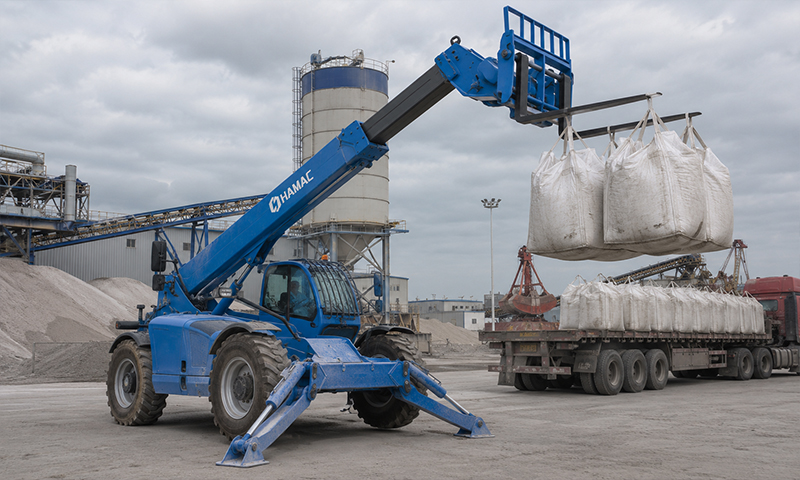
At inland port terminals, a high‑capacity telehandler is used to transfer bulk materials between tr
Free Consultation >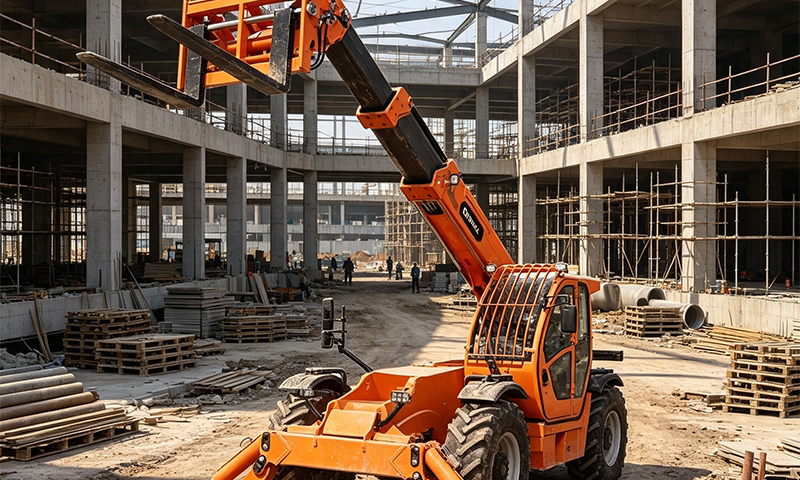
This case study describes how an HT5014 telehandler supports outdoor storage rack replenishment besid
Free Consultation >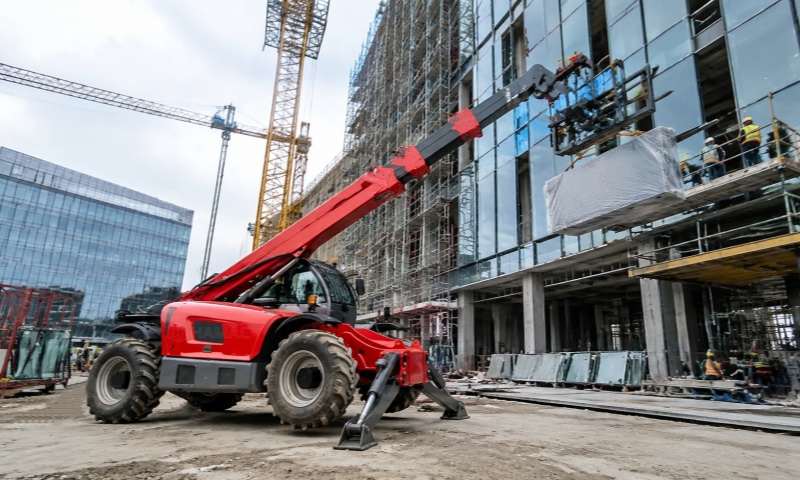
On a commercial building project, an HT4010 telehandler is used to assist facade and curtain wall ins
Free Consultation >Please fill out the form, and we can satisfy any of your needs including equipment selection, scheme design, technical support, or after-sales service. We will contact you as soon as possible.