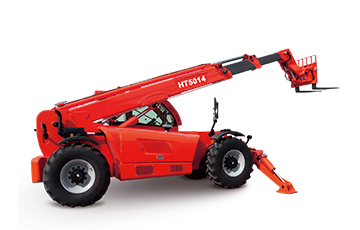
HT5014
Telehandlers
Lifting capacity: 5,000 kg
Max. lift height:=14.0 m
Consult now






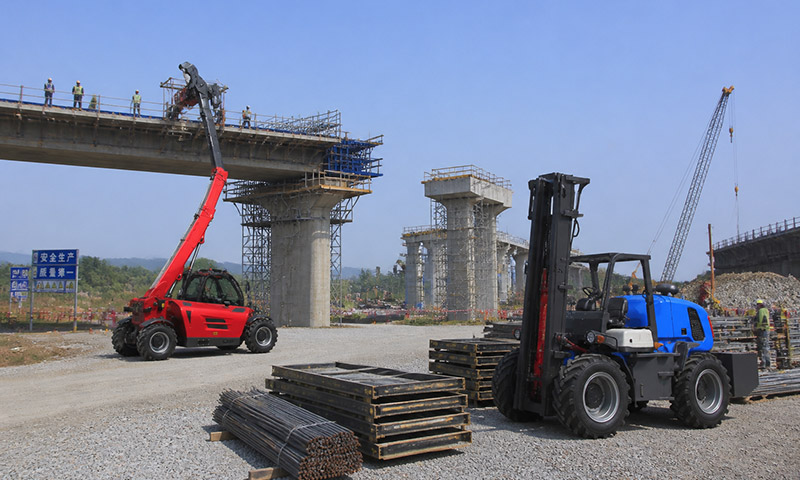
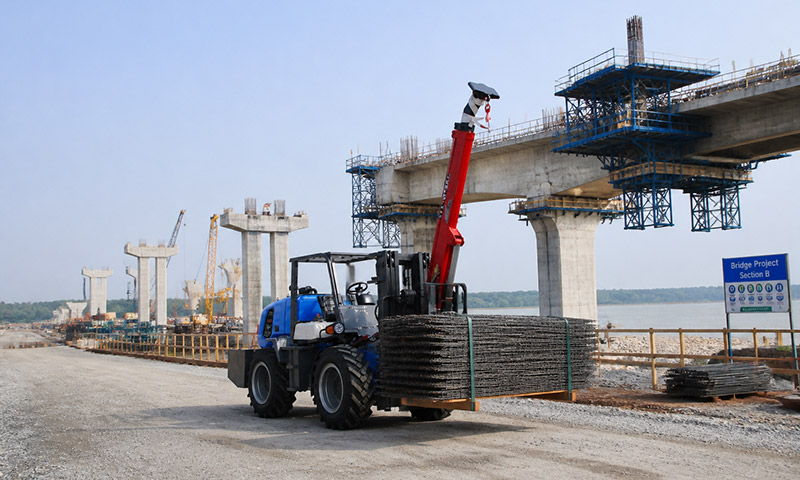
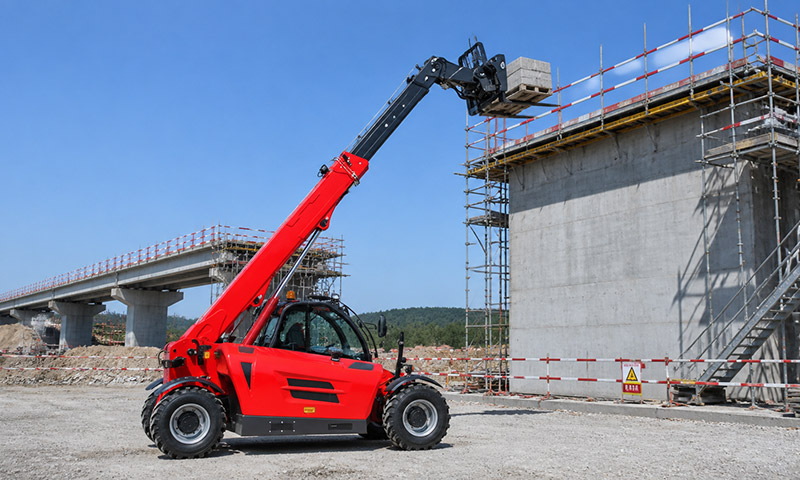
The customer is a civil engineering contractor building a multi‑span bridge over a river, with piers, abutments and approach ramps constructed in stages. The project site includes compacted gravel access roads, temporary embankments and work platforms near the riverbanks, all subject to changing conditions as construction progresses.
Material flows involve reinforcing steel, formwork systems, precast concrete elements, bagged cement and structural accessories that must be moved from central staging areas to specific piers and deck segments. To keep the schedule on track, the contractor needed equipment that could operate safely on rough ground and place materials at height without relying solely on tower cranes or mobile cranes.
Key challenges on the bridge construction site included:
Uneven and sloped terrain along riverside access roads and embankments, unsuitable for standard forklifts.
Frequent movement of heavy pallets of reinforcing steel, formwork and concrete additives between central yards and multiple workfronts.
Need to lift materials onto elevated decks, scaffolding and working platforms where cranes were already busy with major structural lifts.
Pressure to shorten crane hook time and reduce manual handling to improve safety and meet tight project milestones.eougem.
The contractor needed a combined solution that covered both ground‑level heavy transport and high‑reach, precise placement on rough terrain.
HAMAC proposed a dual‑equipment solution:
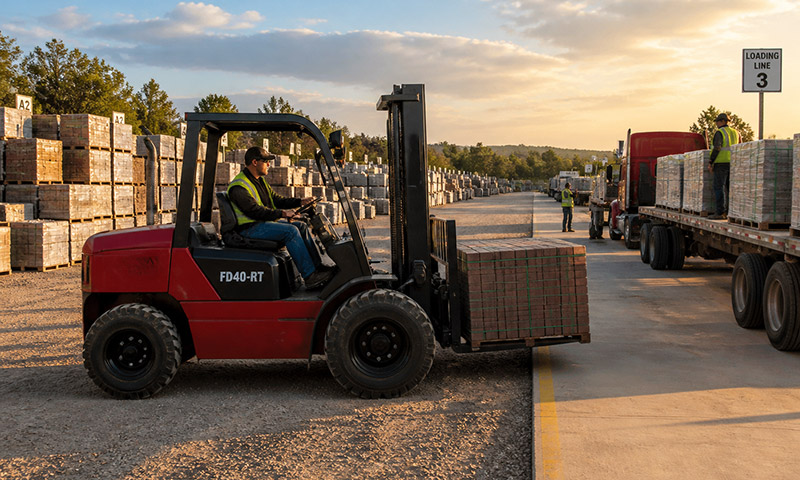
Two FD50‑RT 5 Ton Rough Terrain Forklifts for heavy ground‑level material moves. casece+1
One HT2506 Telehandler with 2.5 ton capacity, 6 m lift height and multi‑mode steering (2WS / 4WS / crab).
This combination allowed the contractor to separate tasks: FD50‑RT focused on transporting and staging heavy pallets across rough ground, while HT2506 handled lifting to height and placing loads onto decks, scaffolds and platforms where cranes could not always reach efficiently.
5 ton lifting capacity for dense pallets of rebar, formwork frames and precast components.
4×4 drive, deep‑tread tyres and high ground clearance to travel along gravel roads, ramps and uneven work areas.
Robust mast and wide‑view carriage for safe handling of tall or bulky loads in outdoor conditions.
2,500 kg rated capacity and 6 m telescopic boom reach for elevated placement tasks.
4×4 chassis and large tyres for stability on rough construction surfaces.
Multi‑mode steering (2WS, 4WS, crab) for manoeuvring around piers, scaffolding and tight workspaces.
FD50‑RT forklifts receive deliveries of rebar bundles, formwork panels, precast elements and bagged cement at the central staging yard near the site entrance. They unload trucks on concrete or compacted surfaces, then carry pallets along gravel access roads and temporary ramps to riverside work platforms and pier locations.
Because FD50‑RT units are purpose‑built rough terrain forklifts, they maintain traction and stability when driving over ruts, small slopes and soft patches while carrying 5 ton loads. This keeps materials close to each workfront and reduces crane moves required just to reposition pallets along the ground.
Once FD50‑RT forklifts have staged pallets near a pier or deck segment, the HT2506 telehandler takes over for vertical and horizontal placement. Using its telescopic boom, the telehandler lifts rebar, formwork components or smaller precast elements up to 6 m, placing them onto scaffolding, temporary decks or elevated platforms.
Crab steering and compact dimensions allow HT2506 to manoeuvre between piers, scaffolds and edge protection barriers in tight areas. This combination of reach and agility helps crews position materials exactly where needed without waiting for crane availability.
Site supervisors coordinate FD50‑RT and HT2506 movements so that each workfront receives materials in the right sequence: FD50‑RT brings heavy pallets to a buffer zone; HT2506 lifts and places items onto the structure. This reduces congestion around cranes and keeps reinforcing, formwork and pouring operations supplied on time.
By using forklifts and a telehandler together, the project team achieves a continuous flow of materials from deliveries, through staging, to final placement, even as ground conditions evolve during construction.
Deploying FD50‑RT rough terrain forklifts alongside the HT2506 telehandler delivered several key benefits for the bridge project:
Shorter crane hook times, as many routine pallet moves and elevated placements are handled by FD50‑RT and HT2506 instead of cranes.
Improved material availability at each pier and deck segment, reducing delays between reinforcing, formwork and concrete pours.
Safer handling on rough terrain, with purpose‑built 4×4 forklifts and a telehandler designed for outdoor construction surfaces, reducing manual handling and ad‑hoc lifting.
Higher overall productivity, because ground‑level transport and high‑reach placement are covered by dedicated machines working in coordination.
This project shows that combining FD50‑RT rough terrain forklifts with an HT2506 telehandler for bridge construction material staging is an effective way for contractors to manage heavy materials across uneven ground and elevated work areas, all while improving safety and keeping critical infrastructure schedules on track.
"If you have projects with similar lifting requirements, our team can recommend the right HAMAC telehandler or forklift configuration."
Please fill out the form, and we can satisfy any of your needs including equipment selection, scheme design, technical support, or after-sales service. We will contact you as soon as possible.