FD50‑RTD
Rough Terrain Forklifts
Rated load capacity: 5,000 kg
Maximum lift height: approx. 4,500–6,000 mm
Consult now






Cement plants, bagging stations, construction-material depots and outdoor dispatch yards need dependable equipment to move bagged cement, dry mortar, bulk bags, palletized additives and maintenance supplies. These operations often combine heavy loads, dusty conditions, repeated truck loading and uneven travel routes.
For outdoor work areas with gravel, compacted soil, damaged concrete, ramps, potholes or soft patches, a rough terrain forklift can offer better mobility and traction than a standard warehouse forklift. The right capacity, tire configuration, fork setup and operating procedure can help a cement operation improve material flow while protecting both operators and bagged products.
Cement handling is demanding because the work combines high throughput with abrasive dust, heavy pallets, outdoor storage and time-sensitive truck dispatch. Forklifts may travel between bagging lines, covered storage areas, dispatch lanes, bulk bag stations and customer-loading zones throughout the day.
A conventional industrial forklift may perform well on clean, level concrete floors. However, cement plants and distribution yards frequently have mixed surfaces, including gravel, unfinished roads, cracked slabs, loading ramps and outdoor storage areas. When ground conditions are uneven, operators need equipment with suitable ground clearance, rugged tires, stable load handling and the ability to maintain traction under normal working loads.
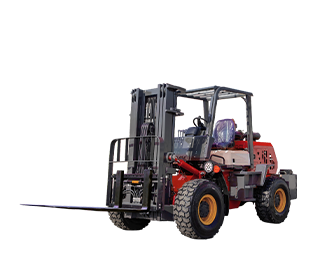
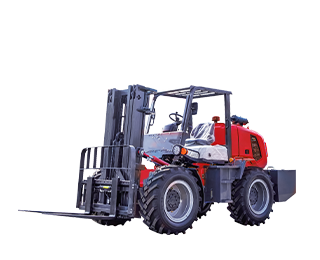
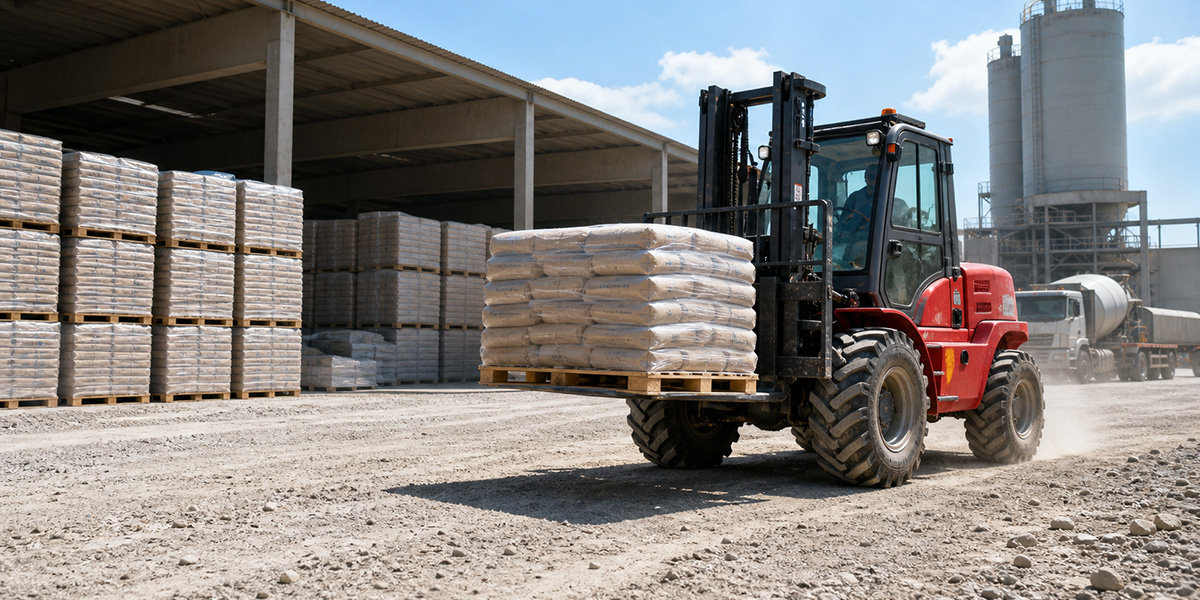
HAMAC rough terrain forklifts are designed for outdoor material movement where standard warehouse trucks may be limited by poor ground conditions. In particular, the HAMAC FD50-RT rough terrain forklift is positioned for heavy cement pallets, stone yards, mining support and demanding outdoor loading operations.[316]
| Material | Typical Handling Task | Key Challenge | Recommended Equipment |
|---|---|---|---|
| Bagged Cement Pallets | Moving finished pallets from the bagging line to storage or truck-loading areas | High pallet weight, dust, repeated loading cycles and potential bag damage | Rough terrain forklift for outdoor areas; diesel or electric forklift for clean indoor zones |
| Dry Mortar and Tile Adhesive | Handling palletized bags in storage, dispatch and distribution yards | Moisture protection, stable stacking and fast order preparation | Rough terrain forklift or standard forklift, depending on surface conditions |
| Bulk Cement Bags | Transferring bulk bags to controlled discharge stations, hoppers or storage zones | Bag stability, loop condition, dust control and safe suspended-load management | Forklift with approved bulk-bag attachment or telehandler with approved lifting equipment |
| Raw-Material Pallets | Moving additives, packaged minerals, spare parts and maintenance supplies | Mixed pallet sizes, outdoor exposure and access restrictions | Rough terrain forklift or diesel forklift |
| Equipment Parts and Maintenance Materials | Supplying conveyors, mills, bagging equipment and workshop teams | Heavy irregular loads and movement across plant roads | Rough terrain forklift or telehandler |
Rough terrain forklifts are built for outdoor material handling on uneven and unpaved ground. Compared with a conventional warehouse forklift, they typically use a stronger chassis, increased ground clearance, durable off-road tires and higher traction to work on gravel, compacted soil, unfinished roads and mixed outdoor surfaces.[449][456]
This does not mean that any rough or unstable surface is automatically safe. Ground firmness, slope changes, drainage, loose material, potholes, ruts and transitions between concrete, gravel and soil must still be assessed before the forklift travels or lifts a load. Uneven ground does not remove the need for route maintenance, operating limits and correct load control.[451]
| Rough Terrain Feature | Benefit for Cement Operations |
|---|---|
| 4×4 Drive | Helps maintain traction when carrying cement pallets across gravel, compacted soil and uneven outdoor routes. |
| Deep-Tread Tires | Provides improved grip on loose, dusty or damp surfaces compared with typical warehouse tires. |
| Higher Ground Clearance | Helps the machine travel over small debris, surface changes, shallow ruts and partially prepared roads. |
| Heavy-Duty Chassis | Supports regular operation in outdoor yards where vibration, dust and surface impacts are more common. |
| Diesel Power | Suitable for extended outdoor shifts and demanding site-duty cycles, subject to local emissions requirements. |
| Wide-View Mast and Fork Carriage | Helps operators align forks with cement pallets and place loads accurately in storage and loading areas. |
Forklift selection should begin with the actual heaviest pallet or load handled during normal operations. Do not select a machine based only on average bag weight or headline forklift capacity. The calculation should include the cement bags, pallet, wrapping, forks, attachments and the real load center.
As a general guide, 3 ton rough terrain forklifts are commonly suited to bagged cement, dry mortar, bricks and general palletized construction materials. For heavier cement pallets, larger stone or aggregate products, machinery parts and high-duty outdoor handling, a 5 ton rough terrain forklift may be more appropriate. HAMAC identifies the FD30-RT as a 3 ton 4WD model for bagged cement and outdoor construction logistics, while the FD50-RT is positioned for heavy cement pallets and more demanding cement-plant work.[316]
| Typical Requirement | Recommended Capacity Class | Suggested HAMAC Equipment | Typical Application |
|---|---|---|---|
| Standard bagged cement pallets and dry mortar | 3 Ton | FD30-RT Rough Terrain Forklift | Outdoor storage, truck loading, construction-material yards and lower-volume dispatch. |
| Mixed cement products, larger pallets and rougher outdoor yards | 3.5–4 Ton | HAMAC 3.5–4 ton rough terrain forklift range | Busy distribution yards, cement depots, building-material storage and mixed-load handling. |
| Heavy cement pallets, stone products and plant maintenance loads | 5 Ton | FD50-RT Rough Terrain Forklift | Cement plants, aggregate yards, heavy dispatch areas and demanding outdoor logistics. |
| Long-distance delivery support, elevated placement or reach-over handling | 2.5–4 Ton Telehandler | HAMAC telehandler range | Loading high-sided trucks, reaching over barriers and placing materials at elevated work areas. |
Capacity must always be confirmed against the machine data plate, the actual load center, attachment configuration and ground conditions. A rated capacity is not a substitute for a site-specific assessment, particularly when operating on slopes or uneven ground.
Forklifts collect wrapped cement pallets from the bagging line or finished-product transfer zone. Operators should insert forks fully under the pallet, confirm that the load is centered, and check that bags, wrapping and pallet boards are in good condition before travel.
When travelling outdoors, carry the pallet low and close to the mast. Travel at a controlled speed, reduce speed before uneven sections, and avoid sharp turns with elevated loads. Cement pallets should not be driven through standing water, deep ruts or unstable soft ground unless the route has been assessed and made suitable for the machine.
Finished cement bags must be protected from moisture and stored on suitable pallets or supports. Forklift operators should stack only on level, stable ground and follow the site’s approved stacking-height rules. Any leaning, damaged, wet or bulging pallet should be isolated and corrected before it becomes a handling risk.
During dispatch, forklifts transfer cement pallets to flatbed trucks, covered vehicles or container-loading areas. A well-designed loading zone should have clear travel lanes, trained loading personnel, controlled pedestrian access and a stable approach surface. Maintaining organized loading sequences can help reduce truck waiting time and dispatch congestion.[455]
Bulk bags require additional controls because they are flexible loads. Before lifting, inspect the bag body, seams, lifting loops, discharge spout and pallet or support frame. Do not lift a damaged bag, and do not use a damaged or unsuitable attachment.
When using a forklift or telehandler to position bulk bags above a hopper or discharge station, operators should use an approved lifting method, lift smoothly and keep personnel outside the exclusion zone. Bulk bags should not be dragged, pushed with the mast or lifted by only one or two loops. Where bulk bag loops are used, all intended lifting loops should be engaged evenly and the bag should be kept upright and stable.[452][453]
Cement dust can become airborne during bag opening and discharge. Enclosed transfer equipment, dust extraction and controlled bag-opening procedures can reduce dust release and operator exposure in bulk cement handling areas.[450]
A rough terrain forklift is usually efficient for ground-level pallet movement, timber-free outdoor storage, truck loading and repetitive cement-yard logistics. However, a telehandler may be more suitable when the operation requires additional lift height or forward reach.
Examples include placing cement pallets on elevated work platforms, loading high-sided trucks, reaching across barriers, supporting building construction at height or moving materials in locations where access is limited. HAMAC telehandlers combine forklift-style attachment options with a telescopic boom for tasks that require more reach than a conventional forklift.
For construction projects that combine uneven terrain, heavy ground-level materials and elevated placement work, see the HAMAC FD50-RT and HT2506 bridge construction material staging case. In that application, FD50-RT rough terrain forklifts handled materials including bagged cement across partially prepared ground, while a telehandler supported elevated material placement.[186]
A 4×4 rough terrain forklift is often suitable for bagged cement operations on gravel, compacted soil, rough outdoor yards and other uneven surfaces. The right model depends on the actual pallet weight, terrain, travel distance, stacking height and loading requirements.
A 3 ton forklift can be suitable for standard bagged cement pallets when the actual total load remains within the machine rating and approved load center. For heavy pallets, larger product packs, long forks, attachments or difficult ground conditions, a higher-capacity machine may be required.
Rough terrain forklifts are designed for outdoor use and typically provide better traction, ground clearance and durability on uneven or unpaved surfaces. Warehouse forklifts are most effective on clean, level floors and may not be suitable for gravel, mud, potholes or partially prepared outdoor routes.
Yes, but only with an approved handling method and suitable attachment. Bulk bags must be inspected, lifted smoothly, kept stable, and handled within their safe working load and the machine capacity. Personnel must remain outside the suspended-load area.
Confirm that the pallet is stable, keep it low while travelling, follow the machine capacity information, slow down on uneven ground and keep pedestrians away from active forklift routes.
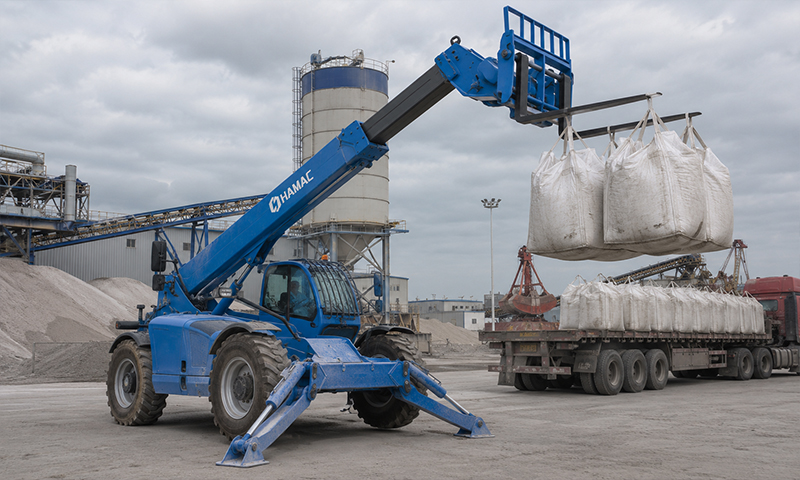
At inland port terminals, a high‑capacity telehandler is used to transfer bulk materials between tr
Free Consultation >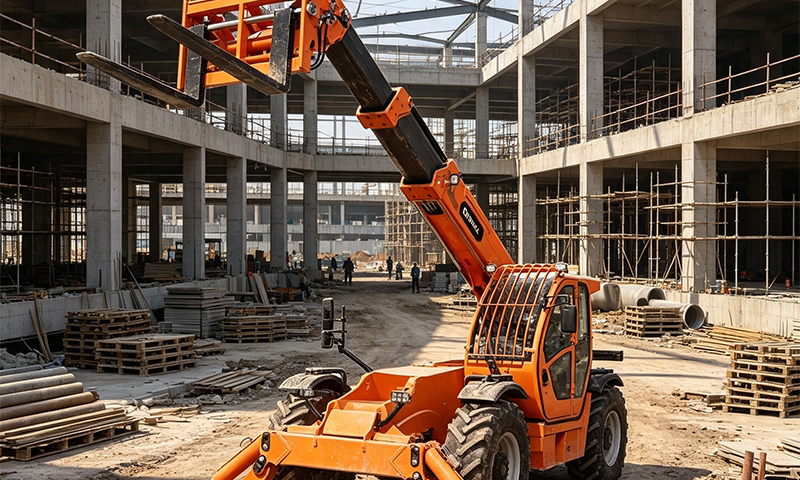
This case study describes how an HT5014 telehandler supports outdoor storage rack replenishment besid
Free Consultation >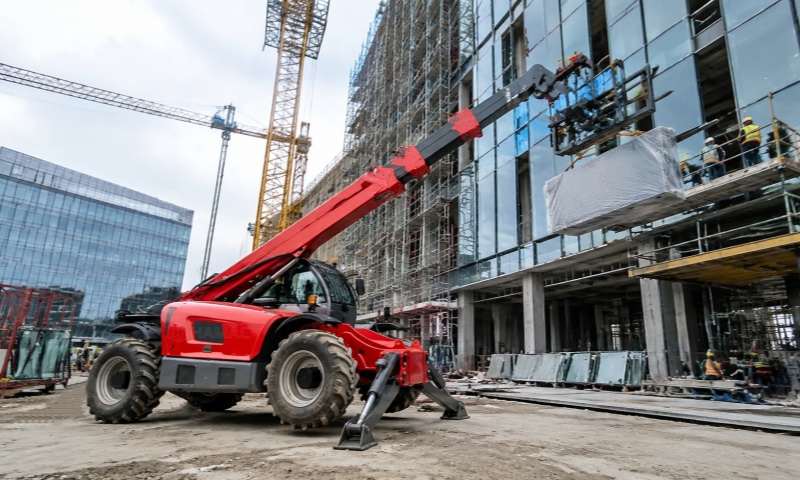
On a commercial building project, an HT4010 telehandler is used to assist facade and curtain wall ins
Free Consultation >Please fill out the form, and we can satisfy any of your needs including equipment selection, scheme design, technical support, or after-sales service. We will contact you as soon as possible.