Vertical Lifts
Aerial Work Platforms
Max Working Height:5.8–10.3 m
Platform Capacity:160–227 kg
Consult now






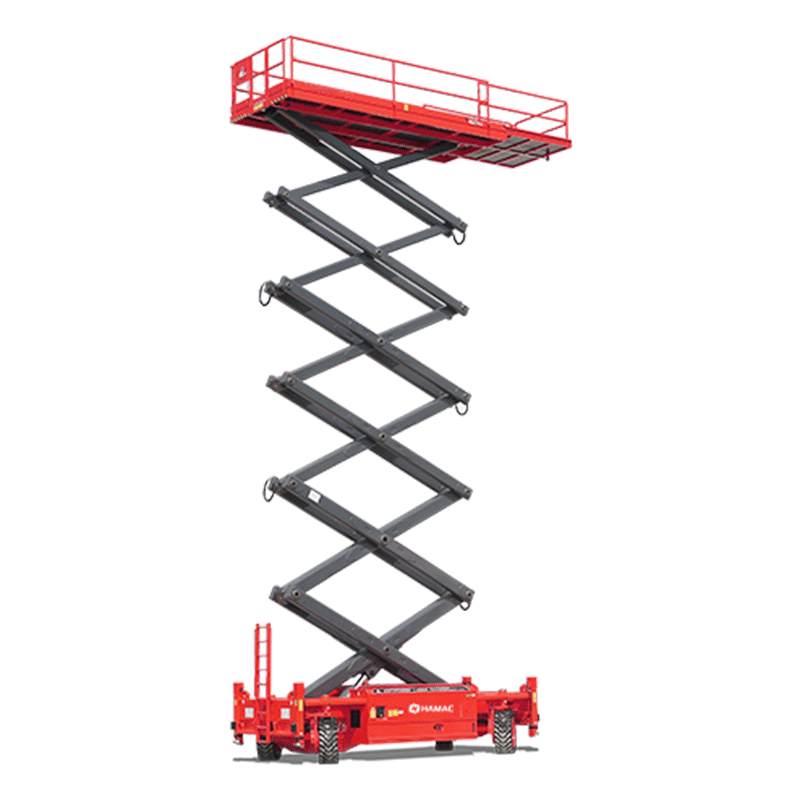
A scissor lift is a mobile elevated work platform that raises workers, tools, and approved materials vertically. It is called a scissor lift because the linked support arms beneath the platform form a crisscross “X” shape, similar to a pair of scissors.
Although scissor lift models vary by working height, power source, platform capacity, and application, the basic working principle is similar. A power source supplies energy to a hydraulic system. The hydraulic system extends cylinders, the scissor arms open, and the platform rises vertically. When the cylinders retract, the scissor structure folds and the platform lowers.
Electric scissor lifts are widely used for indoor warehouse, factory, maintenance, installation, and facility-management work. Rough terrain scissor lifts are normally selected for outdoor construction sites where stronger traction, larger tires, higher ground clearance, and higher platform capacity are required.
A scissor lift works by converting force from a hydraulic cylinder into vertical movement. The hydraulic cylinder pushes the linked scissor arms outward. As the arms open and become straighter, they lift the platform upward. To lower the platform, the hydraulic system releases or redirects pressure, allowing the cylinder to retract and the scissor arms to fold together.
The platform moves mainly in a straight vertical direction. This is different from an articulating boom lift or telescopic boom lift, which can provide horizontal outreach. A scissor lift is best suited for work directly above the machine, especially when operators need a stable platform with enough room for tools and materials.
| Operating Stage | What Happens |
|---|---|
| Power on | The battery system or engine supplies power to the machine controls and hydraulic pump. |
| Lift command | The operator uses the platform or ground controls to activate the lifting function. |
| Hydraulic pressure | The hydraulic pump sends pressurized oil to the hydraulic cylinder. |
| Cylinder extension | The cylinder extends and pushes the scissor mechanism open. |
| Platform elevation | The scissor arms rise and lift the platform vertically to the selected height. |
| Lowering command | The hydraulic circuit controls the release or return of oil, and the platform lowers in a controlled way. |
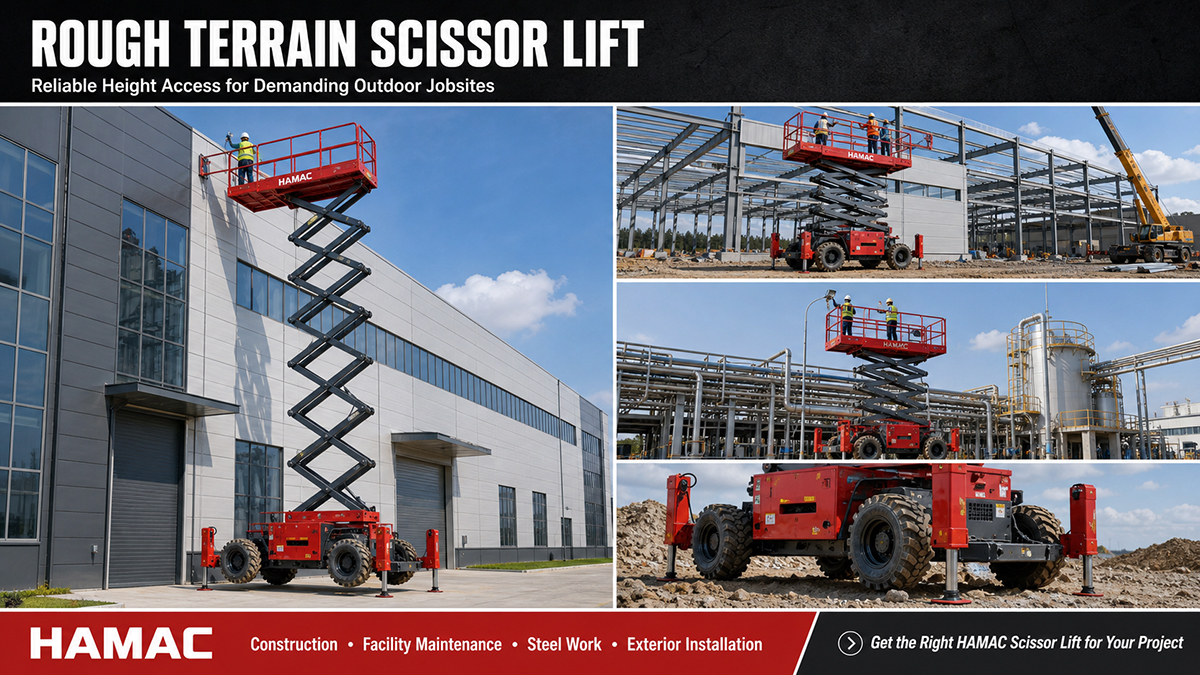
Understanding the main scissor lift components helps buyers select the right model, helps operators complete daily inspections, and makes maintenance planning more effective. The components below are common on most self-propelled electric and rough terrain scissor lifts.
| Component | Main Function |
|---|---|
| Work platform | Provides a raised work area for operators, tools, and approved materials. |
| Guardrails and entry gate | Help protect personnel from falling while working on the platform. |
| Scissor arms | Open and close to raise or lower the platform vertically. |
| Hydraulic cylinders | Provide the force needed to extend the scissor mechanism. |
| Hydraulic pump and oil tank | Create and store hydraulic pressure for platform lifting and lowering. |
| Chassis | Supports the complete machine, including the lifting structure, drive system, and platform. |
| Drive motors or engine | Provide travel power for self-propelled models. |
| Battery pack or diesel engine | Supplies the primary energy source for operation. |
| Platform controls | Allow the operator to control lifting, lowering, driving, steering, and emergency stop functions. |
| Ground controls | Allow a person on the ground to operate or lower the machine when required. |
| Safety devices | Help prevent unsafe operation and may include emergency stop buttons, tilt alarms, pothole protection, and overload protection. |
The work platform is the upper deck where workers stand while performing elevated tasks. It is normally equipped with guardrails, a toe-board, an entry gate, and a non-slip floor. The platform has a rated capacity, which includes the combined weight of personnel, tools, and approved materials.
Many scissor lifts include an extension deck. This sliding platform section gives workers additional horizontal workspace without moving the entire machine. It is useful for tasks such as racking maintenance, ceiling installation, electrical work, ductwork installation, façade work, and construction finishing.
Operators should never exceed the rated platform capacity or place loads beyond the manufacturer’s permitted load position. An overloaded or poorly distributed platform can affect machine stability and create unsafe operating conditions.
The scissor mechanism is the core structure that gives this machine its name. It consists of multiple pairs of heavy-duty steel arms connected by pivot pins. As hydraulic cylinders extend, the arms rotate around their pivot points and lift the platform.
More scissor-arm sections generally allow the platform to reach greater heights. However, machine stability depends on the complete design, including the chassis size, platform capacity, load distribution, safety system, ground condition, and operating limits.
The scissor arms, pivot pins, rollers, welds, and structural connection points should be inspected regularly. Wear, damage, missing pins, hydraulic leaks, or abnormal movement must be corrected before the equipment is used.
The hydraulic system is responsible for generating the lifting force. In a typical scissor lift, an electric motor or engine drives a hydraulic pump. The pump moves hydraulic oil from the tank through valves and hoses to the hydraulic cylinders.
When the operator selects the lift function, hydraulic oil enters the cylinder. The cylinder extends and applies force to the scissor arms. When the operator selects the lower function, the hydraulic system controls oil flow back to the tank, allowing the cylinder to retract and the platform to descend smoothly.
| Hydraulic Component | Function |
|---|---|
| Hydraulic oil tank | Stores the hydraulic oil used in the lifting circuit. |
| Hydraulic pump | Creates oil flow and pressure for lifting. |
| Hydraulic cylinder | Converts hydraulic pressure into mechanical lifting force. |
| Control valves | Direct hydraulic oil to control lifting, lowering, and system protection. |
| Hydraulic hoses and fittings | Carry pressurized oil between system components. |
| Lowering valve | Helps control the platform’s descent speed. |
Even battery-powered electric scissor lifts commonly use a hydraulic lifting system. In other words, “electric” usually refers to the machine’s power source and travel system, while “hydraulic” describes the lifting method.
Electric scissor lifts are normally powered by rechargeable batteries. They are popular for indoor use because they produce no on-site engine exhaust and operate with relatively low noise. They are commonly equipped with compact chassis dimensions and non-marking tires for warehouses, factories, commercial buildings, and other finished-floor environments.
Rough terrain scissor lifts are often powered by diesel engines. These machines are built for outdoor use and may have four-wheel drive, high ground clearance, heavy-duty tires, larger platforms, and stronger gradeability. They are commonly used on construction sites, steel structure projects, industrial plant construction, exterior installation, and infrastructure work.
| Feature | Electric Scissor Lift | Rough Terrain Scissor Lift |
|---|---|---|
| Typical power source | Rechargeable batteries | Diesel engine or outdoor-capable electric system |
| Best environment | Indoor or smooth, level surfaces | Outdoor construction and uneven terrain |
| Noise and emissions | Low noise and no on-site engine exhaust | Higher noise and emissions on diesel models |
| Typical tire type | Non-marking solid tires | Heavy-duty rough terrain tires |
| Typical application | Warehouse, factory, installation and facility maintenance | Construction, exterior installation and demanding jobsites |
The chassis is the lower base of the scissor lift. It supports the lifting structure and contains major operating systems such as batteries, hydraulic components, drive motors, wheels, brakes, steering parts, and control wiring.
Self-propelled scissor lifts can be driven from the platform control panel. The operator can usually move the machine forward or backward, steer left or right, raise or lower the platform, and stop the machine in an emergency. Some models can travel slowly while elevated, but this must always follow the manufacturer’s instructions, permitted surface conditions, platform height limits, and jobsite safety rules.
Electric slab scissor lifts are designed for firm and level ground. Rough terrain scissor lifts use more robust drive systems for outdoor conditions, but they must still operate within their permitted slope, ground, wind, and load limits.
Modern scissor lifts include several safety devices to help reduce operating risks. The exact configuration depends on the model, working height, market regulations, and optional equipment requirements.
| Safety Device | Purpose |
|---|---|
| Emergency stop button | Allows the operator to immediately stop machine functions in an emergency. |
| Emergency lowering system | Allows the platform to be lowered if normal controls or power are unavailable. |
| Tilt alarm | Warns the operator when the machine is on excessive slope or uneven ground. |
| Pothole protection | Helps improve stability on many indoor self-propelled scissor lift models when elevated. |
| Overload protection | Warns or prevents lifting when the platform load exceeds the permitted capacity. |
| Guardrails and toe-boards | Help protect workers and reduce the risk of falling objects. |
| Braking system | Helps keep the machine secure when it is stopped. |
Scissor lifts are commonly treated as mobile supported scaffold work platforms in OSHA guidance. Safe use depends on trained operators, daily inspection, correct ground conditions, compliance with capacity limits, appropriate hazard assessment, and following the manufacturer’s operating manual. [71]
Only trained and authorized personnel should operate a scissor lift. Before each shift, inspect the machine and the work area. Check the platform, guardrails, entry gate, tires, wheels, hydraulic hoses, battery or engine condition, controls, emergency stop, alarms, and visible structural parts.
Before raising the platform, make sure the ground is firm and level, the machine is within its permitted operating limits, and the work area is clear of overhead hazards. Look for electrical lines, ceiling beams, pipework, sprinkler systems, door tracks, racking, traffic, holes, trenches, soft ground, and other obstructions.
Never exceed the rated capacity, use ladders or boxes on the platform, bypass safety devices, or operate the lift on unsuitable ground. Always follow the manufacturer’s manual, local safety requirements, and the site’s work-at-height procedures.
A standard scissor lift mainly raises and lowers vertically. Some models have an extension deck that provides limited extra horizontal workspace. For significant horizontal outreach over obstacles, an articulating boom lift or telescopic boom lift may be a better choice.
Yes. Most electric scissor lifts use batteries and electric motors for power, while a hydraulic pump and cylinders provide the lifting force. This system is commonly called electro-hydraulic lifting.
Some self-propelled models can travel slowly while elevated, subject to the manufacturer’s operating instructions and operating limits. Ground condition, platform height, load, slope, and local safety rules must always be considered.
Platform height is the maximum height of the platform floor above the ground. Working height is the estimated height that an operator can reach while standing on the raised platform. Always use the manufacturer’s specification and evaluate the actual task before selecting a model.
A pre-operation inspection should be completed before use or at the beginning of each shift. Periodic maintenance and detailed inspections should follow the manufacturer’s maintenance schedule, local regulations, operating hours, and the machine’s work intensity.
HAMAC provides electric scissor lifts for indoor warehouse, factory, maintenance, and installation work, as well as rough terrain scissor lifts for outdoor construction and demanding jobsites.
Tell us your required working height, platform capacity, ground condition, platform dimensions, access width, and application. Our team can recommend a suitable model and provide technical specifications, product brochures, container-loading information, and a quotation.
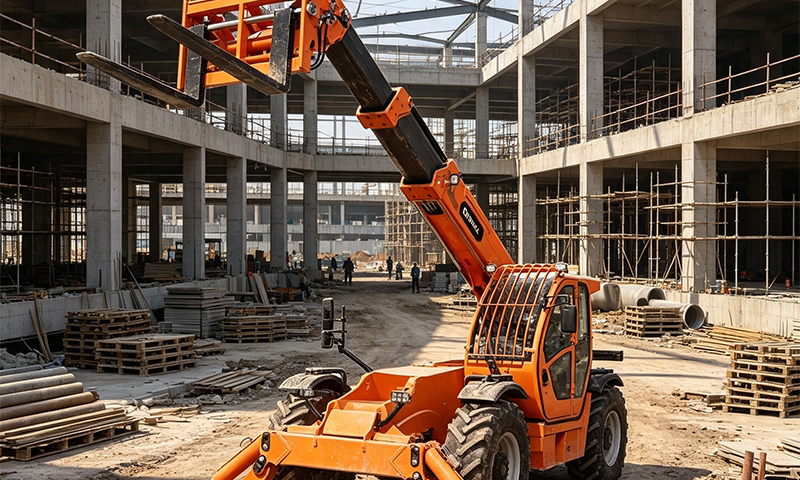
This case study describes how an HT5014 telehandler supports outdoor storage rack replenishment besid
Free Consultation >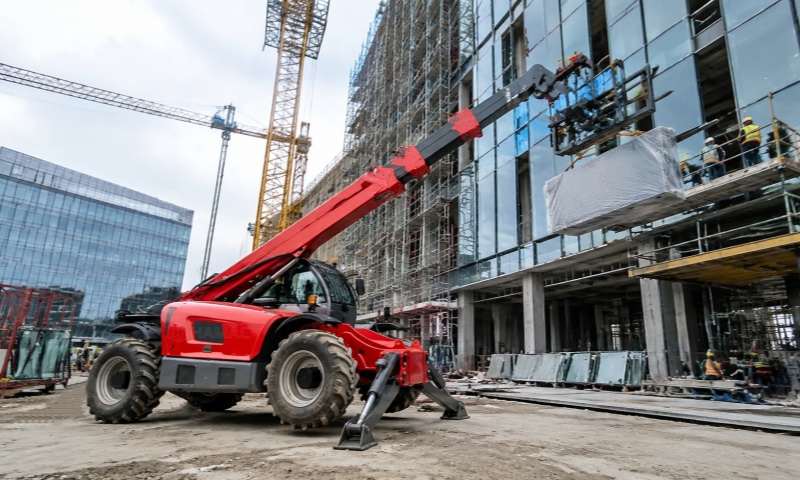
On a commercial building project, an HT4010 telehandler is used to assist facade and curtain wall ins
Free Consultation >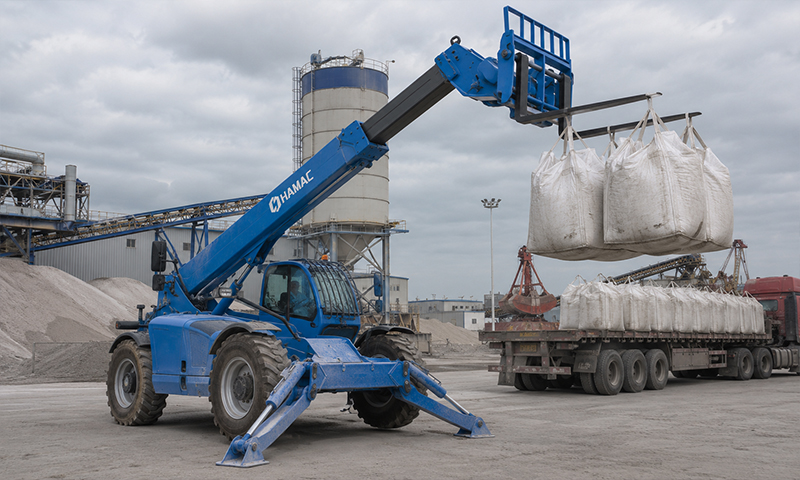
At inland port terminals, a high‑capacity telehandler is used to transfer bulk materials between tr
Free Consultation >Please fill out the form, and we can satisfy any of your needs including equipment selection, scheme design, technical support, or after-sales service. We will contact you as soon as possible.