Scissor Lift
Aerial Work Platforms
Max. Working Height:6–32m
S.W.L (Safe Working Load):230-1000kg
Consult now






Scissor lifts and boom lifts are both widely used for working at height, but they are designed for different jobsite requirements. A scissor lift raises its platform mainly in a straight vertical direction. A boom lift uses an extendable arm to provide both vertical height and horizontal outreach.
The right choice depends on where the work area is located. If workers need to perform tasks directly above a stable and level surface, a scissor lift is often the more efficient solution. If workers need to reach over obstacles, access building façades, work around machinery, or position the platform away from the machine base, a boom lift is usually the better choice.
Before selecting either machine, buyers should evaluate working height, horizontal outreach, platform capacity, ground conditions, access width, power source, wind limits, and the type of work to be completed.
| Feature | Scissor Lift | Boom Lift |
|---|---|---|
| Primary movement | Vertical lifting | Vertical lifting plus horizontal outreach |
| Lifting structure | Crisscross scissor arms | Articulating or telescopic boom arm |
| Horizontal reach | Very limited; extension deck may provide extra workspace | Significant outreach for reaching over or around obstacles |
| Platform size | Usually larger platform with more workspace | Usually smaller basket or work platform |
| Platform capacity | Often suitable for multiple workers, tools, and materials | Typically designed for fewer workers and lighter tool loads |
| Best work position | Directly above the machine | Above, beyond, over, or around the machine |
| Typical environment | Warehouses, factories, indoor maintenance, level construction areas | Building façades, outdoor maintenance, utility work, complex access areas |
| Machine footprint | Often compact, especially electric slab models | Usually longer and larger because of the boom structure |
| Typical power options | Electric battery, diesel, or hybrid depending on model | Electric, diesel, hybrid, or bi-energy depending on model |
Scissor lifts prioritize stable vertical access and platform capacity, while boom lifts prioritize flexible positioning and horizontal reach. Telescopic boom lifts are specifically engineered to provide greater horizontal outreach than other aerial-platform types. [74][75]
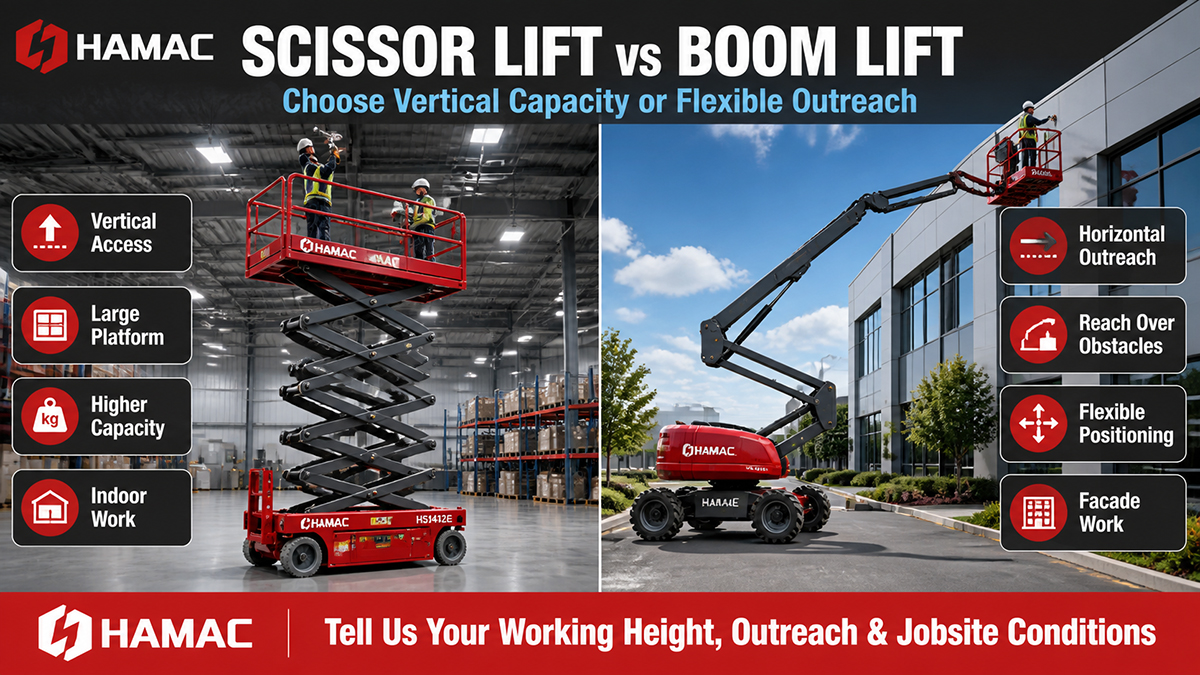
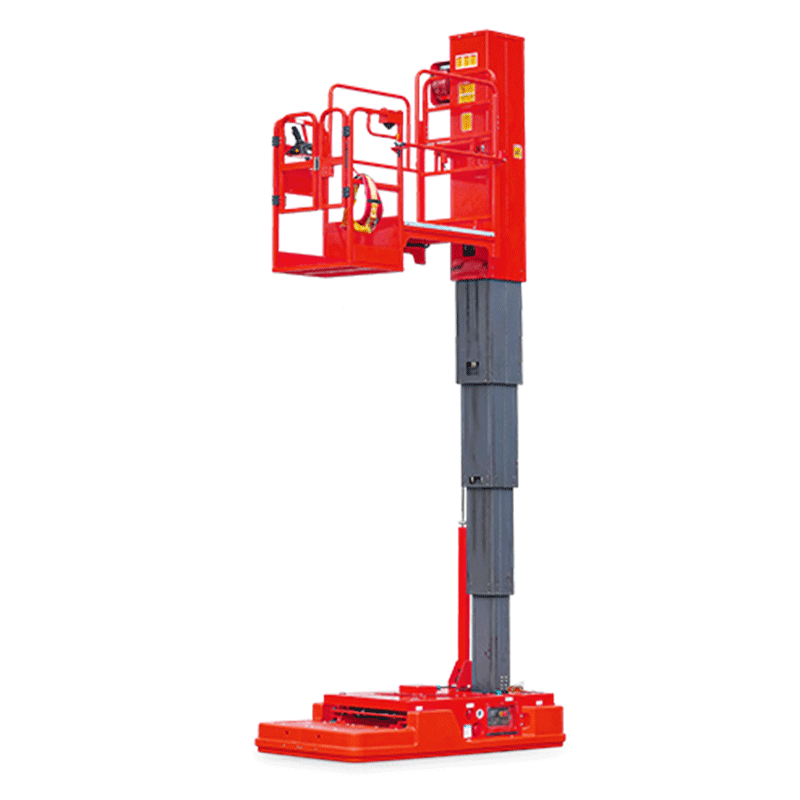
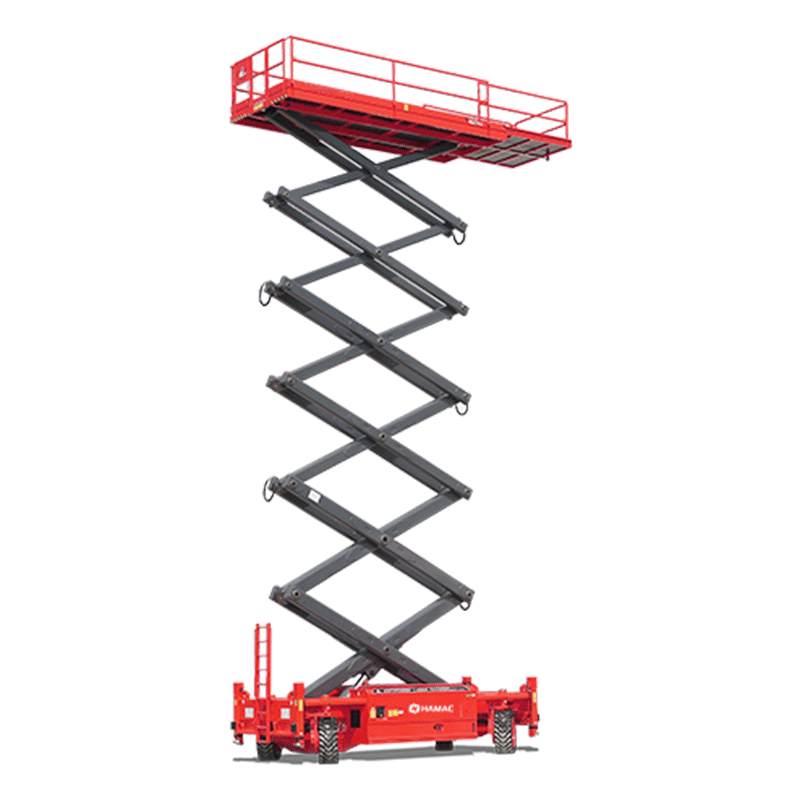
A scissor lift is a mobile elevated work platform that raises workers, tools, and approved materials vertically. The machine uses crossed metal arms that open and close in a scissor-like pattern. When the scissor mechanism extends, it lifts the work platform upward.
Scissor lifts are a practical choice when workers need to complete tasks directly above the machine. They usually provide a larger working deck than boom lifts, allowing more room for operators, tools, materials, and equipment within the rated platform capacity.
Electric scissor lifts are commonly used indoors on smooth and level surfaces. They are suitable for warehouses, factories, logistics centers, shopping malls, airports, workshops, and indoor installation projects. Rough terrain scissor lifts are used for more demanding outdoor applications and may include larger tires, higher ground clearance, four-wheel drive, and larger platforms.
A boom lift is an elevated work platform that uses an extendable arm, also called a boom, to position the platform at height and away from the machine base. This allows operators to reach areas that cannot be accessed by a vertical-only machine.
Boom lifts are commonly divided into two main types: articulating boom lifts and telescopic boom lifts. An articulating boom lift has multiple sections connected by joints, allowing it to move up, over, and around obstacles. A telescopic boom lift has a straight extendable arm that provides long horizontal reach and is often selected for high or distant work areas.
Telescopic boom lifts are especially suitable when the project requires maximum horizontal outreach together with significant working height. [74]
The biggest difference between a scissor lift and a boom lift is the way the platform reaches the work area. A scissor lift moves mainly straight up and down. A boom lift can move upward and outward, allowing the operator to work above, beyond, or around obstacles.
| Jobsite Situation | Recommended Equipment | Reason |
|---|---|---|
| Replace warehouse lights directly above an aisle | Scissor lift | The work area is directly overhead and requires a stable platform. |
| Install ceiling cable trays in a factory | Scissor lift | Workers need vertical access and space for tools and materials. |
| Repair an exterior building façade above landscaping | Articulating boom lift | The platform must reach over obstacles and position beside the façade. |
| Access a high structure from a distant position | Telescopic boom lift | A long straight boom provides maximum horizontal outreach. |
| Perform steel installation around structural obstacles | Articulating boom lift | The jointed boom can reach around beams and structures. |
| Complete indoor racking maintenance | Electric scissor lift | Compact dimensions and vertical lifting suit warehouse environments. |
Use a scissor lift when the work is vertical and concentrated in one area. Choose a boom lift when the operator must work over an obstruction, around a structure, or at a location that is not directly above the machine. [76][79]
Scissor lifts usually have a larger platform than boom lifts. This is one reason they are popular for installation, maintenance, warehouse, and construction-finishing work. A larger platform gives operators room to carry tools, cable trays, lighting components, ducts, panels, and other approved materials within the rated capacity.
Boom lifts normally use a smaller basket or platform positioned at the end of the boom. This compact platform supports flexible access, but it usually has less space for bulky materials. Boom lifts are often better for one or two workers using hand tools, inspection equipment, or smaller installation materials.
Always check the rated platform capacity for the exact model. Capacity can vary according to working height, platform extension status, load distribution, and manufacturer specifications. Never exceed the permitted load or use the machine outside its intended application.
Scissor lifts are commonly classified by power source, terrain capability, working height, platform dimensions, and intended application.
| Scissor Lift Type | Best For | Typical Features |
|---|---|---|
| Electric slab scissor lift | Indoor work on level surfaces | Battery power, non-marking tires, compact chassis, low noise |
| Narrow electric scissor lift | Restricted aisles, doors, elevators, and compact indoor spaces | Narrow width, small turning radius, indoor maneuverability |
| Rough terrain scissor lift | Outdoor construction and uneven ground | Large tires, higher clearance, stronger drive system, larger platform |
| Diesel scissor lift | Outdoor work requiring strong drive power | Diesel engine, rugged chassis, high capacity, construction-oriented design |
Boom lifts are generally divided into articulating boom lifts and telescopic boom lifts. The right type depends on whether the operator needs to work around obstacles or reach a distant location in a straight line.
| Boom Lift Type | Best For | Typical Features |
|---|---|---|
| Articulating boom lift | Reaching over walls, machinery, trees, roofs, pipes, and other obstacles | Multiple boom sections with joints, flexible up-and-over movement |
| Telescopic boom lift | Maximum horizontal outreach and high straight-line access | Straight extendable boom, long reach, suitable for distant work areas |
| Electric boom lift | Indoor or low-emission projects on suitable surfaces | Battery power, low noise, reduced on-site emissions |
| Rough terrain boom lift | Outdoor construction and uneven jobsite conditions | Diesel power, rugged tires, higher clearance, outdoor traction |
Jobsite ground conditions are essential when choosing between a scissor lift and a boom lift. A compact electric scissor lift is designed for smooth, firm, and level surfaces such as warehouse floors, concrete slabs, finished industrial floors, and level paved areas.
For outdoor projects with uneven terrain, mud, gravel, slopes, obstacles, or unpaved surfaces, a rough terrain scissor lift or rough terrain boom lift may be required. These machines are built with stronger drive systems, more aggressive tires, higher ground clearance, and outdoor-oriented chassis designs.
Boom lifts generally need more operating space because the boom arm extends beyond the chassis. Scissor lifts can be easier to use in narrow aisles and restricted indoor environments, especially compact electric models. However, a scissor lift must be positioned directly below the elevated work area, while a boom lift can often be positioned at a safer or more convenient distance.
| Application | Preferred Equipment | Why |
|---|---|---|
| Warehouse lighting maintenance | Electric scissor lift | Direct vertical access, compact size, clean indoor operation |
| Factory equipment maintenance | Electric scissor lift or articulating boom lift | Choose scissor for overhead work; choose boom for work around machinery |
| Building façade cleaning or repair | Articulating boom lift | Allows workers to reach over sidewalks, landscaping, and lower structures |
| Roof installation or repair | Telescopic or articulating boom lift | Provides outreach to roof edges and elevated exterior work areas |
| Steel structure installation | Rough terrain scissor lift or boom lift | Depends on whether the work is vertical or requires obstacle clearance |
| HVAC ductwork installation | Electric scissor lift | Large platform supports workers, tools, and installation materials |
| Bridge inspection and maintenance | Articulating or telescopic boom lift | Flexible reach supports difficult access around structures |
A scissor lift is often more cost-effective when the work is directly overhead, the required height is within the available model range, and a larger platform is useful. The machine can provide efficient vertical access for multiple workers and materials without paying for unnecessary horizontal outreach.
A boom lift can be more cost-effective when outreach is essential. Selecting a scissor lift for a job that requires operators to reach over obstacles may create delays, require repeated machine repositioning, or make the task impossible. In that situation, the boom lift’s higher flexibility can improve productivity and reduce project time.
The lowest purchase or rental price is not always the best decision. Consider total operating efficiency, access time, machine repositioning, labor requirements, fuel or charging needs, transportation, and the ability to complete the work safely.
Start with the position of the work area. If the work point is directly above the machine and the ground is suitable, a scissor lift is often the right choice. If the work point is behind an obstacle, above a roof edge, beside a building façade, or far from the machine base, choose a boom lift.
| Selection Question | If the Answer Is Yes | Recommended Equipment |
|---|---|---|
| Is the work area directly above the machine? | You only need vertical lifting | Scissor lift |
| Do you need to reach over walls, equipment, trees, or structures? | Horizontal outreach is required | Articulating boom lift |
| Do you need maximum straight-line horizontal reach? | The work area is far from the machine base | Telescopic boom lift |
| Do multiple workers and materials need to be carried? | A spacious platform and higher capacity are important | Scissor lift |
| Is the worksite a narrow indoor warehouse aisle? | Compact dimensions and maneuverability are essential | Narrow electric scissor lift |
| Is the worksite an uneven outdoor construction area? | Rugged mobility and terrain capability are required | Rough terrain scissor lift or rough terrain boom lift |
| Do you need to work beside a tall building façade? | The platform must be positioned away from the base | Boom lift |
Both scissor lifts and boom lifts must be operated by trained and authorized personnel. Operators should inspect the machine before use, follow the manufacturer’s operating manual, respect rated capacity limits, and evaluate jobsite hazards before raising the platform.
Important hazards include unstable ground, excessive slopes, holes, trenches, overhead obstructions, electrical lines, vehicle traffic, strong winds, falling objects, and insufficient clearance. The machine must be selected according to the actual work environment rather than only by its maximum working height.
When working indoors, check for overhead beams, racking, sprinklers, lights, cable trays, doors, forklifts, and pedestrian routes. When working outdoors, inspect terrain, wind, soil condition, slopes, power lines, nearby structures, and safe machine positioning.
Neither machine is always better. A scissor lift is better for direct vertical access, larger platform space, and work on stable surfaces. A boom lift is better when the project requires horizontal outreach, work over obstacles, or flexible positioning around structures.
No. A standard scissor lift raises mainly straight upward. Some models have extension decks that provide limited extra workspace, but they cannot replace the horizontal outreach of a boom lift.
Yes. Electric boom lifts can be used indoors when the facility has sufficient floor capacity, access space, ceiling clearance, and safe operating conditions. For direct overhead work in narrow spaces, however, a compact electric scissor lift is often more practical.
Scissor lifts often provide larger platforms and can offer higher capacity for multiple workers, tools, and approved materials. However, capacity varies by model, so always confirm the manufacturer’s rated platform capacity before selecting equipment.
An articulating boom lift has multiple hinged sections and is designed to reach up, over, and around obstacles. A telescopic boom lift has a straight extendable boom and is designed for maximum direct horizontal outreach. [74]
HAMAC provides electric scissor lifts for indoor warehouse, factory, maintenance, and installation work, as well as rough terrain scissor lifts for outdoor construction and demanding jobsite conditions.
Tell us your required working height, horizontal outreach, platform capacity, ground condition, application, and access limitations. Our team can help you determine whether a scissor lift or boom lift is the better solution and provide suitable product recommendations, technical specifications, container-loading information, and a quotation.
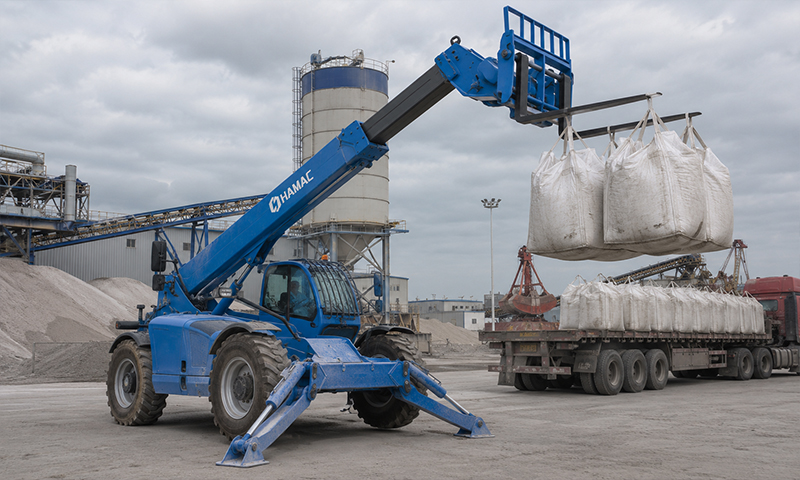
At inland port terminals, a high‑capacity telehandler is used to transfer bulk materials between tr
Free Consultation >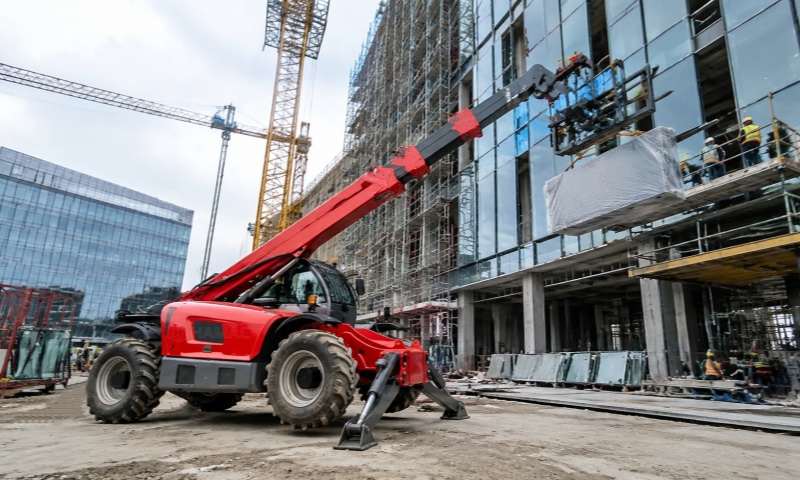
On a commercial building project, an HT4010 telehandler is used to assist facade and curtain wall ins
Free Consultation >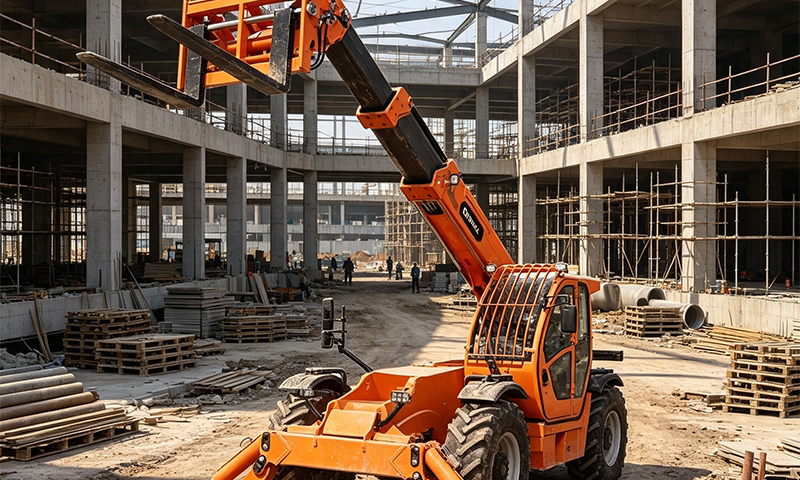
This case study describes how an HT5014 telehandler supports outdoor storage rack replenishment besid
Free Consultation >Please fill out the form, and we can satisfy any of your needs including equipment selection, scheme design, technical support, or after-sales service. We will contact you as soon as possible.