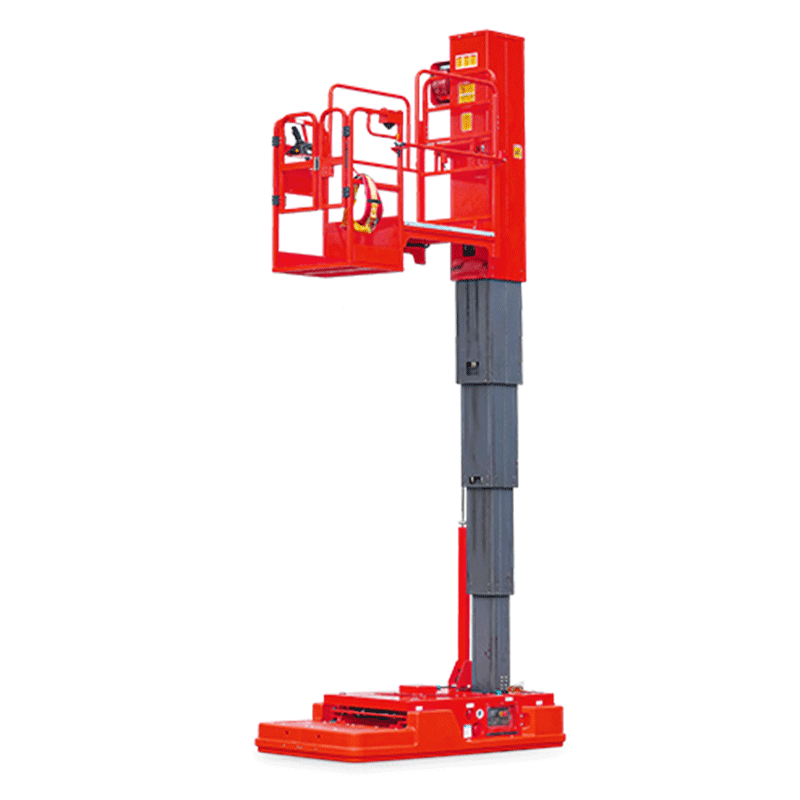
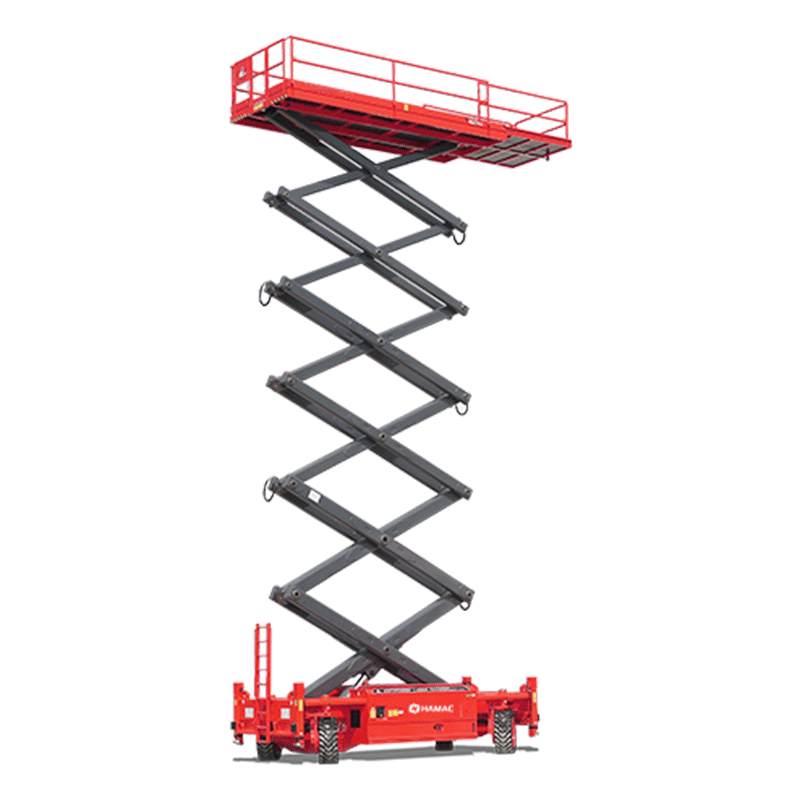
Scissor Lift
Aerial Work Platforms
Max. Working Height:6–32m
S.W.L (Safe Working Load):230-1000kg
Consult now






Scissor lifts are available in many sizes, from compact electric models for low-level indoor work to large rough terrain machines for demanding outdoor construction projects. When choosing a scissor lift, buyers should understand three key specifications: platform height, working height, and platform capacity.
These figures are closely related, but they do not mean the same thing. Platform height tells you how high the platform floor can rise above the ground. Working height estimates how high an operator can safely reach while standing on that raised platform. Platform capacity tells you the maximum combined weight of workers, tools, and approved materials that the platform can carry.
A correct scissor lift selection must consider more than height. The right machine should also match the jobsite surface, indoor or outdoor environment, access width, platform dimensions, extension deck requirements, machine weight, transport method, and local safety requirements.
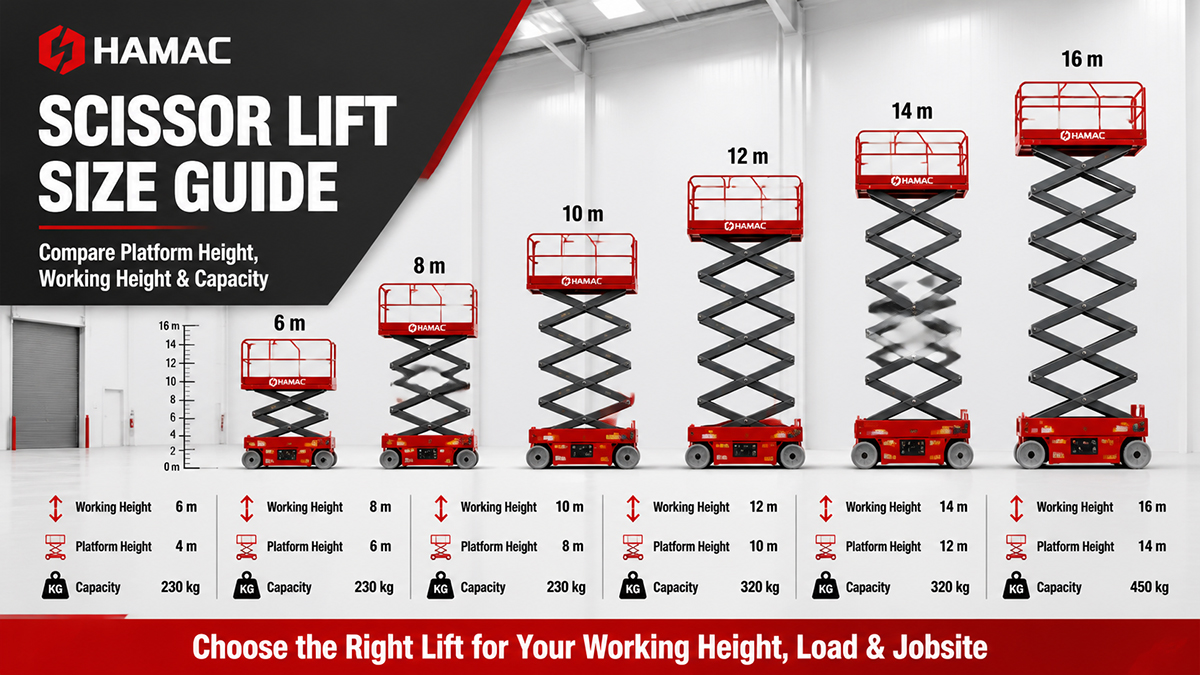
| Specification | What It Means | Why It Matters |
|---|---|---|
| Platform height | The maximum height of the platform floor above ground level. | Shows the actual standing height of the operator. |
| Working height | The estimated maximum height an operator can reach while standing on the elevated platform. | Helps buyers match the lift to the target work area, such as a ceiling, light, pipe, façade, or structure. |
| Platform capacity | The maximum permitted combined load on the platform. | Ensures the lift can safely carry operators, tools, equipment, and approved materials. |
Platform height is the maximum vertical distance from the ground to the platform floor when the scissor lift is fully raised. It represents the height at which the operator is standing, not the total height that the operator can reach with their hands or tools.
For example, if a scissor lift has a maximum platform height of 8 m, the platform floor can rise to 8 m above the ground. The operator stands at that 8 m level while performing maintenance, installation, inspection, cleaning, or construction work.
Platform height is an important technical specification because it is used to compare machine classes, evaluate the lift structure, and identify whether the machine can physically elevate the platform to the required level.
| Example Specification | Meaning |
|---|---|
| Maximum platform height: 5.8 m | The platform floor rises up to 5.8 m above ground level. |
| Maximum platform height: 8.0 m | The operator stands 8.0 m above ground level when the platform is fully raised. |
| Maximum platform height: 12.0 m | The platform floor reaches a maximum elevation of 12.0 m. |
Platform height is the machine’s actual platform-floor elevation. It does not include the height of the operator, their outstretched arms, or the tool being used. [94]
Working height is the approximate height that an operator can reach while standing on the elevated platform. In many aerial-work-platform product specifications, working height is calculated by adding approximately 2 m to the maximum platform height.
The calculation is commonly shown as:
Working Height = Maximum Platform Height + 2 m
For example, a scissor lift with a maximum platform height of 8 m may be listed with a working height of approximately 10 m. The 2 m difference represents the approximate standing reach of an operator working from the platform.
| Platform Height | Approximate Working Height | Typical Application |
|---|---|---|
| 4 m | 6 m | Low-level maintenance, shelving and lighting work |
| 6 m | 8 m | Warehouses, workshops and indoor maintenance |
| 8 m | 10 m | Factory installation, high racking and ceiling maintenance |
| 10 m | 12 m | Commercial buildings, MEP work and larger warehouse projects |
| 12 m | 14 m | High-bay facilities, industrial maintenance and construction work |
| 14 m | 16 m | High-ceiling projects, façade work and outdoor installation |
| 16 m | 18 m | Demanding outdoor construction and high-access work |
Working height is generally calculated as platform height plus approximately 2 m, but buyers should always confirm the manufacturer’s specification and assess the actual work task. [85][94]
Platform height and working height should never be used as if they are the same specification. A buyer who only checks platform height may select a machine that does not provide enough reach for the actual job. A buyer who only checks working height may misunderstand the physical position of the platform floor.
| Point of Comparison | Platform Height | Working Height |
|---|---|---|
| Measurement point | Ground level to platform floor | Ground level to the operator’s approximate reachable work point |
| Includes operator reach | No | Yes, usually an estimated additional 2 m |
| Best for | Technical machine comparison and platform elevation planning | Choosing equipment for a required work location |
| Example | 8 m platform height | Approximately 10 m working height |
For a warehouse ceiling light located at 9.5 m above the floor, a machine with approximately 10 m working height may be suitable if the actual task, operator reach, tool length, platform position, and clearance requirements have been checked. A machine with only 8 m working height would usually be too low for this application.
Platform capacity, also called rated load capacity or safe working load, is the maximum combined weight that the platform can safely carry under the manufacturer’s specified operating conditions. This includes all people, tools, personal protective equipment, materials, accessories, and equipment placed on the platform.
For example, if a scissor lift has a rated platform capacity of 320 kg, the total combined weight of two operators, their tools, cable trays, installation materials, and other approved items must not exceed 320 kg.
Capacity must be treated as a strict operating limit. Exceeding the rated platform load can affect stability, damage equipment, reduce safety margins, and create an unsafe working condition. Capacity also assumes that the load is positioned and distributed according to the machine manufacturer’s instructions.
| Items on the Platform | Example Weight |
|---|---|
| Operator 1 with PPE | 85 kg |
| Operator 2 with PPE | 85 kg |
| Hand tools and tool bag | 30 kg |
| Installation materials | 80 kg |
| Total platform load | 280 kg |
In this example, a 230 kg capacity scissor lift would not be suitable. A model with at least 320 kg rated capacity may be required, subject to the manufacturer’s load-distribution rules, extension-deck limits, and application conditions.
Many scissor lifts include an extension deck, also called a roll-out platform extension. It provides additional workspace and limited extra horizontal access without repositioning the entire machine. This feature is useful for racking work, ceiling installation, ductwork, electrical cable trays, façade finishing, and maintenance tasks.
However, the extension deck may have a separate lower capacity limit. Even if the main platform has a high rated capacity, the extension deck may only allow a limited part of that total load. Operators should never place heavy materials on the extended deck without checking the model-specific capacity plate and operating manual.
| Capacity Type | What It Covers | Important Check |
|---|---|---|
| Main platform capacity | Total permitted weight on the primary platform area | Includes operators, tools, materials and approved accessories |
| Extension deck capacity | Maximum permitted load on the extended platform section | May be lower than total platform capacity |
| Maximum occupants | Permitted number of people on the platform | May differ for indoor and outdoor operation |
| Load distribution | How weight is positioned on the platform | Heavy loads should not be concentrated on one side or at the platform edge |
On many scissor lift models, the extension deck has a lower permitted capacity than the main platform. The total rated load includes people, tools, and materials across both the main platform and extension area. [84]
Scissor lift sizes are often grouped by working height. Compact electric scissor lifts are commonly used for lower indoor heights, while larger electric and rough terrain models are selected for high-bay warehouses, industrial plants, construction sites, and outdoor installation projects.
| Working Height Class | Approximate Platform Height | Typical Lift Type | Common Applications |
|---|---|---|---|
| 6 m to 8 m | 4 m to 6 m | Compact electric scissor lift | Low-level maintenance, shelving, stock work, retail and workshop tasks |
| 8 m to 10 m | 6 m to 8 m | Electric slab scissor lift | Warehouse maintenance, lighting, racking, factory work and installation |
| 10 m to 12 m | 8 m to 10 m | Medium-height electric scissor lift | High warehouse work, MEP installation, ductwork and facility maintenance |
| 12 m to 14 m | 10 m to 12 m | Large electric or rough terrain scissor lift | High-bay facilities, industrial plants, construction and exterior work |
| 14 m to 16 m | 12 m to 14 m | High-reach scissor lift | Industrial maintenance, high ceilings, façade work and construction projects |
| 16 m to 18 m or more | 14 m to 16 m or more | Rough terrain or high-capacity scissor lift | Outdoor construction, steel work, large industrial projects and demanding access work |
Scissor lift working heights commonly range from approximately 6 m to 18 m or more, depending on machine design and application. Compact indoor electric models generally cover lower height classes, while larger rough terrain models are designed for higher outdoor access requirements. [90][92]
Capacity varies significantly between compact indoor lifts, wide-deck electric lifts, and rough terrain construction models. The figures below are general planning references only. Always check the exact product specification, capacity plate, operating manual, and applicable local regulations before purchase or operation.
| Lift Type | Typical Capacity Range | Typical Users and Applications |
|---|---|---|
| Compact electric scissor lift | Approximately 230 kg to 300 kg | One or two operators, hand tools, light maintenance materials |
| Standard electric scissor lift | Approximately 230 kg to 450 kg | Warehouse work, facility maintenance, electrical installation and indoor construction |
| Wide-deck electric scissor lift | Approximately 350 kg to 550 kg | Multiple workers, larger tools, ducts, panels and installation materials |
| Rough terrain scissor lift | Approximately 350 kg to 900 kg or more | Outdoor construction, steel work, exterior installation and demanding projects |
| Heavy-duty industrial scissor lift | Approximately 700 kg to 1,400 kg or more | Specialized material handling or heavy industrial lifting applications |
Compact scissor lifts commonly begin at around 230 kg capacity, while heavy-duty rough terrain and industrial models can provide much higher ratings. Capacity values vary by model and should only be confirmed from the manufacturer’s technical documentation. [87][88]
Working height and capacity are important, but they are not enough to select the correct scissor lift. A machine may meet the required height but still be unsuitable if it cannot pass through a doorway, move between racking aisles, fit inside an elevator, or operate on the available floor surface.
| Specification | Why It Matters | Typical Selection Question |
|---|---|---|
| Overall width | Determines whether the lift can pass through doors, gates and narrow aisles. | Can the machine enter the warehouse, workshop or work zone? |
| Overall length | Affects transport, turning space and storage requirements. | Is there enough room to turn and position the machine? |
| Stowed height | Important for door clearance, elevators, trucks and storage. | Can the machine pass under the entrance or be transported in the required vehicle? |
| Platform dimensions | Determine workspace for people, tools and materials. | Do operators need a compact platform or a wide deck with an extension? |
| Machine weight | Affects floor loading, transport method and loading capacity. | Can the floor, elevator, truck or trailer support the machine weight? |
| Ground clearance | Important for outdoor travel over uneven ground and obstacles. | Will the machine travel over curbs, debris, uneven ground or construction surfaces? |
| Gradeability | Shows the machine’s ability to climb slopes while stowed. | Does the route include ramps or inclined access roads? |
| Drive configuration | Determines traction and terrain performance. | Is two-wheel drive sufficient, or is four-wheel drive required? |
Indoor and outdoor projects require different scissor lift configurations. Indoor customers usually prioritize compact size, low noise, non-marking tires, battery power, and easy movement through narrow access points. Outdoor customers often prioritize ground clearance, traction, platform capacity, large tires, rugged drive systems, and stability on approved terrain.
| Selection Factor | Indoor Electric Scissor Lift | Outdoor Rough Terrain Scissor Lift |
|---|---|---|
| Ground condition | Smooth, firm and level concrete or finished floor | Uneven, unpaved or challenging terrain within model limits |
| Machine width | Often narrow for warehouse aisles and access doors | Usually wider for outdoor stability and rugged travel |
| Power source | Battery electric |
Usually diesel, |
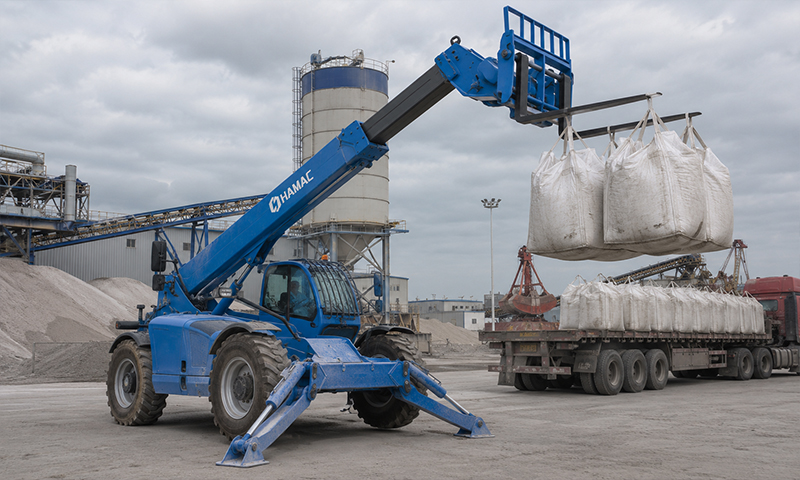
At inland port terminals, a high‑capacity telehandler is used to transfer bulk materials between tr
Free Consultation >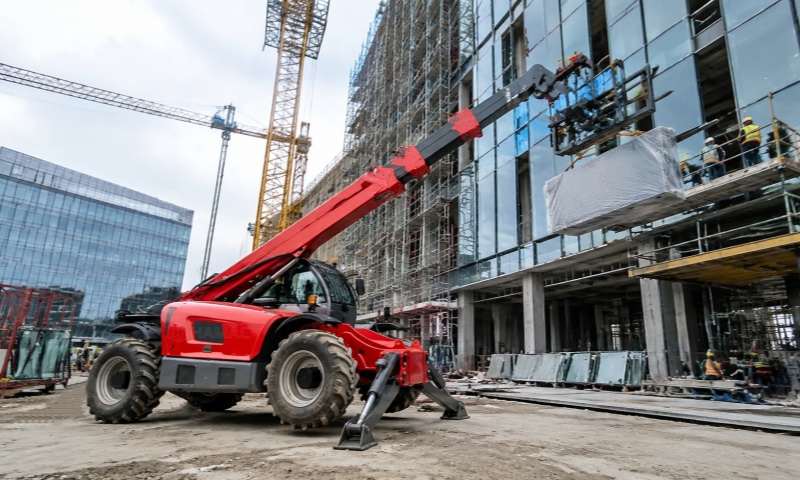
On a commercial building project, an HT4010 telehandler is used to assist facade and curtain wall ins
Free Consultation >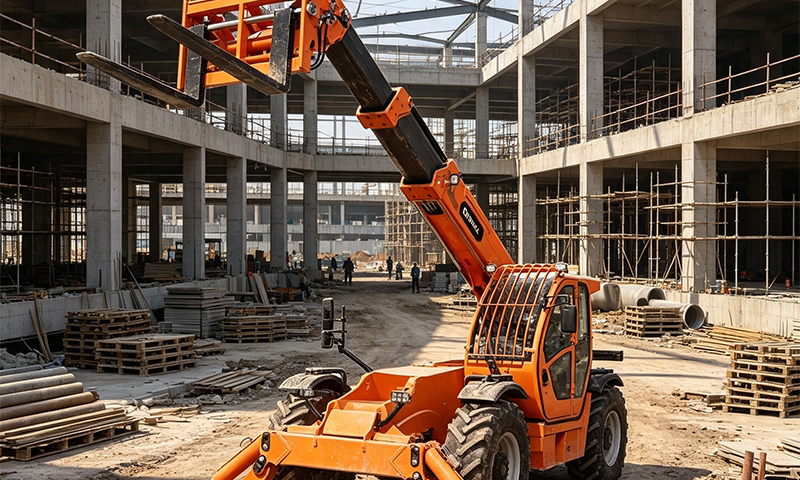
This case study describes how an HT5014 telehandler supports outdoor storage rack replenishment besid
Free Consultation >Please fill out the form, and we can satisfy any of your needs including equipment selection, scheme design, technical support, or after-sales service. We will contact you as soon as possible.