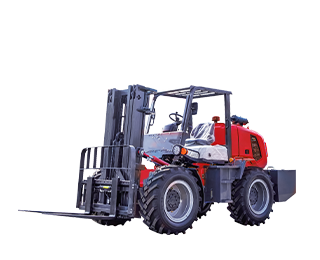
FD35‑RTS
Rough Terrain Forklifts
Rated load capacity: 3,500 kg
Maximum lift height: 4,500 mm
Consult now






Choosing the right telehandler is not simply a matter of selecting the highest lifting capacity. The best telescopic handler for your project depends on the actual load weight, required lift height, forward reach, terrain conditions, attachment needs, and available operating space.
This telehandler selection guide compares popular HAMAC models from compact 2.5 ton machines to heavy-duty 5 ton rough terrain telehandlers. It is designed to help contractors, rental companies, building-material suppliers, farms, industrial yards, and infrastructure projects select a practical machine for safe and productive material handling.
Choose a compact model such as the HT2506 when you need efficient pallet handling and moderate lift height in tighter work areas. Select a mid-range model such as the HT3510, HT4007, HT4010, or HT4014 when your project requires a balance of lifting capacity, reach, maneuverability, and operating cost. Choose a heavy-duty model such as the HT5010, HT5014, or HT5018 when you need to lift up to 5,000 kg and place materials at higher elevations on large construction, industrial, or infrastructure sites.
Most importantly, review the rated load chart for the exact working height and forward reach required. A telehandler's maximum rated capacity is normally measured with the boom retracted; available lifting capacity decreases as the boom extends upward or forward.
Start with the heaviest load you need to handle, including pallets, forks, attachments, lifting accessories, and packaging. Avoid selecting a machine based only on its maximum advertised capacity. Instead, choose a telehandler that provides sufficient capacity at the actual height and reach required by your application.
Lift height determines how high the machine can place a load. Forward reach determines how far the boom can extend from the front of the telehandler. Both are important when loading upper floors, working beside scaffolding, placing materials over obstacles, or reaching into trucks and storage areas.
For example, a 6 m telehandler can be an efficient solution for ground-level and lower-rise handling, while a 10 m to 14 m telehandler is better suited to multi-storey construction and elevated material placement. For high-reach applications, an 18 m telehandler offers greater vertical access, but operators must always follow the applicable load chart and site safety procedures.
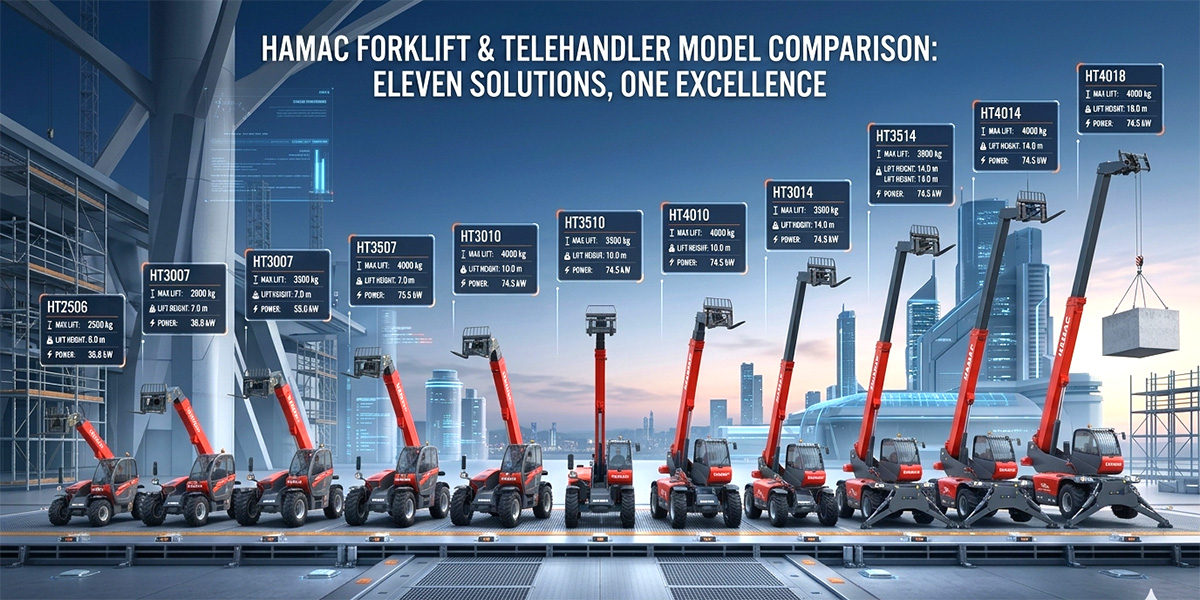
The following table provides a practical starting point for comparing different telehandler sizes. Final selection should always be confirmed against the latest technical specifications, load chart, attachment configuration, and local operating conditions.
| Model | Rated Capacity | Maximum Lift Height | Best-Fit Applications | Why Choose It |
|---|---|---|---|---|
| HT2506 | 2,500 kg | 6 m | Low-rise construction, pallet handling, building-material yards, farms | Compact and practical for everyday lifting where extreme height is not required. |
| HT3510 | 3,500 kg class | 10 m class | Commercial construction, formwork, masonry, general rental work | A balanced choice for contractors needing more height and capacity than compact models. |
| HT4007 | 4,000 kg | 7 m | Heavy pallet movement, industrial yards, warehouses with outdoor access | Prioritizes lifting strength for medium-height, heavy-duty handling tasks. |
| HT4010 | 4,000 kg class | 10 m class | Mid-rise construction, loading, concrete materials, steel handling | Combines strong capacity with useful working height for versatile jobsite use. |
| HT4014 | 4,000 kg | 13.8 m | Concrete, steel structures, upper-floor material placement | A high-reach 4 ton solution for projects that require elevated placement without moving to a 5 ton class. |
| HT5010 | 5,000 kg | Approximately 10 m | Heavy construction materials, precast products, industrial loading | Ideal when high lifting capacity is more important than maximum vertical reach. |
| HT5014 | 5,000 kg | Approximately 14 m | Multi-storey construction, infrastructure, high racks, heavy elevated loads | Offers a strong combination of 5 ton capacity, 14 m lift height, 4WD, and 4-wheel steering. |
| HT5018 | 5,000 kg | 18 m | High-rise material placement, tall industrial structures, major infrastructure projects | Best for projects where heavy loads must be placed at significant height. |
For residential and commercial construction, start by considering pallet weights, building height, scaffold layout, and the distance from the machine to the placement point. The HT2506 is a practical choice for lower-rise material handling. For mid-rise projects, the HT3510, HT4010, and HT4014 provide more height and flexibility. For heavy concrete, steel, formwork, or high-level placement, the HT5014 and HT5018 offer higher capacity and reach.
A rough terrain telehandler should be configured for the jobsite, not just the load. For mud, gravel, slopes, and unfinished construction surfaces, look for 4WD drive, off-road tires, adequate ground clearance, stable chassis design, and steering modes suitable for confined areas. Four-wheel steering can improve maneuverability and help operators position materials more accurately in crowded work zones.
Industrial users often prioritize heavy pallet handling, truck loading, outdoor storage, and reliable daily operation. The HT4007 and HT5010 are suitable when lifting strength is more important than very high reach. If materials must be placed on elevated platforms or high storage levels, the HT4014 or HT5014 may provide a better balance.
Farms, feed yards, and rural material-handling operations benefit from a telehandler with strong traction, simple controls, and attachment versatility. Forks can be used for pallets and bales, while compatible buckets can support loose material handling. Choose a model that matches the height of storage areas, barns, feed operations, and loading points.
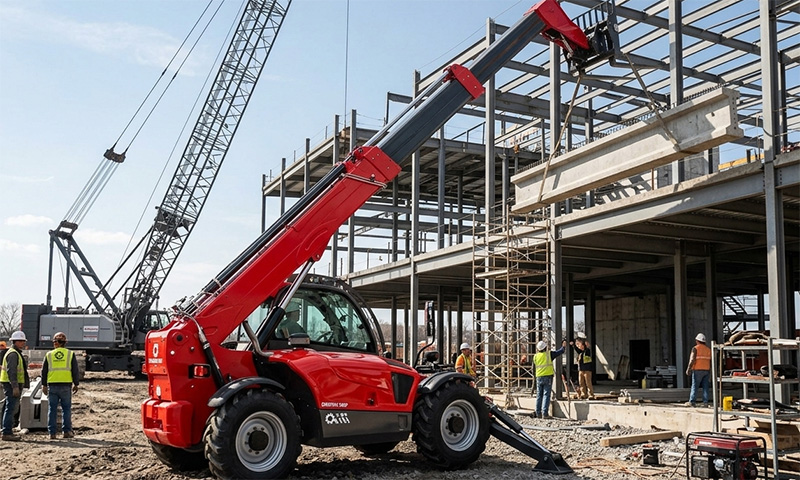
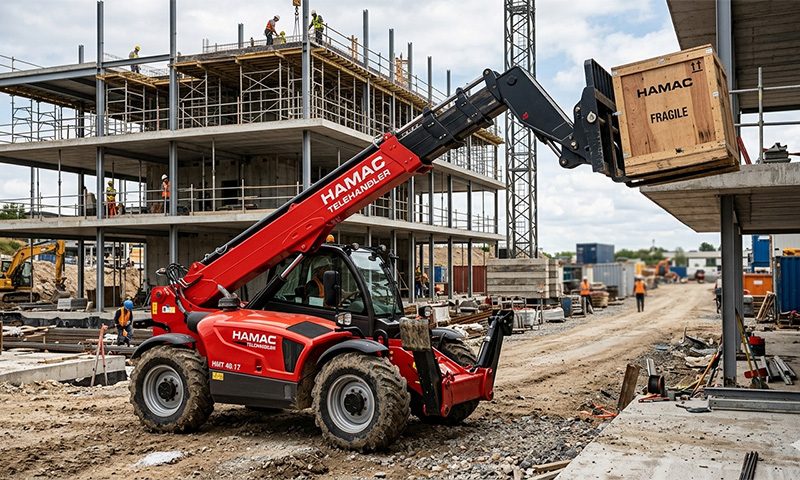
A telehandler must be able to reach the load as well as lift it. Before selecting a model, assess road access, surface conditions, slope, turning area, gate width, indoor clearance, and transport requirements.
A telescopic handler becomes more versatile when equipped with the right attachment. However, attachments can change the operating weight, load centre, visibility, and lifting capacity. Always use approved attachments and follow the load chart for the specific configuration.
The most common telehandler selection mistake is choosing a machine based only on the maximum rated capacity printed in the brochure. A 5 ton telehandler does not necessarily lift 5 tons at full boom extension or maximum height. Capacity changes with boom angle, extension, attachment type, load centre, stabilizer configuration, and ground conditions.
Before ordering, prepare a simple job profile: maximum load weight, load dimensions, required lift height, forward reach, terrain type, attachment requirement, and typical working cycle. Then compare that profile with the official load chart and technical data for the selected telehandler model.
HAMAC telehandlers are designed to support a broad range of lifting and placement tasks across construction, industrial operations, agriculture, logistics yards, and infrastructure projects. From compact 2.5 ton models for everyday material movement to 5 ton high-reach telehandlers for demanding elevated work, the range helps customers match machine size to real operating needs.
Selecting the right model can improve loading efficiency, reduce manual handling, minimize material transfer steps, and help project teams place materials closer to the point of use. For the best result, work with the supplier to confirm the required configuration, attachments, maintenance support, shipping requirements, and local compliance needs.
Choose the size based on your heaviest load, the required lift height, the forward reach, and the terrain. A 2.5 ton to 3.5 ton model may suit general material handling, while 4 ton to 5 ton telehandlers are better for heavier construction and industrial loads.
The main difference is the maximum lift height and working envelope. A 10 m model is suitable for many general construction tasks, a 14 m model supports higher-floor placement, and an 18 m model is intended for high-reach projects. Actual capacity at height must be verified in the relevant load chart.
Not always. A 5 ton telehandler provides greater lifting capacity, but it may have higher acquisition, transport, fuel, and operating costs. A 4 ton model can be a more efficient choice when it fully meets the required load, height, and reach.
4WD is strongly recommended for uneven ground, dirt, gravel, mud, slopes, and most outdoor construction environments. For smooth indoor floors or paved yards, the final configuration should be selected according to local operating conditions and manufacturer recommendations.
Review the official load chart, not only the maximum rated capacity. The chart shows the allowable load at different boom heights and extension distances, helping you determine whether the telehandler can safely complete the intended lift.
Tell us your load weight, lift height, forward reach, jobsite terrain, and preferred attachment. Our team can help you compare HT2506, HT3510, HT4007, HT4010, HT4014, HT5010, HT5014, and HT5018 telehandler options and recommend a suitable configuration for your project.
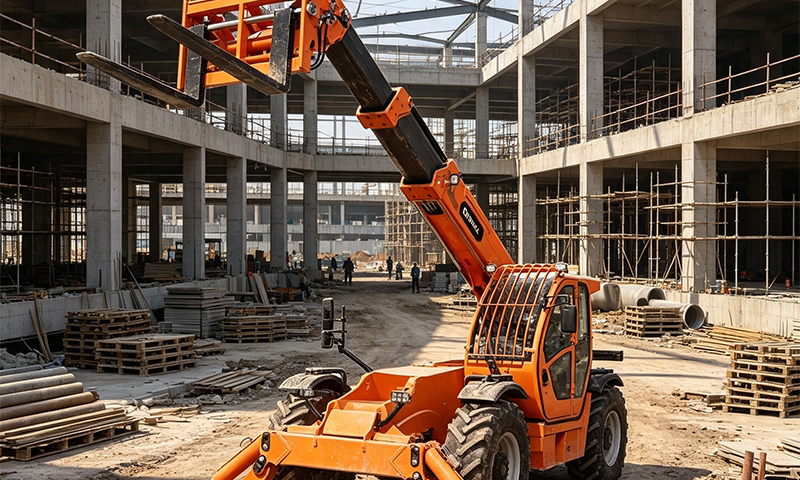
This case study describes how an HT5014 telehandler supports outdoor storage rack replenishment besid
Free Consultation >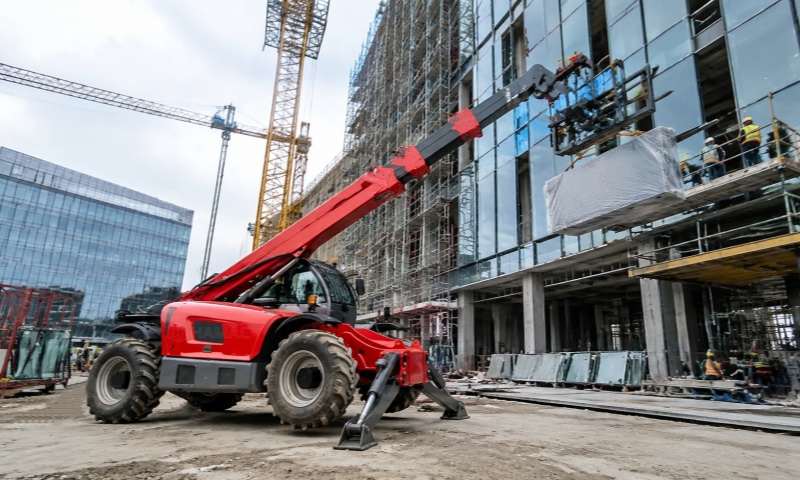
On a commercial building project, an HT4010 telehandler is used to assist facade and curtain wall ins
Free Consultation >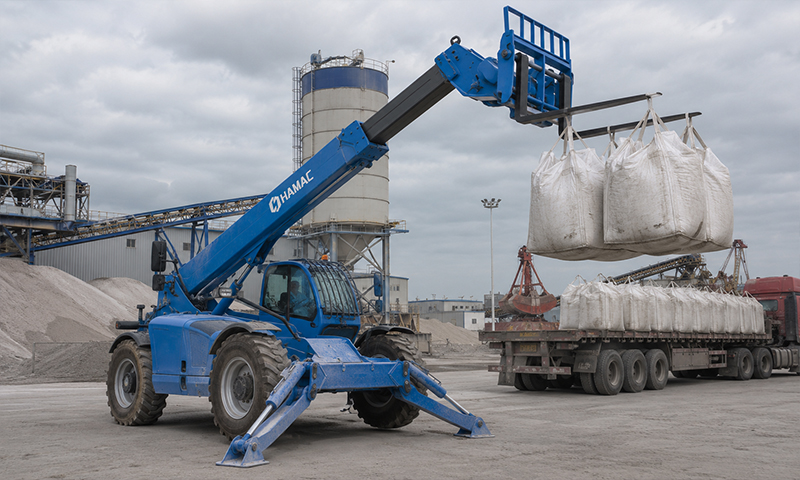
At inland port terminals, a high‑capacity telehandler is used to transfer bulk materials between tr
Free Consultation >Please fill out the form, and we can satisfy any of your needs including equipment selection, scheme design, technical support, or after-sales service. We will contact you as soon as possible.