Vertical Lifts
Aerial Work Platforms
Max Working Height:5.8–10.3 m
Platform Capacity:160–227 kg
Consult now






Choosing between an indoor and outdoor scissor lift is one of the most important decisions when planning elevated work. The right machine affects operator safety, work efficiency, access capability, operating cost, and the overall productivity of your project.
Indoor scissor lifts are usually compact, battery-powered electric machines designed for smooth and level surfaces. They are widely used in warehouses, factories, shopping malls, airports, logistics centers, workshops, and commercial buildings. Outdoor scissor lifts are commonly rough terrain models with larger tires, stronger drive systems, higher ground clearance, and a more robust chassis for demanding jobsites.
The simplest selection rule is this: choose an electric slab scissor lift for clean, firm, level indoor surfaces; choose a rough terrain scissor lift when the jobsite includes uneven ground, gravel, mud, slopes, loose soil, or outdoor construction conditions. However, buyers should also evaluate working height, platform capacity, access width, power requirements, wind conditions, and local safety requirements before choosing a model.
| Feature | Indoor Scissor Lift | Outdoor Scissor Lift |
|---|---|---|
| Typical machine type | Electric slab scissor lift | Rough terrain scissor lift |
| Power source | Rechargeable battery electric power | Usually diesel engine; electric rough terrain models are also available |
| Best ground condition | Smooth, firm and level concrete or finished floors | Uneven, unpaved, rough or demanding outdoor terrain |
| Tire type | Non-marking solid tires | Heavy-duty tires with deeper tread for better traction |
| Machine size | Compact and narrow for aisles, doors and restricted areas | Larger chassis and wider overall footprint |
| Noise and emissions | Low noise and zero on-site exhaust emissions | Higher noise and engine emissions on most diesel models |
| Platform capacity | Suitable for operators, tools and lighter materials | Often offers larger platforms and higher capacities |
| Drive capability | Best for level, hard surfaces and tight spaces | Often includes four-wheel drive, higher ground clearance and stronger gradeability |
| Typical applications | Warehouse maintenance, inventory work, lighting, HVAC and indoor installation | Construction, exterior finishing, steel work, façade installation and outdoor maintenance |
Most electric scissor lifts fit the slab-lift category and are favored in indoor environments where lower noise and emissions matter. Rough terrain models are intended for more difficult outdoor ground conditions and commonly provide features such as four-wheel drive, better traction, larger platforms, and higher capacities. [53]
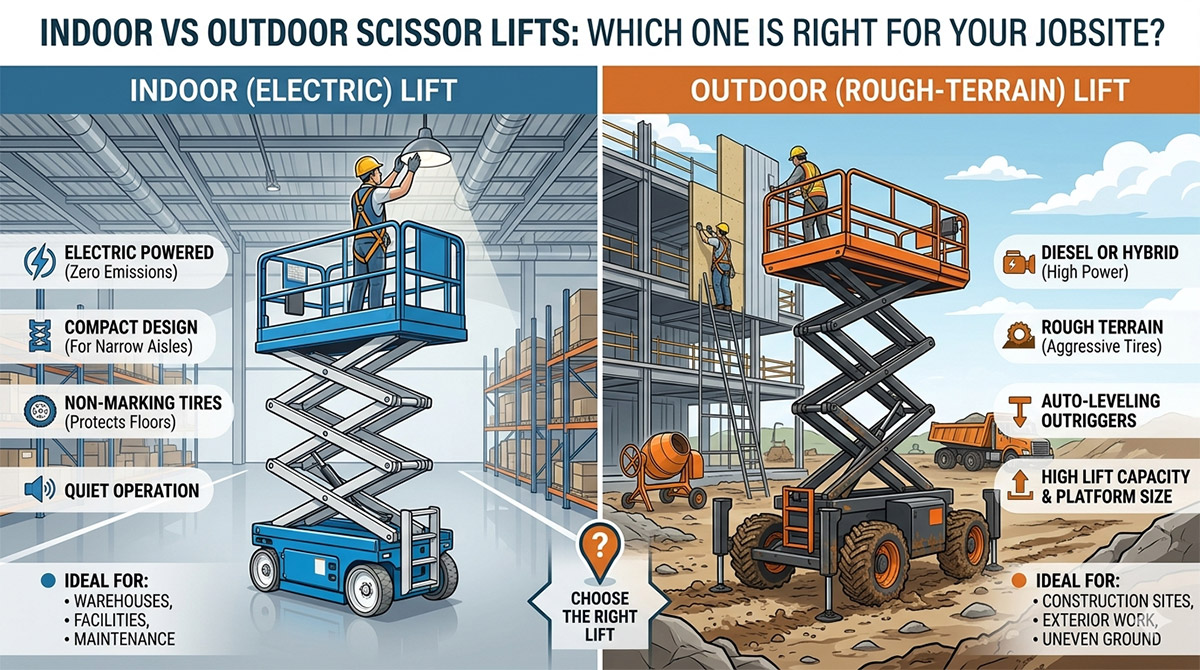
An indoor scissor lift is normally a battery-powered electric scissor lift designed for smooth, level, and firm floors. It is often called an electric slab scissor lift because it is intended to operate on concrete slabs, finished industrial floors, warehouse floors, asphalt, and other stable surfaces.
These machines are designed for maneuverability. They usually have a compact chassis, small turning radius, non-marking tires, proportional controls, and low-noise operation. Many models can pass through standard doors, travel between warehouse aisles, and work around equipment or storage racks where space is limited.
An electric indoor scissor lift is a strong choice when air quality, noise control, and floor protection are important. Because it does not produce engine exhaust during operation, it is suitable for enclosed places such as food warehouses, factories, retail stores, airports, data centers, hospitals, exhibition halls, and commercial buildings.
| Industry or Location | Typical Elevated Work | Recommended Configuration |
|---|---|---|
| Warehouse | Racking inspection, inventory work, lighting replacement and sprinkler maintenance | Compact electric scissor lift with non-marking tires |
| Factory | Machine maintenance, cable installation, ductwork and overhead production-line service | Electric scissor lift with suitable platform capacity |
| Shopping mall | Signage, decoration, ceiling work, cleaning and maintenance | Low-noise compact electric scissor lift |
| Airport or station | Lighting maintenance, equipment servicing and facility repairs | Electric scissor lift with compact dimensions |
| Data center | Cable tray installation, HVAC servicing and overhead inspection | Electric model with non-marking tires and clean operation |
| Exhibition hall | Lighting, banners, booth installation and ceiling maintenance | Compact electric scissor lift with extension deck |
The main benefit of an indoor electric scissor lift is clean and quiet operation. It is practical for indoor facilities where diesel exhaust, engine noise, and large off-road tires are not acceptable.
Its compact design also helps operators work in restricted spaces. Narrow electric models can move through aisles, doorways, loading areas, and congested work zones more easily than larger rough terrain machines.
Electric models commonly use non-marking tires, which help reduce the risk of tire marks on finished concrete, epoxy floors, retail flooring, or other sensitive indoor surfaces. Indoor scissor lifts are generally designed for smooth surfaces such as warehouse floors and finished concrete, while their tires may not provide sufficient traction for rough outdoor ground. [56]
An outdoor scissor lift is usually a rough terrain scissor lift designed for demanding external work environments. It is built to handle uneven ground, loose gravel, construction debris, soil, mud, slopes, and other conditions that are unsuitable for a standard slab electric scissor lift.
Most outdoor rough terrain scissor lifts are diesel-powered because construction projects often require longer operating time, stronger drive power, and the ability to travel through difficult ground conditions. Some manufacturers also offer electric rough terrain scissor lifts for projects that need lower emissions while retaining outdoor-capable features.
Compared with indoor models, outdoor scissor lifts usually have larger tires, deeper tire tread, higher ground clearance, a larger platform, higher load capacity, and more robust drive components. Depending on the model, they may also include four-wheel drive, oscillating axles, automatic leveling systems, and outriggers.
| Industry or Jobsite | Typical Elevated Work | Recommended Configuration |
|---|---|---|
| Building construction | Exterior installation, masonry, façade work and structural finishing | Diesel rough terrain scissor lift |
| Steel structure project | Steel erection, welding, bolting, panel installation and overhead work | High-capacity rough terrain scissor lift |
| Infrastructure project | Bridge maintenance, station construction and elevated installation work | Four-wheel-drive rough terrain scissor lift |
| Industrial plant construction | Pipe installation, exterior maintenance and large-scale equipment work | Large-platform rough terrain scissor lift |
| Outdoor facility maintenance | Building façade, signage, lighting and external repairs | Rough terrain scissor lift selected by ground condition |
| Rental fleet | Temporary access equipment for construction and maintenance clients | Mixed fleet of electric slab and rough terrain models |
Rough terrain scissor lifts are commonly selected for slopes and uneven surfaces because they offer stronger traction, larger work platforms, higher capacities, and outdoor-oriented driving capability. Typical applications include exterior construction, welding, maintenance, and finishing work. [53]
The most common indoor versus outdoor comparison is between an electric slab scissor lift and a diesel rough terrain scissor lift. Although both lift workers vertically, their design priorities are very different.
| Selection Point | Electric Slab Scissor Lift | Rough Terrain Scissor Lift |
|---|---|---|
| Primary environment | Indoor or outdoor work on flat, firm and level surfaces | Outdoor construction and uneven terrain |
| Power type | Battery electric | Usually diesel; some electric RT versions are available |
| Surface requirement | Concrete, tile, asphalt or similarly stable surface | Gravel, compacted soil, construction ground and uneven terrain within rated limits |
| Drive system | Two-wheel drive or compact electric drive design | Often four-wheel drive with stronger traction |
| Ground clearance | Lower for compact indoor access | Higher for obstacles and rougher jobsite conditions |
| Platform capacity | Moderate capacity for personnel and tools | Often higher capacity for multiple workers and materials |
| Machine width | Narrower for tight access | Wider for stability and off-road performance |
| Noise and emissions | Low noise and no on-site exhaust emissions | Higher noise and emissions for conventional diesel models |
Slab scissor lifts are designed for flat surfaces and constrained access areas, while rough terrain models are designed for rougher landscapes and may include four-wheel drive, traction control, leveling capability, and higher capacity. [49][53]
Yes, an electric scissor lift can sometimes be used outdoors, but only if the ground is firm, stable, level, and within the manufacturer’s permitted operating limits. A paved loading area, level concrete yard, or smooth asphalt surface may be suitable for some electric slab models.
However, an indoor electric scissor lift should not be treated as a rough terrain machine. It is generally not suitable for mud, loose gravel, deep potholes, soft soil, steep slopes, unstable surfaces, or unfinished construction ground. Using the wrong machine can reduce traction, increase the risk of instability, damage tires or drive components, and create unsafe operating conditions.
If an outdoor project involves difficult terrain but requires low-emission equipment, consider an electric rough terrain scissor lift. This machine category combines electric power with more rugged tires, ground clearance, traction, and outdoor-oriented chassis features. [55]
Use the following questions to identify whether your project requires an indoor or outdoor scissor lift.
| Question | If Your Answer Is Yes | Recommended Direction |
|---|---|---|
| Is the floor smooth, sealed and level? | The jobsite is a warehouse, factory or commercial building | Electric indoor scissor lift |
| Do you need zero on-site emissions? | The lift will work in an enclosed or sensitive indoor area | Electric indoor scissor lift |
| Must the machine pass through narrow doors or aisles? | Space is limited and maneuverability is important | Compact narrow electric scissor lift |
| Is the ground uneven, unpaved or soft? | The project is on an active construction site or outdoor terrain | Rough terrain scissor lift |
| Do you need stronger traction and climbing ability? | The jobsite includes slopes, gravel or rough access routes | Four-wheel-drive rough terrain scissor lift |
| Do multiple workers and heavier materials need to be lifted? | A larger platform and higher capacity are required | High-capacity rough terrain scissor lift |
| Do you need outdoor capability without diesel emissions? | The project has sustainability or emission-control requirements | Electric rough terrain scissor lift |
Do not choose a scissor lift based on height alone. A suitable machine must match both the elevated work requirement and the ground conditions of the jobsite.
| Specification | Why It Matters |
|---|---|
| Working height | Confirms whether operators can safely reach the required work area |
| Platform height | Shows the maximum floor height of the elevated platform |
| Platform capacity | Determines how many workers, tools and materials can be carried safely |
| Platform dimensions | Determines available workspace and whether an extension deck is required |
| Overall width | Confirms access through aisles, doorways, gates and work zones |
| Ground clearance | Important when traveling over outdoor obstacles or uneven ground |
| Gradeability | Shows the slope the machine can climb when stowed, subject to manual limits |
| Drive configuration | Two-wheel drive suits smooth floors; four-wheel drive supports more demanding terrain |
| Tire type | Non-marking tires suit indoor floors; deep-tread tires support outdoor traction |
| Power source |
Battery power supports quiet indoor work; diesel often supports rugged outdoor use |
All scissor lift operators should complete pre-operation checks and follow the equipment manual, local regulations, and jobsite safety procedures. Before raising the platform, verify that the ground is stable, the machine is within its allowable slope and load limits, the work area is clear, and there are no overhead obstructions or electrical hazards.
For indoor work, pay close attention to overhead beams, sprinkler systems, lights, door tracks, cable trays, racking, pedestrian routes, forklifts, and floor openings. For outdoor work, assess wind, uneven terrain, mud, soft ground, vehicle traffic, overhead power lines, trenches, drop-offs, and changing construction-site conditions.
Scissor lifts are generally treated by OSHA as mobile supported scaffold work platforms. Employers should ensure that operators understand site hazards, inspect the equipment, follow loading limits, and use the machine according to applicable safety requirements and the manufacturer’s instructions. [54]
Indoor scissor lifts are normally compact battery-electric machines for smooth, level floors. Outdoor scissor lifts are usually rough terrain models with more robust tires, better traction, higher ground clearance, and stronger drive capability for uneven construction sites.
Diesel scissor lifts are generally not the preferred option for enclosed areas because of engine exhaust, noise, and larger machine dimensions. If indoor use is unavoidable, it must follow local ventilation, safety, and site requirements. In most cases, an electric scissor lift is the better choice for indoor work.
A standard electric slab scissor lift should not be used on loose gravel, rough terrain, or unstable ground unless the manufacturer specifically confirms that the model and operating conditions are suitable. For gravel and uneven construction sites, choose a rough terrain scissor lift.
Many rough terrain scissor lifts have larger platforms and higher rated capacities than compact indoor models. However, the exact capacity depends on the specific model, platform extension status, lifting height, load distribution, and manufacturer specifications.
A compact electric scissor lift with non-marking tires is usually the best choice for warehouse maintenance, racking work, lighting replacement, inventory checks, and indoor installation tasks. Select the working height, platform capacity, overall width, and platform size according to the warehouse layout and work requirements.
HAMAC offers electric scissor lifts for indoor warehouse and facility work, as well as rough terrain scissor lifts for outdoor construction and demanding jobsites. Tell us your required working height, platform capacity, ground condition, access width, and application.
Our team can recommend a suitable electric, diesel, or rough terrain scissor lift model and provide product specifications, technical support, container-loading information, and a quotation for your market.
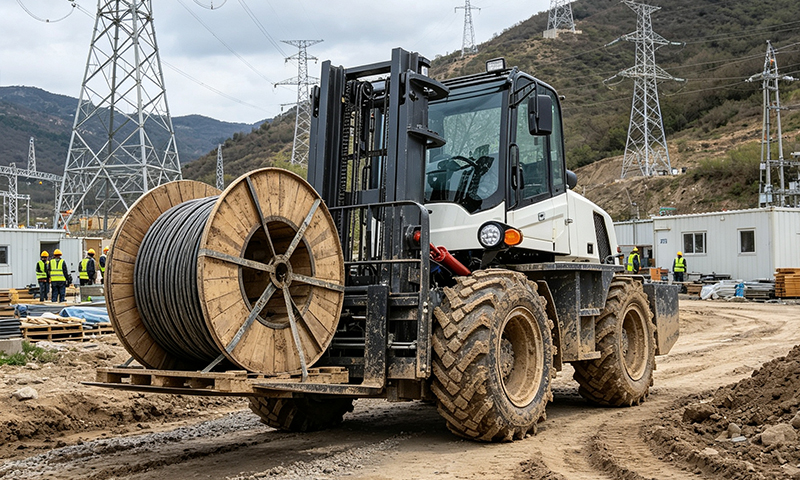
On remote infrastructure and utility projects, a HAMAC FD60-RT 6 ton rough terrain forklift is used t
Free Consultation >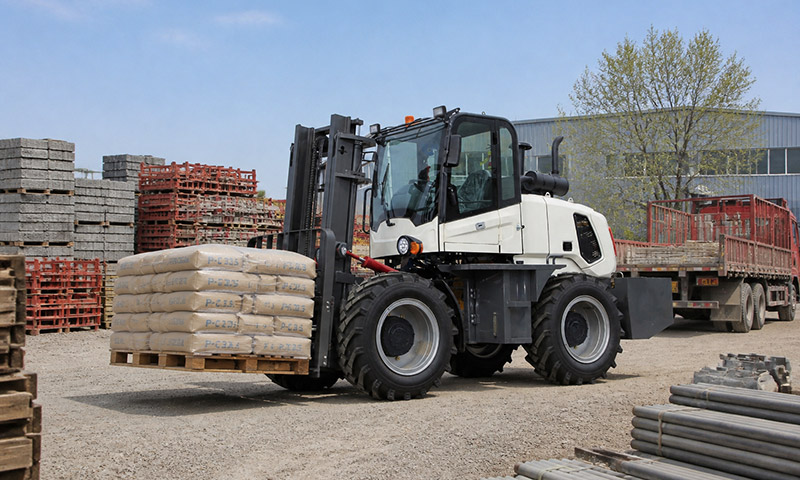
FD60‑RT 6 ton rough terrain forklifts are used in a precast concrete yard to move and stage heavy b
Free Consultation >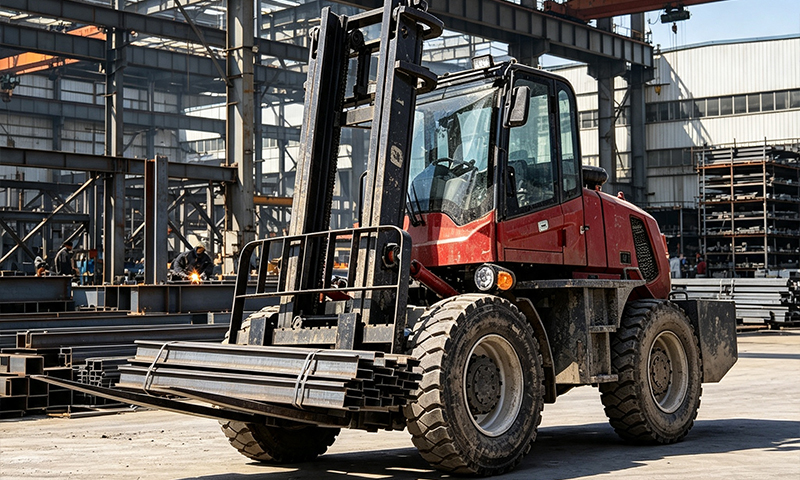
In a steel fabrication plant, a rough terrain forklift is used to move steel beams, plates and heavy
Free Consultation >Please fill out the form, and we can satisfy any of your needs including equipment selection, scheme design, technical support, or after-sales service. We will contact you as soon as possible.