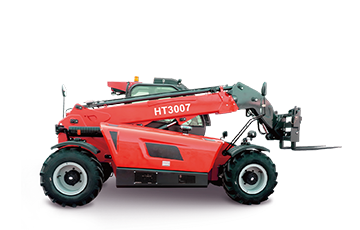
HT3007
Telehandlers
Lifting capacity: 3000 kg
Max. lift height: 7 m
Consult now






On Indonesian oil palm estates, material handling still runs mostly on manual labor. Bunches travel from the palm base to the roadside collection point by wheelbarrow; fertilizer moves into the block as 50 kg bags on a worker's shoulder (PMC); and at the collection point, a loading crew throws bunches into the truck by hand. Field tests put numbers on what mechanization changes: a mechanical in-field transporter moves 5–7 tonnes of FFB per man-day, roughly three times what a worker with a wheelbarrow achieves (MPOB). This guide explains how a telehandler takes over each of these tasks, how a tropical-spec machine differs from a standard one, which model fits which estate, and the support available in Indonesia.
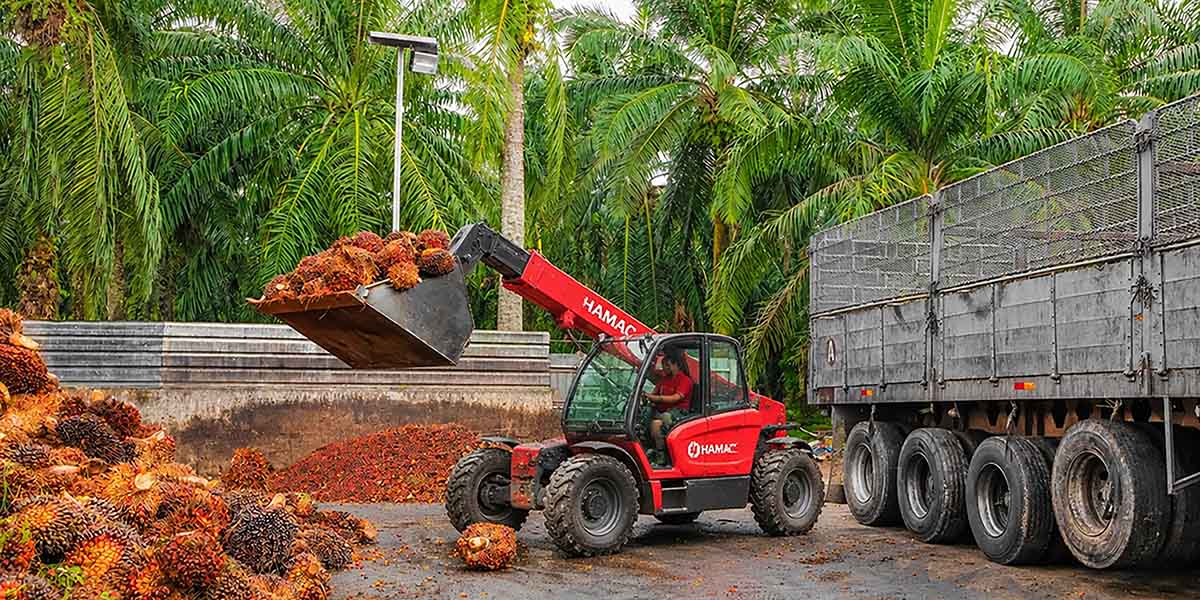
Four characteristics of plantation work map directly onto what a telehandler is built to do:
| What Your Material Is Like | What the Task Demands | What the Telehandler Provides |
|---|---|---|
| Scattered — bunches lie along the palm rows | Gather loose loads on narrow paths | General-purpose bucket, filled along the route |
| Heavy — fertilizer pallets, full fruit hoppers | Lift rated loads repeatedly, all day | 3,000–5,000 kg rated capacity class |
| Soft ground — muddy inter-row paths, peat soil | Cross wet-season blocks with a load | 4x4 drivetrain with deep-tread off-road tyres |
| High endpoint — truck side boards above 1 m | Place the load inside the truck bed, not beside it | 7–10 m telescopic boom with high-tip discharge |
Existing estate machinery covers only part of this list. Research on in-field transport notes that mini tractor-trailer systems are confined to firm, flat ground (Springer) — they travel the paths but cannot load over the truck board. A wheel loader can work mud but is too wide for inter-rows and cannot place a pallet. The telehandler is the one machine that both runs the muddy rows and loads the truck from a single position.
Most forklifts are engineered for paved yards and temperate climates. A wet-tropical plantation punishes exactly the components those machines treat as standard — cooling, tyres, hydraulics and electrics. The differences below are what separate a machine that survives a plantation from one that stalls in it:
| Component | Standard Machine | Tropical-Spec Machine | Why It Matters on Your Estate |
|---|---|---|---|
| Drivetrain and tyres | 2WD or highway-pattern industrial tyres designed for paved yards | 4x4 with deep-tread off-road tyres and higher ground clearance | Wet-season paths and peat soil; stumps, frond bases and rutted block roads |
| Cooling system | Radiator rated for temperate ambient temperatures | Higher-capacity cooling rated for continuous duty in high heat, with a protected core | The machine works long shifts in heat; debris and insects from plantation roads must not clog the core |
| Hydraulic hoses and fittings | Standard hose specification | Hoses and sealed connectors specified for heat and humidity; corrosion-protected fittings | Humidity ages rubber and corrodes connections months faster than in a temperate yard |
| Electrical system | Open connectors, standard insulation | Sealed connectors and moisture-protected wiring | Monsoon moisture is the main cause of electrical faults on estate machinery |
| Air intake and filters | Single-stage filtration | Dual-stage intake with pre-cleaner; fuel system protected against moisture | Road dust and monsoon moisture in the fuel are daily facts, not edge cases |
| Maintenance access | Check points behind panels, tools required | Daily inspection points reachable without tools | Inspection happens every shift in this climate — anything slow gets skipped |
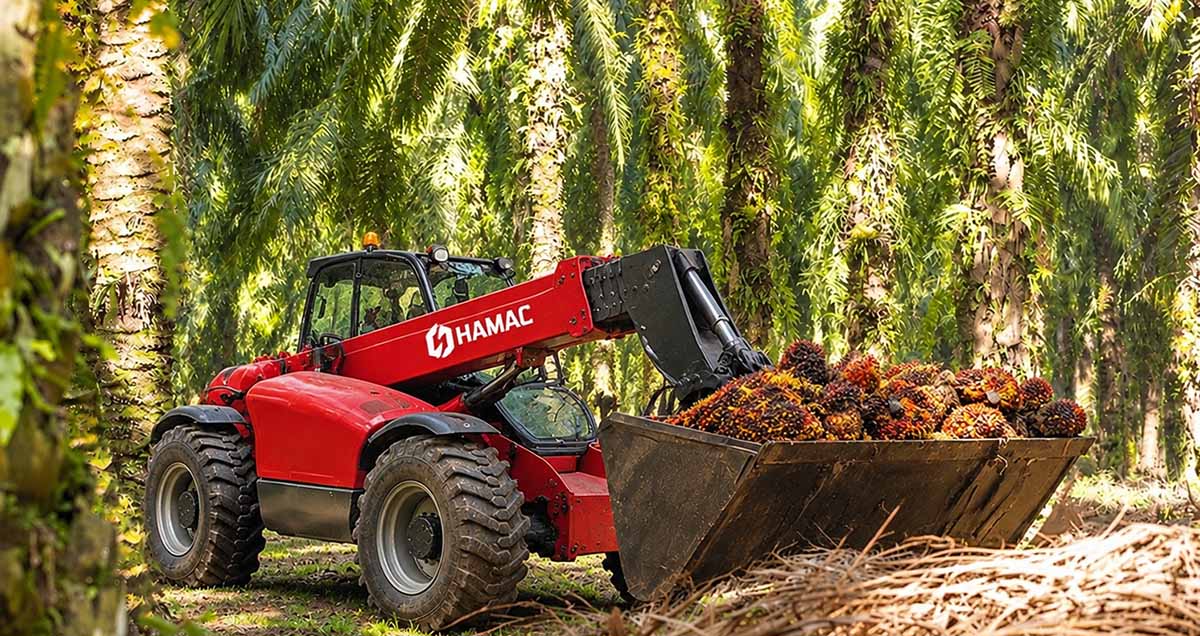
FFB evacuation — palm base to truck bed in one pass.
In the block. After rain, your harvesting paths are soft and the bunches lie scattered along the palm rows. The telehandler works the same route your carriers walk — but with a bucket, it takes away a full hopper per trip instead of one bunch at a time.
At the collection point. A mini tractor can only dump on the ground, so your bunches still need a loading crew to throw them into the truck. The telehandler lifts the full hopper over the truck's side board and tips it straight into the bed. The ground-stacking step disappears, and so does the crew.
Loading the truck. With 7–10 m of boom, the machine reaches across the truck bed and loads from one side without repositioning. One operator takes the bunches from palm base to truck body — no double handling.
| Stage | Ground Condition | What the Machine Does | Attachment |
|---|---|---|---|
| In the block | Muddy inter-row paths | Gathers bunches into the bucket along the route, a full hopper per trip | General-purpose bucket or fruit hopper |
| Collection point | Roadside, firm ground | Lifts the hopper over the side board and tips it into the bed | Self-dumping hopper |
| Truck loading | Truck body above 1 m | Boom reaches across the bed, loads from one side | Pallet forks or hopper |
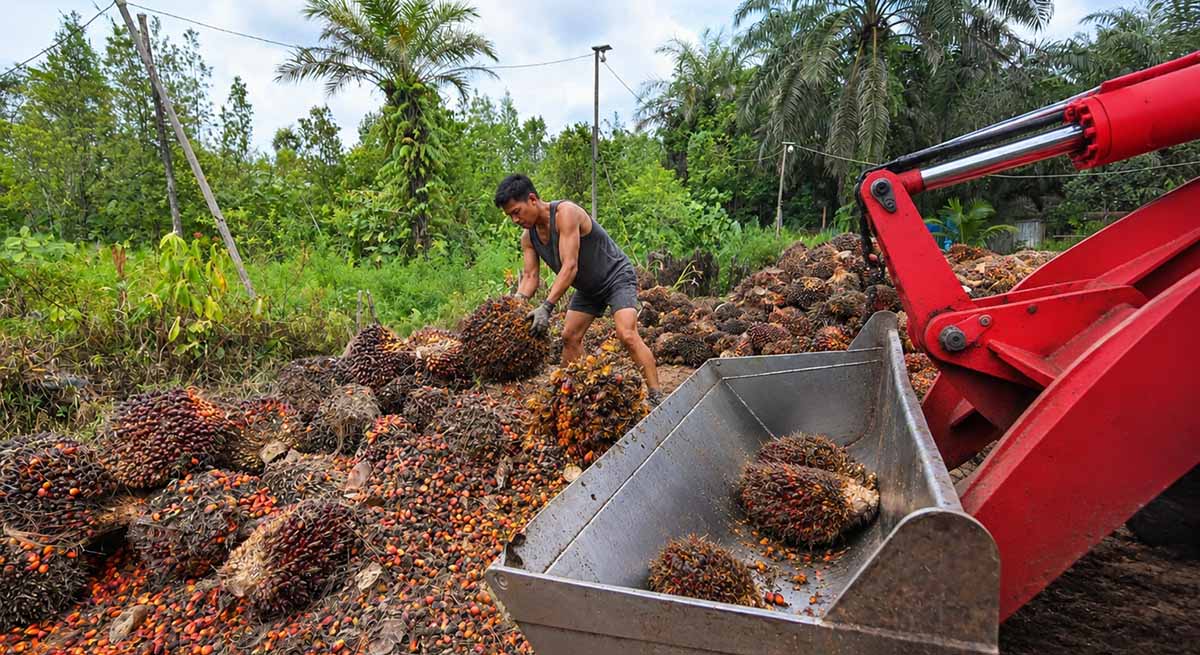
Fertilizer — pallets at the row, not bags on shoulders. Right now, fertilizer reaches the block on a lorry, and from there a worker carries each 50 kg bag on his shoulder while another spreads it by hand (PMC). A telehandler reverses the workflow: full pallets are loaded at your warehouse, the machine runs the block road, and the forks set each pallet down at the application point, row by row. The people who were carrying bags go back to spreading — the job that actually needs them — and the shoulder-carry injuries stop happening. For bulk fertilizer, a bucket handles loose material.
Replanting blocks — material at the planting point. Replanting ground is the softest on any estate: freshly cleared soil, no established paths, and everything — polybag seedlings, mulch, stakes, tools — has to go in across a wide area. Where mini tractors are limited to firm, flat ground (Springer), a 4x4 telehandler with forks and a bucket runs multiple rows of material per trip, so seedlings arrive at the planting point instead of stacked at the block entrance. The workload keeps growing: Indonesia's replanting program covers 50,000 hectares in 2026, with funding now at IDR 60 million per hectare (Palm Oil Magazine).
Mill yard, workshop and estate roads. Not everything on the estate is mud. On the hard surfaces around the mill and workshop, a rough terrain forklift does the same work at lower cost — and placing culverts and gravel along the road line needs the telehandler's reach.
| Where | What Happens There | Machine That Fits |
|---|---|---|
| Mill and warehouse yard | Fertilizer stacking, spare parts receiving, empty fruit bunch (EFB) loading for field return | FD30-RT (3 t) or FD35-RT (3.5 t) |
| Estate workshop | Engine parts, tires and assemblies moved between storage and service bays | Rough terrain forklift with quick-change attachments |
| Estate roads | Culvert pipes, gravel and drainage material placed along the road line | HT5010 telehandler (5 t / 10 m) — reach and height place material where a forklift cannot |
The same hard-surface logic applies on timber and material yards — see our timber yard loading article for that workflow.
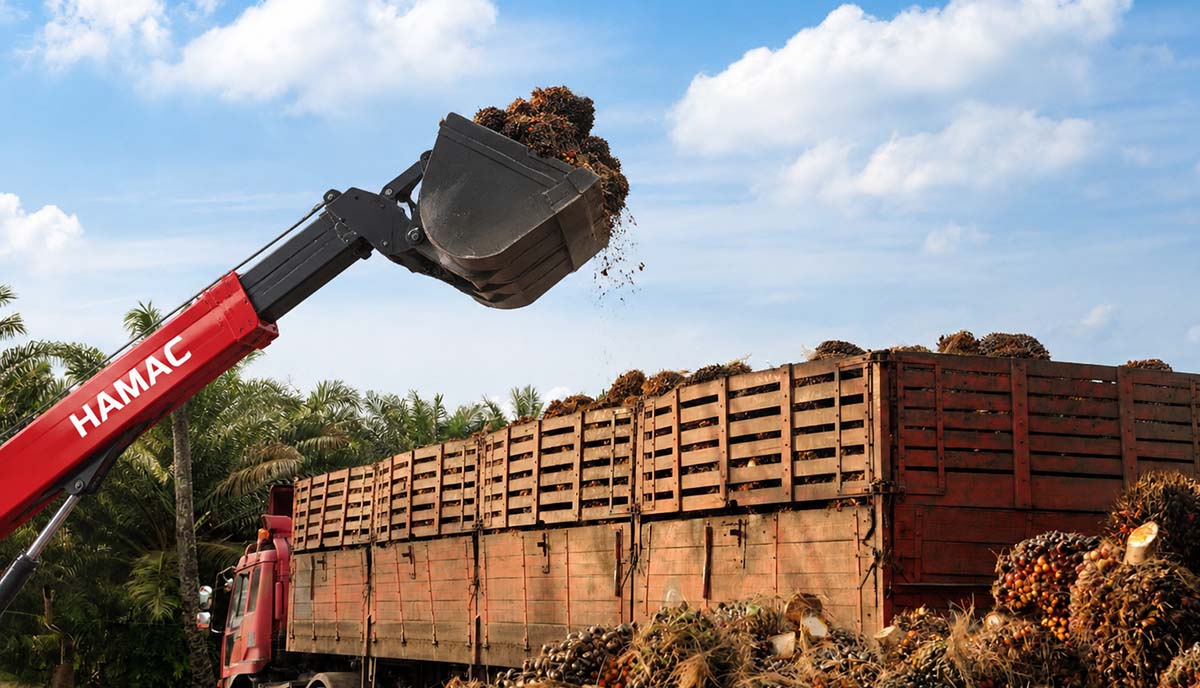
Match the machine to your estate size and your heaviest routine load — a fertilizer pallet or a full FFB hopper is the load the machine must lift every day.
| Your Estate | Model | Rated Capacity | Lifting Height | What It Covers |
|---|---|---|---|---|
| Small and medium estates — FFB collection and direct truck loading | HT3007 telehandler | 3,000 kg | 7 m | Standard truck loading at the collection point |
| Mid-size estates — high-sided trucks, fertilizer pallets | HT3510 telehandler | 3,500 kg | 10 m | Taller loading, lighter pallets, road material |
| Large estates — full-pallet fertilizer, road material | HT5010 telehandler | 5,000 kg | 10 m | Heaviest daily loads, high-level loading |
| Mill and warehouse yards — hard surfaces | FD30-RT / FD35-RT | 3,000 / 3,500 kg | 3–4.5 m mast | Stacking, parts handling, EFB loading |
One rule applies to every model: the rated capacity holds at low height and short reach, and drops as the boom extends. Work from the load chart at your actual geometry, never the nameplate. Full ranges are on the telehandler and rough terrain forklift pages; for a direct comparison between two compact classes, see HT2506 vs HT3510.
Three attachments cover plantation work, and the quick-change coupler is what turns them into one machine serving the whole estate:
| Attachment | What It Does |
|---|---|
| General-purpose bucket | Gathers bunches along the harvesting path; handles bulk material and gravel |
| Pallet forks | Delivers fertilizer pallets and seedling trays to the planting point |
| Self-dumping hopper | Carries FFB and tips straight into the truck bed — the attachment that replaces the loading crew |
A working day shows the payoff: gather bunches in the block through the morning with the bucket, run fertilizer pallets after midday with the forks, unload a parts delivery at the workshop before close. The same fork-and-bucket setup is proven on mixed farms for bales and feed — see our farm bale handling guide, and our reach comparison for choosing attachment working ranges.
HAMAC keeps a local office in Indonesia for commissioning, operator training, spare parts and warranty response — when the machine needs a part, it does not wait on an overseas shipment.
Daily inspection takes about ten minutes, and in this climate three items deserve the closest attention: tyres (embedded stones, cuts from stumps and frond bases), hydraulic hoses at the fittings (humidity ages rubber faster), and filters (road dust and monsoon moisture in the fuel). The full shift checklist is in our telehandler daily inspection guide. In the wet season, walk or probe the route before entering a block with a load, and keep loads low and slow on soft ground.
Plantation-level studies of mechanized evacuation report benefit–cost ratios of 1.11 to 1.49 — the systems paid for themselves (IOPRI Kelapasawit Journal).
Get a configuration matched to your estate: send your daily FFB volume, block layout, row-path width and wet-season road photos to [email protected] or WhatsApp 0086-15136236223. We will come back with a machine and attachment proposal, with the labor numbers worked out.
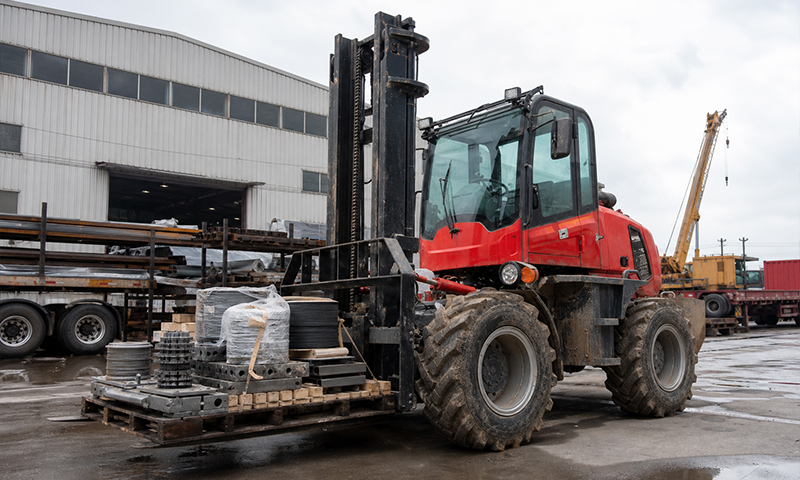
In heavy warehouse and production environments, a rough terrain forklift is used to move large pallet
Free Consultation >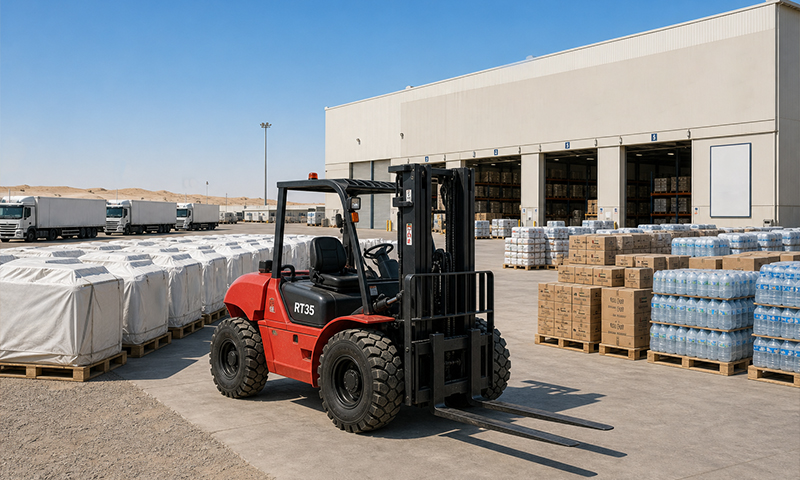
Results and Benefits By deploying RT35 forklifts, the humanitarian logistics hub achieved several key
Free Consultation >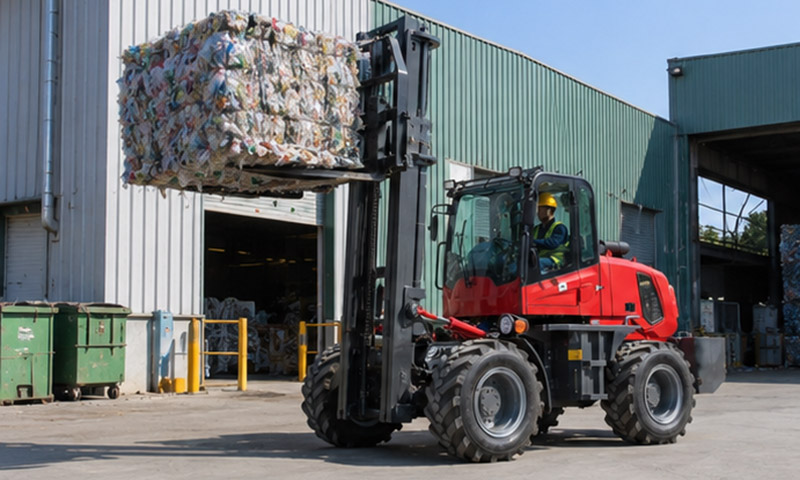
At a recycling plant, a HAMAC FD40-RT articulated rough terrain forklift is used to handle compressed
Free Consultation >Please fill out the form, and we can satisfy any of your needs including equipment selection, scheme design, technical support, or after-sales service. We will contact you as soon as possible.