Vertical Lifts
Aerial Work Platforms
Max Working Height:5.8–10.3 m
Platform Capacity:160–227 kg
Consult now






A scissor lift is a mobile elevated work platform designed to lift personnel, tools, and materials vertically to a required working height. Its name comes from the crisscross metal supports beneath the platform: when these arms extend, they form a scissor-like “X” pattern and raise the platform straight upward.
Unlike boom lifts, which can reach outward as well as upward, a scissor lift primarily provides vertical access. This makes it a practical solution where operators need a stable, spacious work platform for tasks such as warehouse maintenance, ceiling installation, equipment servicing, electrical work, painting, racking installation, and construction finishing.
For many buyers, the main decision is whether to choose an electric scissor lift for smooth indoor floors or a rough terrain scissor lift for demanding outdoor jobsites. The right model depends on required working height, platform capacity, ground condition, workspace width, power source, and the type of work to be completed.
Scissor lifts are widely used when workers need to safely access elevated work areas directly above the machine. They provide a larger platform than ladders and can carry operators together with tools, materials, and installation equipment within the machine’s rated capacity.
| Application | Typical Work | Recommended Scissor Lift Type |
|---|---|---|
| Warehouse and logistics center | Inventory checks, racking maintenance, lighting replacement, sprinkler inspection | Electric scissor lift |
| Factory and production plant | Equipment maintenance, machine installation, ductwork and cable work | Electric scissor lift |
| Shopping mall, airport, hotel or exhibition hall | Indoor cleaning, signage installation, ceiling maintenance and repairs | Compact electric scissor lift |
| Construction project | Steel structure work, façade installation, painting and MEP installation | Electric or rough terrain scissor lift |
| Outdoor construction site | Cladding, masonry, steel erection and elevated installation work | Rough terrain diesel scissor lift |
| Rental fleet | Short-term access equipment rental for multiple industries | Electric and rough terrain scissor lifts |
In U.S. occupational-safety guidance, scissor lifts are generally treated as mobile supported scaffold work platforms. They are commonly used to raise workers vertically in maintenance, construction, manufacturing, retail, and other industrial applications. [15][17]
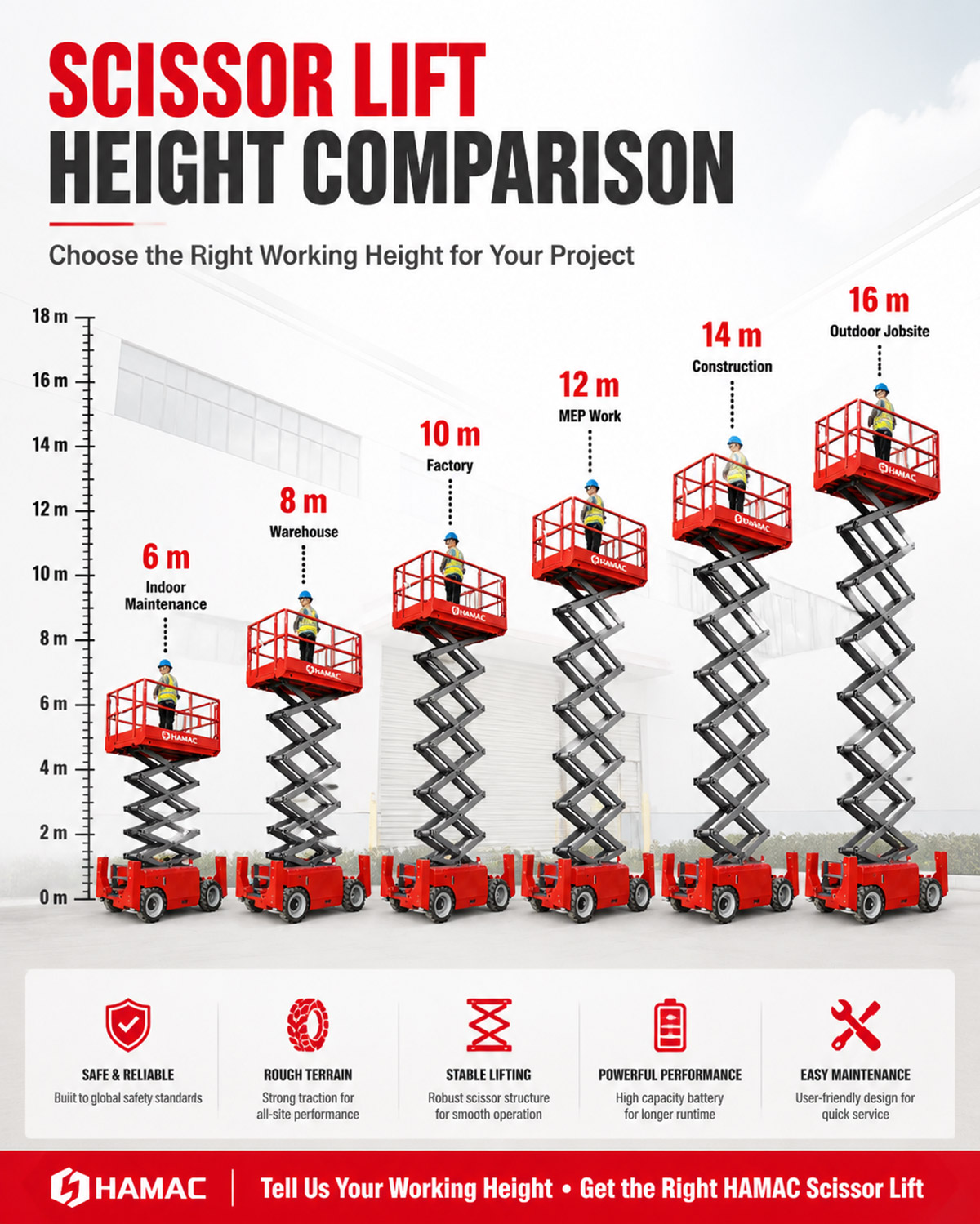
A scissor lift raises its platform through a set of linked metal arms arranged in a crisscross pattern. When the lifting system applies force to these arms, the arms straighten and push the platform upward. When the system releases or reverses that force, the arms fold back together and lower the platform.
Most self-propelled scissor lifts use a hydraulic lifting system. Hydraulic oil is pressurized by a pump and directed to hydraulic cylinders. As the cylinders extend, they open the scissor mechanism and elevate the platform. The operator can control lifting, lowering, driving, steering, and emergency-stop functions from the platform control box or ground control panel.
| Main Component | Function |
|---|---|
| Work platform | Provides space for operators, tools and approved materials |
| Guardrails and entry gate | Help protect workers on the elevated platform |
| Scissor arms | Expand and fold to raise or lower the platform vertically |
| Hydraulic cylinders | Provide lifting force to extend the scissor structure |
| Hydraulic pump and oil system | Generate and deliver hydraulic pressure for lifting movement |
| Chassis and drive system | Support the machine and enable travel around the worksite |
| Battery or engine | Supplies power for lifting, driving and platform controls |
| Control panels | Allow safe control from the platform and ground level |
A scissor lift moves mainly in a straight vertical direction. This gives it a stable and predictable lifting path, but it also means the machine must be positioned directly below the work area. If an operator needs to reach over obstacles or access a distant façade, an articulating boom lift or telescopic boom lift may be more suitable.
Scissor lifts can be classified by their power source, operating environment, chassis design, and intended application. The most common types include electric scissor lifts, hydraulic scissor lifts, diesel scissor lifts, and rough terrain scissor lifts. Industrial scissor lifts may use hydraulic, pneumatic, or mechanical actuation, while mobile models can be powered by electricity, diesel, gas, LPG, or compressed air depending on the design and application. [17]
An electric scissor lift is typically powered by rechargeable batteries. It is designed for indoor work or outdoor work on firm, level surfaces. Because it operates with low noise and zero on-site exhaust emissions, it is widely used in warehouses, factories, shopping centers, airports, workshops, and logistics facilities.
Electric scissor lifts often feature non-marking tires, compact dimensions, a small turning radius, and smooth proportional controls. These characteristics make them suitable for working in narrow aisles, congested production areas, and finished indoor floors.
Typical applications include warehouse racking maintenance, inventory work, overhead lighting replacement, electrical installation, HVAC servicing, ceiling work, painting, and facility maintenance.
A hydraulic scissor lift uses hydraulic cylinders and pressurized oil to raise and lower the platform. Hydraulic lifting is one of the most common mechanisms in both mobile scissor lifts and fixed industrial lift tables.
Hydraulic scissor lifts may be self-propelled, manually moved, stationary, pit-mounted, or integrated into production lines. In industrial settings, a hydraulic scissor lift table can be used for material handling, loading, assembly, transfer, feeding, loading dock operations, and ergonomic workstation positioning.
A diesel scissor lift uses an engine-powered system and is normally intended for outdoor work. Compared with compact electric models, diesel scissor lifts generally offer higher platform capacity, larger platforms, stronger climbing ability, and better performance in demanding construction environments.
Diesel-powered models are commonly used for exterior construction, façade work, steel erection, industrial plant projects, bridge work, and large outdoor installation jobs. They should be selected when the worksite requires stronger driving power and the operating environment permits engine emissions and noise.
A rough terrain scissor lift is built for outdoor jobsites with uneven, unpaved, or challenging ground conditions. These machines commonly use diesel power and may include four-wheel drive, large foam-filled or heavy-duty tires, oscillating axles, high ground clearance, automatic leveling features, and outriggers.
Rough terrain models are suitable for construction sites, infrastructure work, steel projects, outdoor maintenance, and other jobs where a standard slab electric scissor lift cannot safely travel or operate. They should still be used only within the manufacturer’s permitted slope, load, wind, and ground-condition limits.
Compact scissor lifts are designed for restricted indoor spaces. They usually offer a narrower chassis, smaller turning radius, and lighter overall machine weight. These models are useful in warehouses with narrow aisles, retail facilities, production workshops, elevators, and other places where access space is limited.
When choosing a compact model, buyers should check the overall machine width, stowed height, transport length, turning radius, maximum platform height, and whether the machine can pass through the facility’s doorways or elevators.
A scissor lift and a boom lift both provide access at height, but they solve different jobsite requirements. A scissor lift moves vertically and usually provides a larger platform area. A boom lift can move vertically and horizontally, allowing workers to reach over obstacles or access areas away from the base of the machine.
| Feature | Scissor Lift | Boom Lift |
|---|---|---|
| Primary movement | Vertical lifting | Vertical and horizontal outreach |
| Platform size | Usually larger and more spacious | Usually smaller basket platform |
| Best for | Work directly above the machine | Reaching over obstacles or accessing distant work areas |
| Typical applications | Warehouse, indoor maintenance, ceiling work and construction finishing | Building façade, tree work, utility work and complex access areas |
| Ground requirement | Usually requires stable and level ground | Depends on model; rough terrain models are available |
Choose a scissor lift when the work area is directly overhead and the job requires more platform space for people and materials. Choose a boom lift when horizontal outreach is essential.
The best scissor lift is not simply the model with the greatest lifting height. Buyers should match the machine configuration to the actual work environment, access conditions, and operating requirements.
| Selection Factor | Questions to Ask |
|---|---|
| Working height | How high must operators safely reach, including the height of the worker and tools? |
| Platform height | What platform elevation is required to achieve the target working height? |
| Platform capacity | How many workers, tools and materials need to be carried at the same time? |
| Platform size | Does the job require a large deck or an extension platform for more working space? |
| Ground condition | Is the surface smooth and level, or uneven, soft and rough? |
| Power source | Is low-noise, emission-free electric power required, or is diesel power better for outdoor work? |
| Access dimensions | Can the machine pass through doors, aisles, loading areas, elevators and site entrances? |
| Transport requirements | What are the machine’s stowed dimensions, weight and container loading requirements? |
| Local requirements | What certification, safety, electrical, training or site-specific requirements apply in your market? |
For example, a warehouse customer replacing lights at a 10-meter working height may need a compact electric scissor lift with non-marking tires, a narrow chassis, and adequate platform capacity for two operators and their tools. An outdoor steel-structure contractor working on uneven ground may need a diesel rough terrain scissor lift with four-wheel drive, leveling capability, high ground clearance, and a larger platform.
Safe operation begins with trained personnel, pre-operation inspection, suitable ground conditions, and compliance with the machine manual and local regulations. Operators should inspect the platform, guardrails, tires, hydraulic hoses, controls, emergency stop, battery or engine system, and safety devices before each shift.
The lift should be used on a stable surface within the manufacturer’s allowable limits. Operators should never exceed the rated platform capacity, use boxes or ladders on the platform to gain extra height, bypass safety devices, or move the machine in a manner not permitted by the manufacturer.
Particular attention is required around overhead power lines, openings, drop-offs, vehicle routes, overhead obstructions, strong wind, soft ground, and uneven surfaces. OSHA guidance identifies scissor lifts as mobile supported scaffold work platforms and emphasizes applicable scaffold requirements for safe use. [14][15]
In general industry language, scissor lifts are often grouped with aerial work platforms or mobile elevating work platforms because they provide elevated access. However, classifications can differ by country, standard, and regulatory authority. In OSHA guidance, scissor lifts are treated as mobile supported scaffolds rather than aerial lifts. [14][15]
Platform height is the maximum height of the platform floor above ground level. Working height is the estimated height an operator can reach while standing on the elevated platform. Working height is usually higher than platform height, but the exact calculation should follow the manufacturer’s specification and the actual task requirements.
Yes, many electric scissor lifts can be used outdoors on firm, level surfaces when weather conditions and manufacturer limits allow. However, they are generally not designed for rough, muddy, sloped, or uneven construction ground. For demanding outdoor conditions, a rough terrain scissor lift is normally the better choice.
Some self-propelled scissor lifts can travel at limited speed while the platform is elevated, subject to the manufacturer’s operating instructions, ground conditions, load, and elevation limits. Operators should always follow the specific machine manual and site safety rules.
A pre-operation inspection should be completed before use or at the start of each shift. Regular maintenance and periodic inspections should also follow the manufacturer’s service schedule, local requirements, and the machine’s working intensity.
Whether you need a compact electric scissor lift for indoor warehouse work or a rough terrain diesel scissor lift for outdoor construction, selecting the correct working height, capacity, platform size, and drive configuration is essential for safe and efficient operation.
Contact our team for scissor lift specifications, working-height recommendations, product brochures, container loading information, and a quotation based on your application and local market requirements.
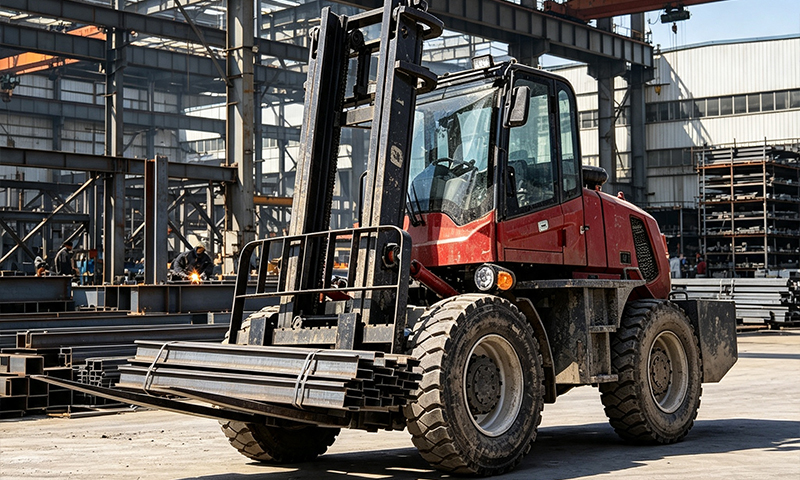
In a steel fabrication plant, a rough terrain forklift is used to move steel beams, plates and heavy
Free Consultation >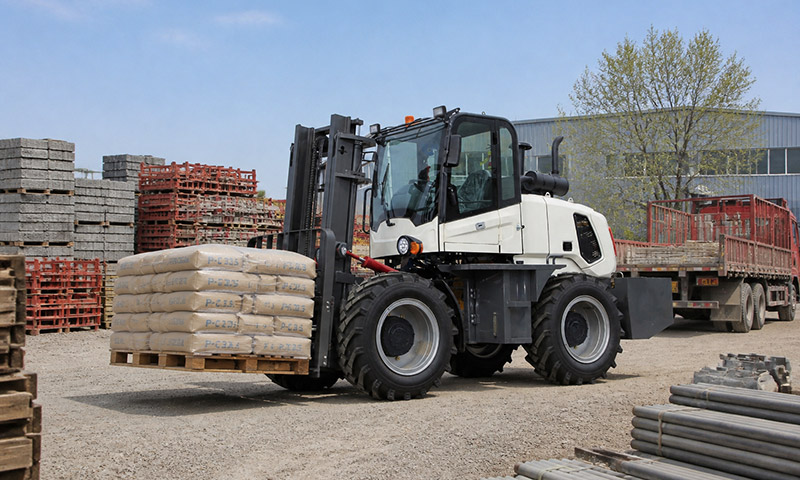
FD60‑RT 6 ton rough terrain forklifts are used in a precast concrete yard to move and stage heavy b
Free Consultation >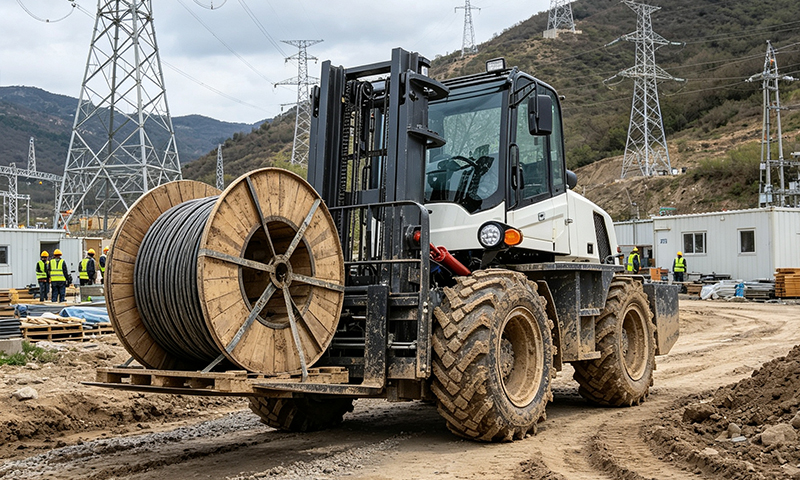
On remote infrastructure and utility projects, a HAMAC FD60-RT 6 ton rough terrain forklift is used t
Free Consultation >Please fill out the form, and we can satisfy any of your needs including equipment selection, scheme design, technical support, or after-sales service. We will contact you as soon as possible.