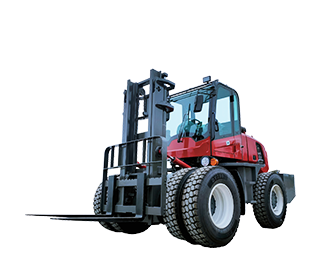
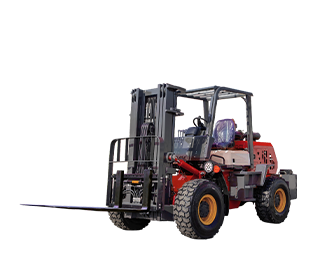
FD35‑RTS
Rough Terrain Forklifts
Rated load capacity: 3,500 kg
Maximum lift height: 4,500 mm
Consult now






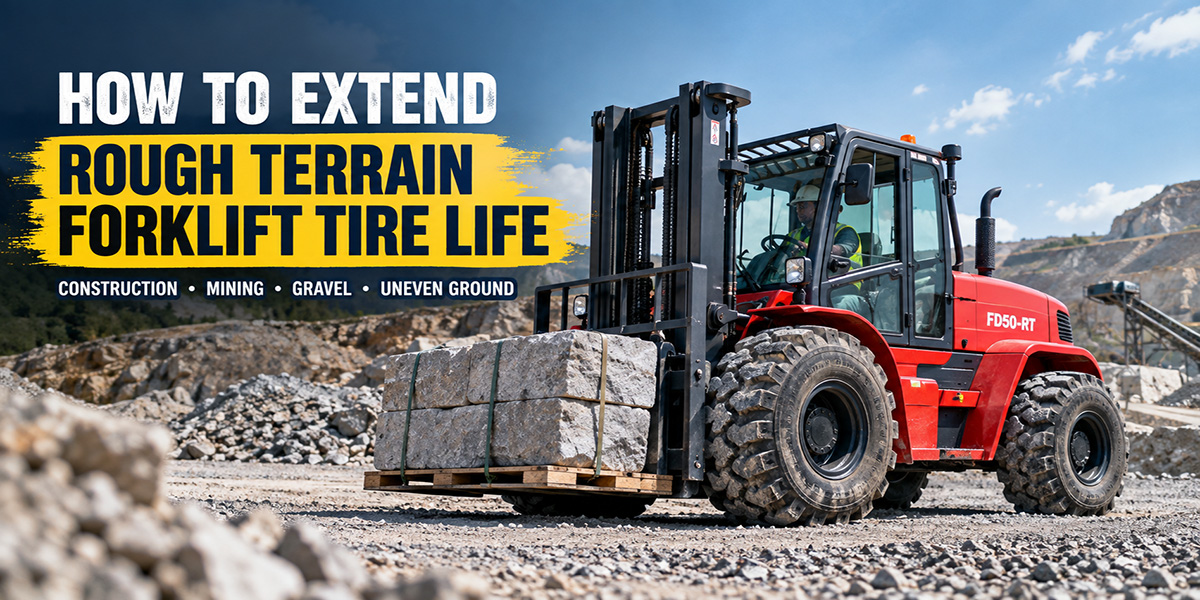
Rough terrain forklift tires work in some of the hardest outdoor conditions: gravel, mud, sharp stone, construction debris, uneven roads, slopes, timber yards and mining sites. Tire damage can lead to unexpected downtime, reduced traction, wheel damage, unsafe load handling and higher operating cost.
Extending rough terrain forklift tire life depends on five practical habits: correct tire pressure, daily inspection, safe driving, controlled loads and well-prepared travel routes. These checks help protect tires, wheels, axles and the complete forklift.
HAMAC provides rough terrain forklifts for construction, farms, stone yards, timber yards, mining support and outdoor material handling. This guide explains how operators and fleet managers can reduce tire wear and avoid preventable tire failure.
| Common Cause | Possible Result |
|---|---|
| Incorrect tire pressure | Uneven tread wear, excess heat, sidewall stress, poor traction and reduced tire life. |
| Overloading or poor load control | Higher tire stress, wheel damage, axle loading and unstable travel on uneven ground. |
| Sharp rocks, rebar, scrap and construction debris | Cuts, punctures, embedded objects, slow leaks and sidewall damage. |
| Fast travel, sharp turns or hard braking | Tread scrub, sidewall stress, heat buildup and premature wear. |
| Wheel spin in mud or loose gravel | Rapid tread wear, deep ruts, loss of traction and higher risk of getting stuck. |
| Poor route condition | Impact damage from potholes, ruts, trench edges, loose stones and unstable shoulders. |
Tire wear often shows a pattern. Uneven wear may indicate incorrect pressure, overload, alignment concerns, repeated sharp turning or a poor travel route. Small cuts, sidewall cracks and embedded objects should be addressed early before they develop into expensive failures.
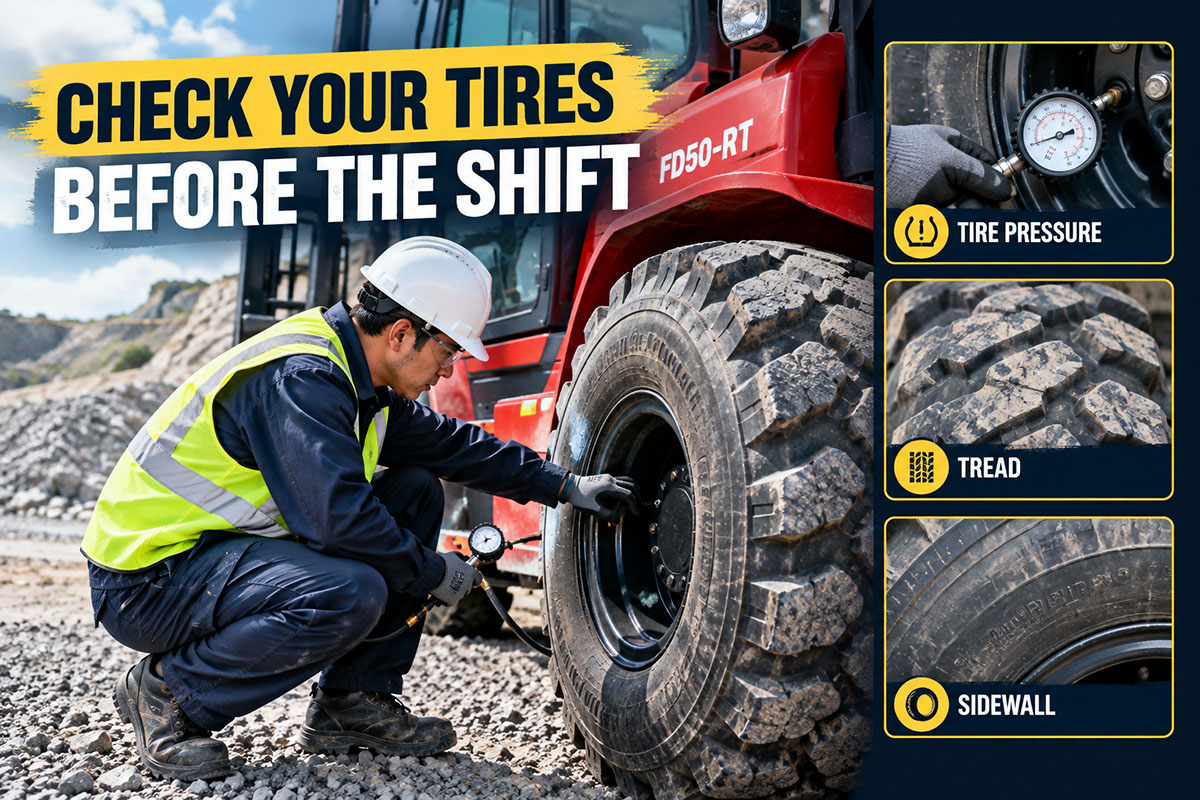
Inspect tires before every shift, ideally when they are cool. Use a calibrated pressure gauge and follow the tire and forklift manufacturer’s recommended cold inflation pressure for the specific tire, load and application.
| Inspection Point | What to Check |
|---|---|
| Tire Pressure | Check cold pressure with a calibrated gauge; do not guess from tire appearance. |
| Tread | Look for cuts, torn lugs, uneven wear, exposed material and embedded rocks or metal. |
| Sidewalls | Check for cracks, deep cuts, bulges, impact damage or exposed cord. |
| Valve and Bead Area | Check valve cap, valve stem, bead area and signs of slow air leakage. |
| Wheel and Hardware | Inspect visible wheel condition, wheel nuts and signs of damage or oil leakage nearby. |
| Dual Tires or Tread Gaps | Remove trapped stones, metal, wood or debris where applicable. |
Do not lower tire pressure simply to make the forklift feel softer on rough ground. Underinflation can increase flexing, heat and sidewall damage. Overinflation can increase impact stress and cause uneven tread wear. Adjust pressure only according to the approved tire and machine specification. Never deflate a hot tire to match a cold-pressure target.
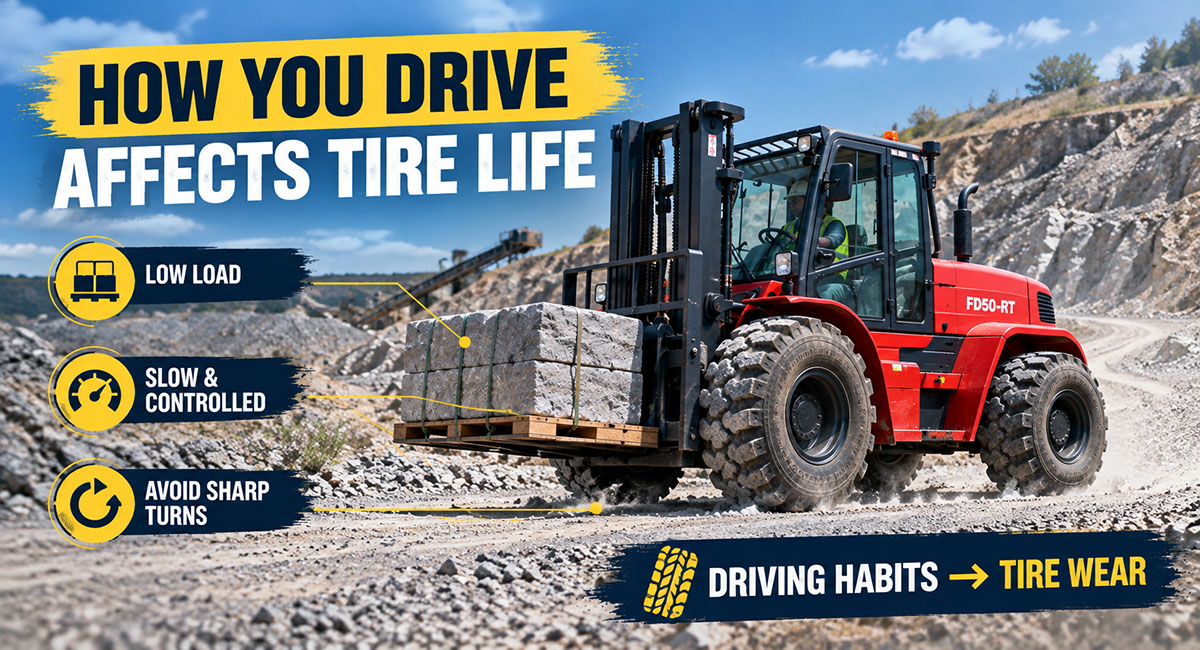
Operator driving habits have a direct effect on tire life. A rough terrain forklift should move slowly and smoothly when carrying materials over gravel, stone, mud, ruts and uneven ground.
Heavy loads, long timber bundles, stone products and wet materials increase stress on tires and axles. Slower travel and smooth steering can reduce tread scrub, impact damage and premature tire wear.
The best tire-maintenance program begins with the worksite. A clean, firm and well-planned travel route reduces punctures, tire impacts, wheel damage and unnecessary wheel spin.
| Route Problem | Recommended Action |
|---|---|
| Sharp stone, rebar, scrap or debris | Remove hazards or create a marked safe travel route. |
| Deep potholes, ruts or uneven transitions | Repair, fill, level or bypass the damaged section before heavy travel. |
| Mud, standing water or soft soil | Improve drainage, prepare a firmer route or stop work until the surface is safe. |
| Soft shoulder, trench edge or stockpile edge | Mark a safe offset and keep loaded forklifts away from unstable edges. |
| Frequent tight turns | Improve yard layout, increase turning radius or change material-staging positions. |
| Steep loaded route | Review slope limits, surface condition, load weight and travel plan before use. |
Route preparation protects more than tires. It also improves traction, reduces wheel and axle shock, helps prevent load shift and lowers the chance of getting stuck with a loaded forklift.
A forklift tire carries the full operating load of the machine, attachment and material. Do not calculate capacity from the material weight alone. Include pallet, steel stillage, forks, attachments and packaging in the total load.
The HAMAC FD30-RT is a 3 ton 4WD rough terrain forklift for construction and farm applications. The HAMAC FD50-RT is a 5 ton 4x4 diesel rough terrain forklift for stone markets, timber yards and heavy construction work. Choose the correct capacity class for the normal work load to help avoid repeated overload stress on tires, wheels, axles and the forklift chassis.
| Condition Found | Required Action |
|---|---|
| Deep sidewall cut, bulge, exposed cord or severe crack | Stop work immediately and arrange professional tire inspection or replacement. |
| Repeated air loss, damaged valve, rim issue or abnormal heat | Stop and inspect the tire, valve, bead and wheel condition before operating. |
| Large rock, metal or sharp object embedded in the tire | Stop and remove or repair safely; do not continue until the tire is assessed. |
| Wheel spin, deep ruts, sinking or loss of traction | Stop accelerating, lower the load and assess ground condition and exit route. |
| Hard impact with a pothole, stone or obstacle | Inspect tire, wheel, steering and axle area before resuming work. |
| Loose or damaged wheel hardware | Stop operation and arrange inspection before travel or lifting. |
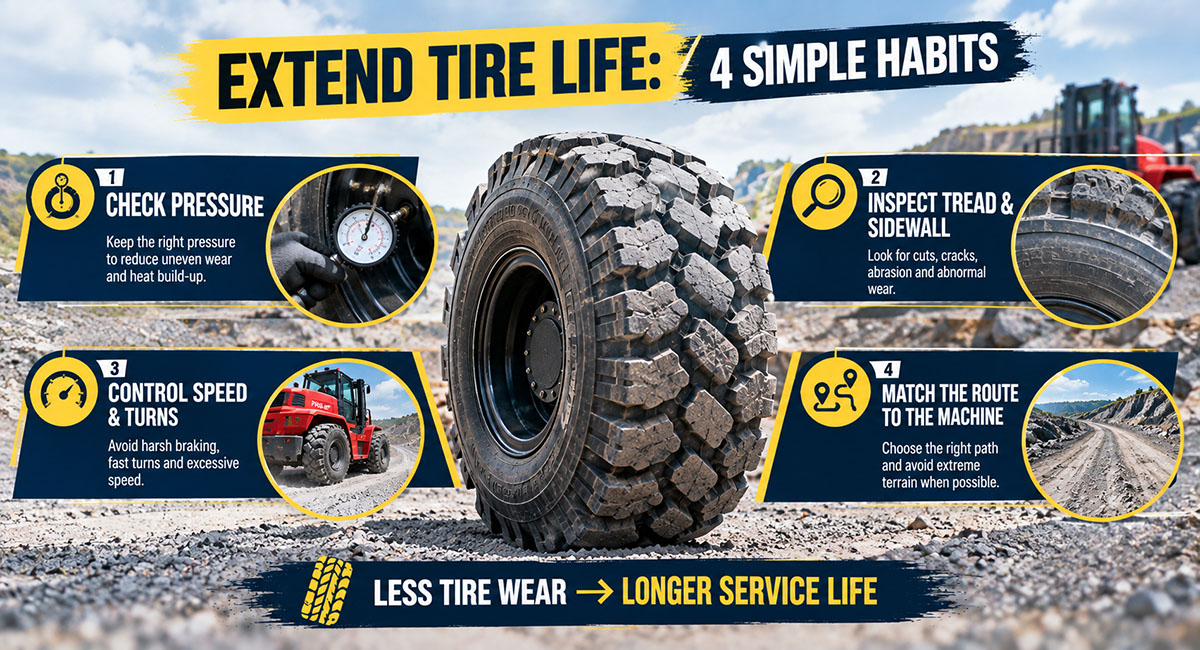
Extending rough terrain forklift tire life is not only about buying stronger tires. It depends on correct cold pressure, daily inspection, controlled loads, smooth driving and prepared routes. These habits can reduce tire replacement cost, prevent avoidable downtime and improve outdoor handling safety.
How often should rough terrain forklift tire pressure be checked?
Check tire pressure before every shift when tires are cool, using a calibrated gauge and the tire and forklift manufacturer’s recommended cold-pressure specification.
Does low tire pressure improve traction in mud?
Do not reduce tire pressure without manufacturer approval. Low pressure can increase sidewall flexing, heat buildup, damage and premature tire failure.
What damages rough terrain forklift tires most often?
Common causes include incorrect tire pressure, sharp stones, rebar, scrap, overloading, fast travel, sharp turns, wheel spin, potholes and poor route conditions.
When should a forklift tire be removed from service?
Stop work if there is exposed cord, a bulge, deep sidewall cut, severe crack, repeated air loss, rim damage, loose wheel hardware or major impact damage.
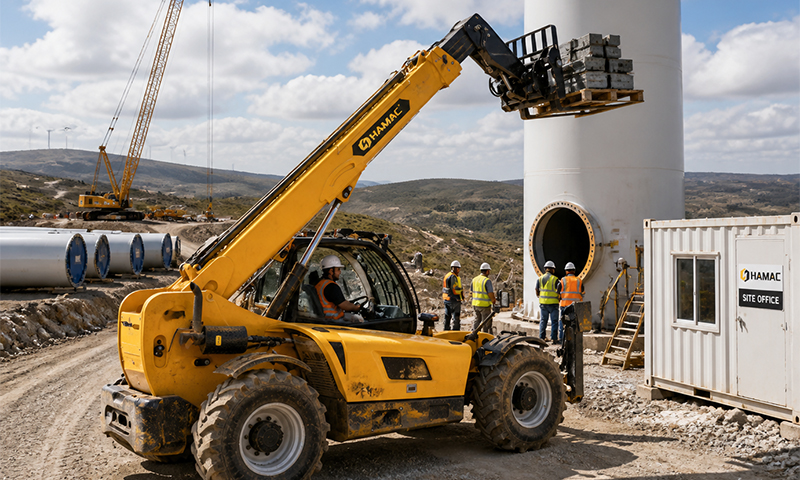
On a wind farm construction site, a HAMAC HT5010 5 ton 10 m telehandler is used to handle pallets, to
Free Consultation >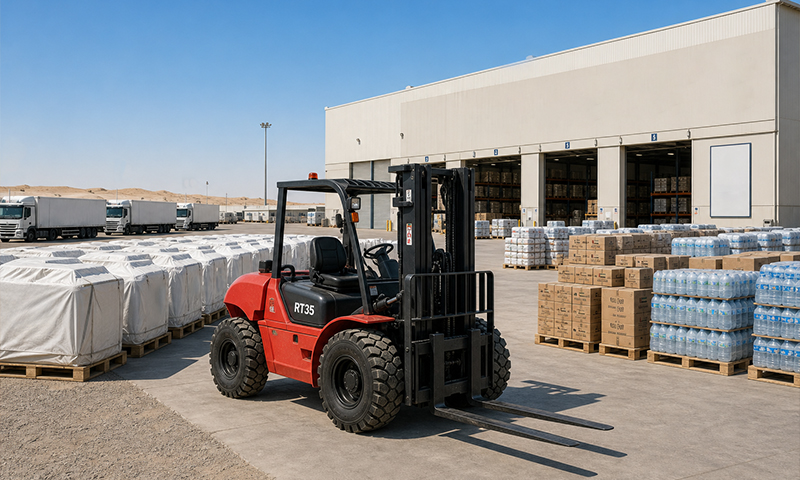
Results and Benefits By deploying RT35 forklifts, the humanitarian logistics hub achieved several key
Free Consultation >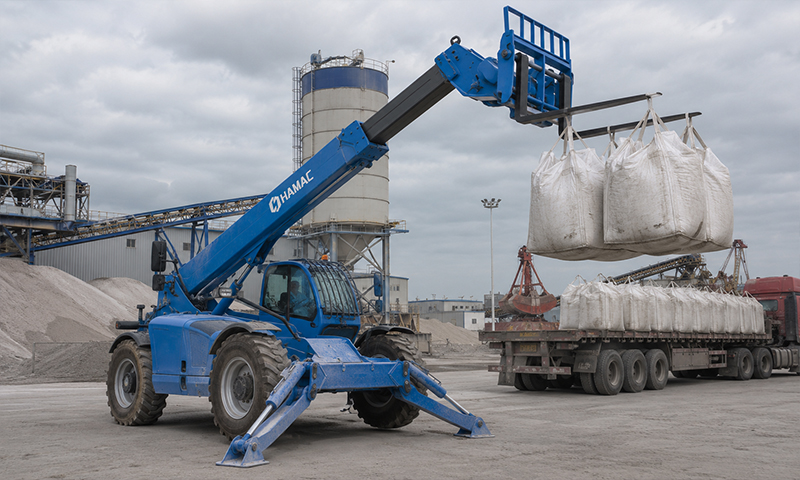
At inland port terminals, a high‑capacity telehandler is used to transfer bulk materials between tr
Free Consultation >Please fill out the form, and we can satisfy any of your needs including equipment selection, scheme design, technical support, or after-sales service. We will contact you as soon as possible.