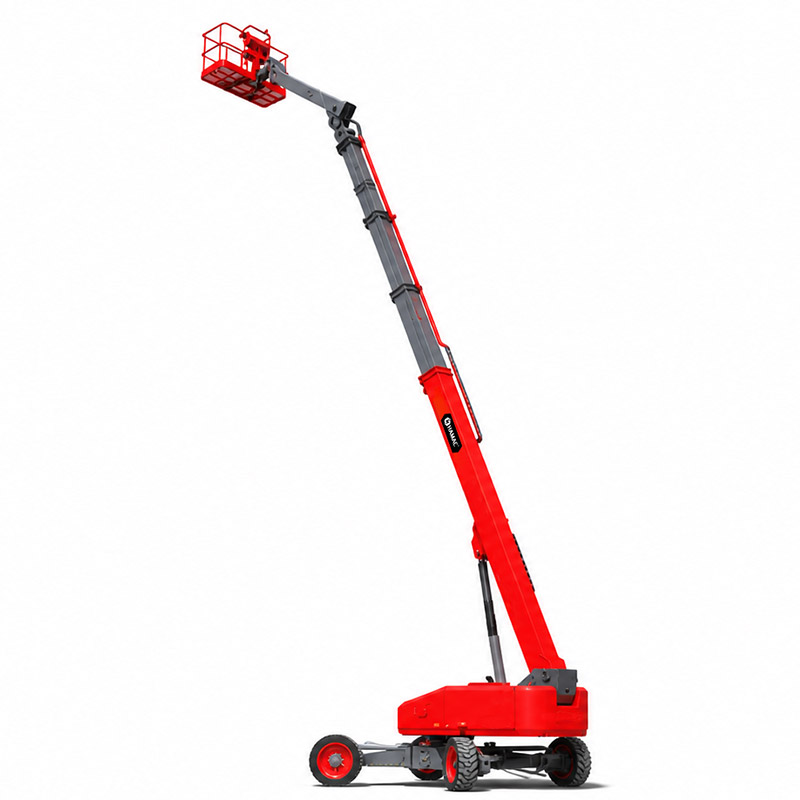
Telescopic Lift
Aerial Work Platforms
Max Platform Height: 18.3m–56m
Platform Capacity: 230kg–480kg
Consult now





A narrow scissor lift is designed to work where a standard-width machine cannot enter. But “narrow” is not the same as small, light or low, and the right choice depends on your narrowest access route, turning space and platform requirements rather than on machine size alone.
This guide compares narrow and standard scissor lifts by width, platform size, floor loading and workspace fit, so you can select the machine that reaches the work area and still supports the task.
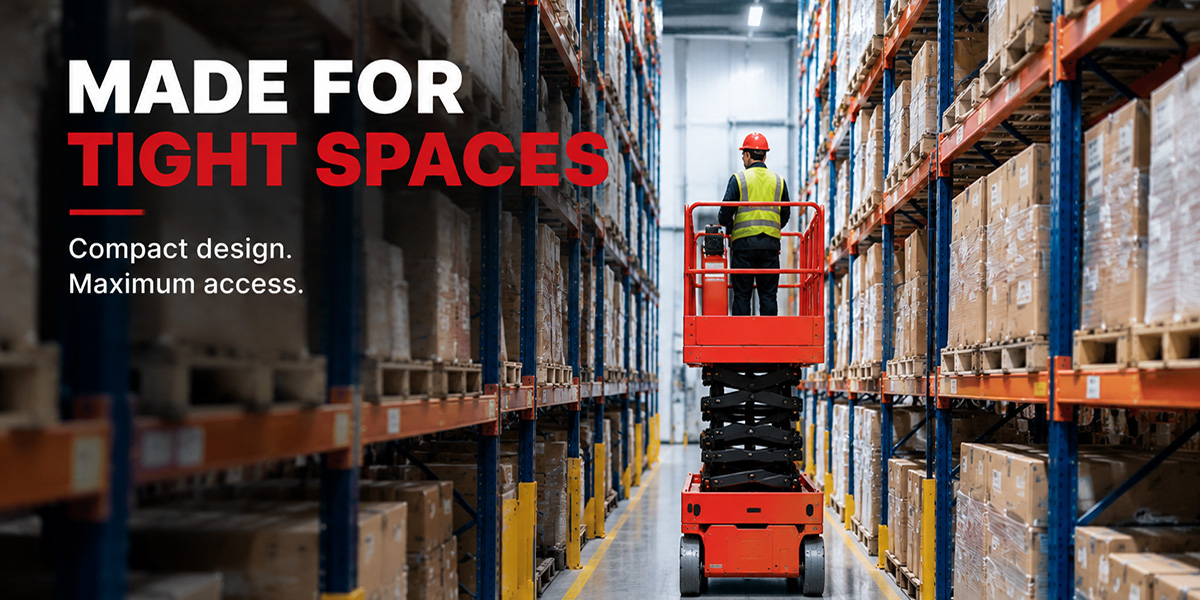
A narrow scissor lift reduces overall machine width while keeping the height capability of comparable machines. Narrow models are built for tight aisles, narrow doorways, elevators and congested indoor workspaces where a standard-width platform cannot pass or turn.
“Narrow” does not automatically mean a smaller platform or a lower capacity. Width, platform size and load rating are separate specifications, so confirm each figure for the model you are considering instead of assuming one follows the other.
Use a compact scissor lift when the access route, rather than the work point, is the limiting factor. The table below shows where narrow models are usually the better fit.
| Workspace | Why a Narrow Model Fits |
|---|---|
| Warehouse racking aisles | Machine width matches narrow aisle clearances |
| Elevator lobbies and machine rooms | Both width and stowed height are restricted |
| Mall and office corridors | Limited turning space between walls and columns |
| Clean rooms and cold stores | Tight door widths and controlled access routes |
| Specification | Narrow Scissor Lift | Standard Scissor Lift | Selection Tip |
|---|---|---|---|
| Overall machine width | Approx. 0.75–1.0 m | Approx. 1.2–1.6 m | Base the decision on measured door and aisle widths |
| Platform height | Commonly approx. 6–12 m | Commonly approx. 6–18 m | Height capability is independent of machine width |
| Platform capacity | Approx. 200–300 kg | Approx. 300–450 kg | Narrow models often carry less than standard machines |
| Platform size | Smaller deck, shorter extension | Larger deck, more occupants | Check the extension-deck limit separately |
| Stowed height | Usually lower, easier through low doors | Relatively higher | Verify for elevators and low overhead clearance |
| Turning space | Requires less | Requires more | Match to the actual aisle layout |
| Floor loading | More concentrated wheel loads | Greater total machine weight | Decide by wheel load or ground bearing, not width |
| Best suited for | Racking aisles, elevators, corridors, cold stores | Open workshops and main warehouse aisles | Final choice must follow measured site data |
The ranges above are common industry comparisons for initial planning only. “Narrow” and “standard” definitions vary between manufacturers, so confirm the final configuration against the model specification sheet before ordering.
A narrower machine can mean a smaller platform, a shorter extension deck or a different load distribution. Before choosing a narrow scissor lift, confirm that the scissor lift platform size and capacity still suit the number of operators, tools and materials for the task.
If your access route allows a standard machine, a wider platform often improves productivity by reducing repositioning. Choose narrow only when the workspace requires it, not simply because a smaller machine feels easier to handle.
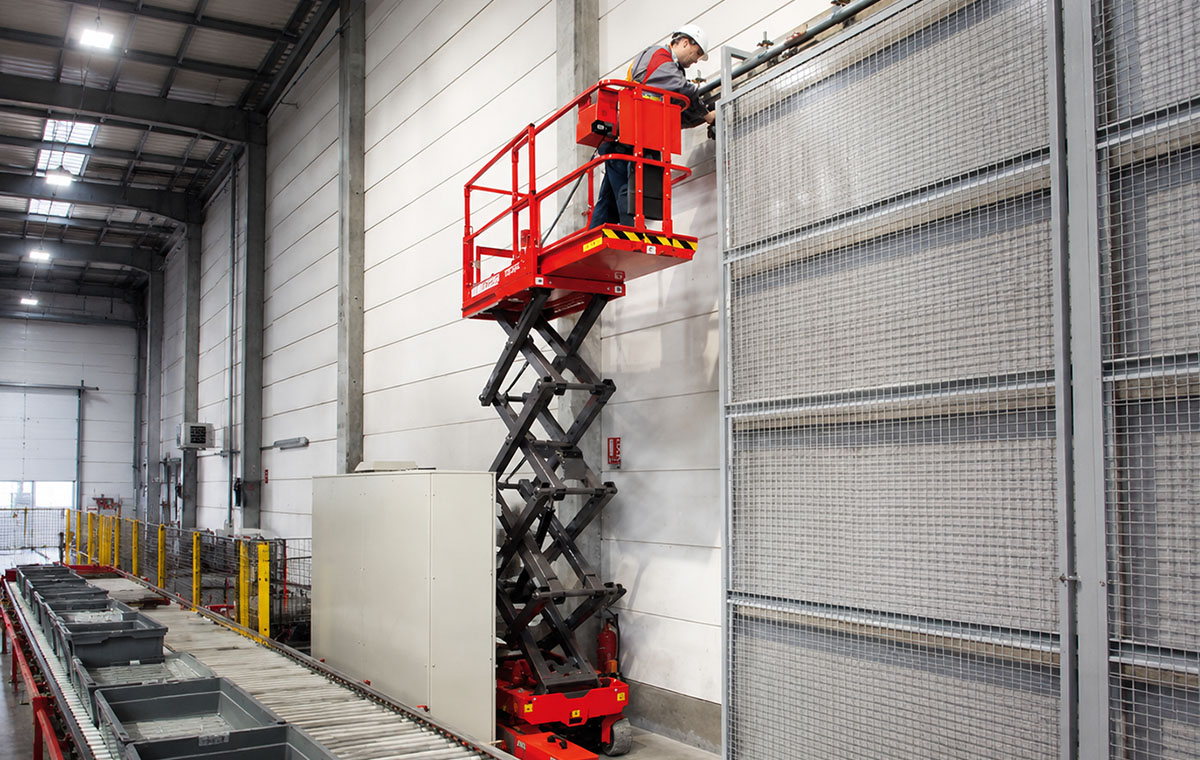
Record the following scissor lift access dimensions for the entire route to the work point, not only the final working position.
| Measurement | What to Check |
|---|---|
| Minimum door width | Narrowest opening along the full route |
| Minimum overhead clearance | Lowest ceiling, beam or duct above the route |
| Aisle and turning space | Width available for travel and repositioning |
| Elevator or freight door | Internal car dimensions and sill loading |
| Thresholds and ramps | Steps, dock edges and approved operating slope |
Give these measurements to your supplier together with the required working height and total platform load. For guidance on uneven ground and outdoor sites, see our rough terrain scissor lift buying guide.
Scissor lift floor loading must be confirmed separately from platform capacity. The building or slab must support the machine weight, operators and materials, and individual wheels create concentrated loads on the surface.
Ask for machine weight and wheel-load or ground-bearing information, then have the relevant site or building specialist confirm suitability for suspended floors, mezzanines, elevator routes and sensitive surfaces. For background on MEWP site and ground hazards, see the IPAF best practice guidance.
Use the decision table below to match your workspace to the right machine type.
| Site Condition | Recommended Choice |
|---|---|
| Wide aisles and generous turning space | Standard scissor lift |
| Doors or aisles narrower than standard machine width | Narrow scissor lift |
| Elevator or freight route is the main restriction | Verify stowed height and width before choosing |
| Platform must carry more people or materials | Standard model or higher-capacity narrow machine |
| Limited slab or floor capacity | Decide by wheel load and ground bearing, not by width |
To receive a recommendation, send HAMAC your narrowest access dimensions, required working height, total platform load and floor conditions through the inquiry form on the HAMAC scissor lift product page.
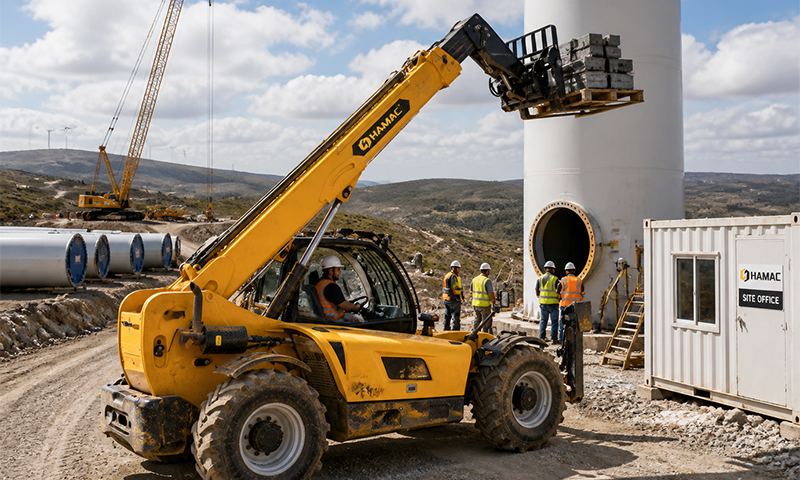
On a wind farm construction site, a HAMAC HT5010 5 ton 10 m telehandler is used to handle pallets, to
Free Consultation >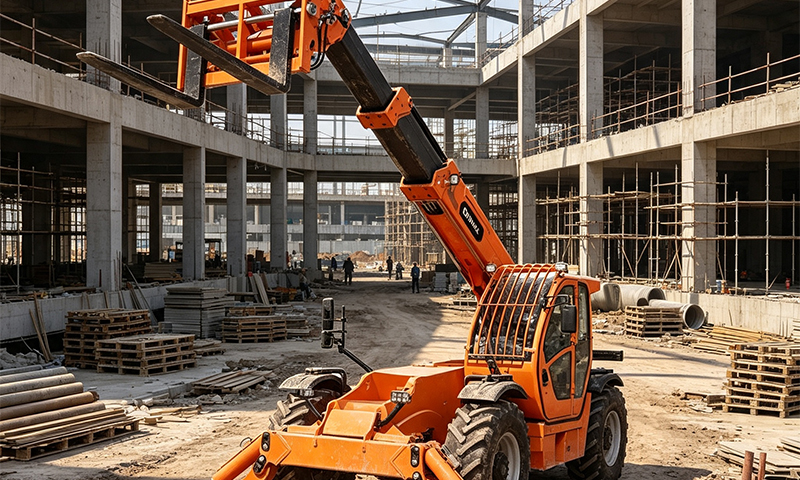
This case study describes how an HT5014 telehandler supports outdoor storage rack replenishment besid
Free Consultation >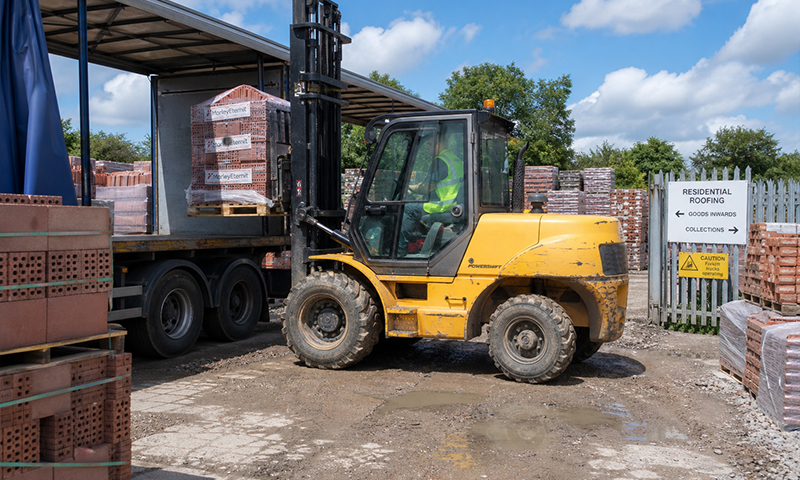
In a roof tile and brick storage yard, a rough terrain forklift is used to move palletized roofing ti
Free Consultation >Please fill out the form, and we can satisfy any of your needs including equipment selection, scheme design, technical support, or after-sales service. We will contact you as soon as possible.