FD50‑RTD
Rough Terrain Forklifts
Rated load capacity: 5,000 kg
Maximum lift height: approx. 4,500–6,000 mm
Consult now






A daily telehandler inspection takes only a few minutes, but it can help prevent equipment damage, unexpected downtime and unsafe lifting incidents. Before every shift, operators should inspect the telehandler, attachment, controls, load chart and work area before moving or lifting any load.
This practical checklist applies to construction telehandlers, rough terrain telehandlers, farm telehandlers and outdoor warehouse telehandlers. It is a daily reminder only and does not replace the official operator manual, maintenance schedule, local regulations, site safety rules or required operator training.
HAMAC offers telehandlers for construction, agriculture, warehouses and industrial yards. Whether you operate a compact 6m telehandler or a 10m rough terrain telehandler, the same rule applies: inspect the machine and worksite before every shift.
| Step | What to Check | Why It Matters |
|---|---|---|
| 1. Walk-Around | Leaks, tires, wheels, boom, forks, quick-hitch and attachment condition | Find visible damage, loose components and hydraulic problems before operation. |
| 2. Fluids and Engine | Engine oil, hydraulic oil, coolant, fuel, battery, radiator and warning signs | Helps prevent overheating, power loss and component damage. |
| 3. Cab and Safety Devices | Seat belt, mirrors, windows, lights, horn, alarms and warning indicators | Ensures the operator can see, control and warn others safely. |
| 4. Function Test | Brakes, parking brake, steering, travel controls, boom and attachment functions | Confirms that key operating and lifting functions respond correctly. |
| 5. Load and Worksite | Load chart, attachment, load weight, ground, slope, obstacles and exclusion zone | Confirms that the planned task can be completed within safe operating limits. |
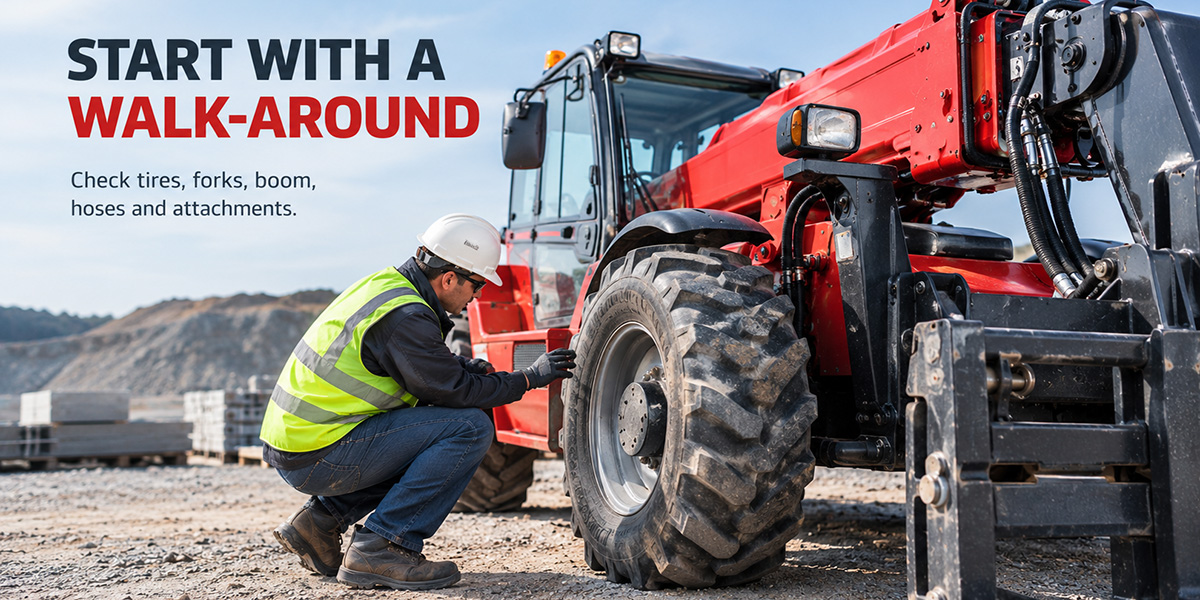
Start with a complete walk-around before entering the cab. Look under and around the telehandler for oil, fuel, coolant or hydraulic-fluid leaks. Inspect the boom, hydraulic cylinders, hoses, fittings, chassis and protective guards for visible damage or loose parts.
Rough terrain tires, hydraulic hoses and lifting components are especially important on gravel, mud, uneven construction sites and farm yards. A small leak, damaged tire or unsecured attachment can become a serious problem when the machine is travelling or lifting under load.
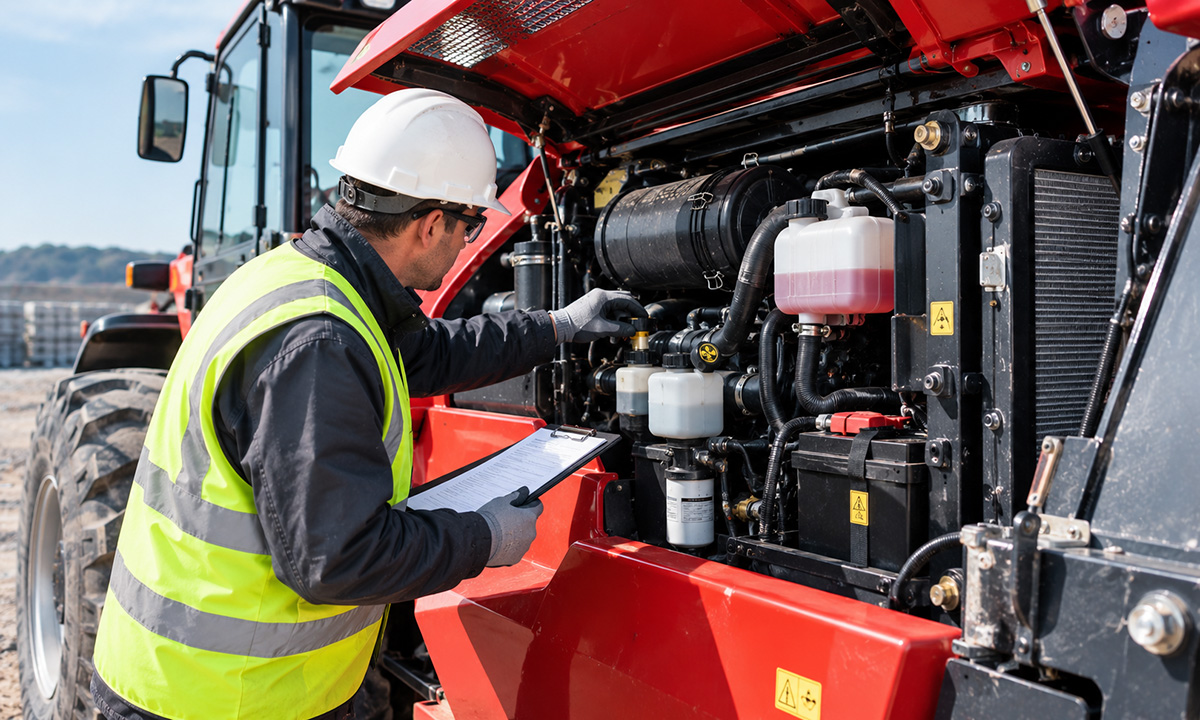
Check fluid levels and visible engine-area condition according to the manufacturer’s operator manual. Do not use incorrect fluid types or fill beyond the specified level.
| Inspection Item | Daily Check |
|---|---|
| Engine and Hydraulic Oil | Check levels and look for leaks, contamination or warning indicators. |
| Coolant and Radiator | Check coolant level when safe, and remove debris that may affect cooling airflow. |
| Fuel and Battery | Confirm sufficient fuel and inspect battery terminals or visible wiring for damage. |
| Seat Belt and Seat | Confirm the belt latches correctly and the operator seat is secure and properly adjusted. |
| Visibility Equipment | Check mirrors, windows, cameras and wipers for clear visibility. |
| Warning Devices | Test horn, work lights, warning lights, reverse alarm and dashboard warnings. |
If the machine has a load-sensing, overload-warning or stability system, make sure its warning indicators are working and have not been bypassed. Daily safety checks should include the horn, reverse alarm, lights, brakes, steering modes and warning systems before the telehandler enters the work area.
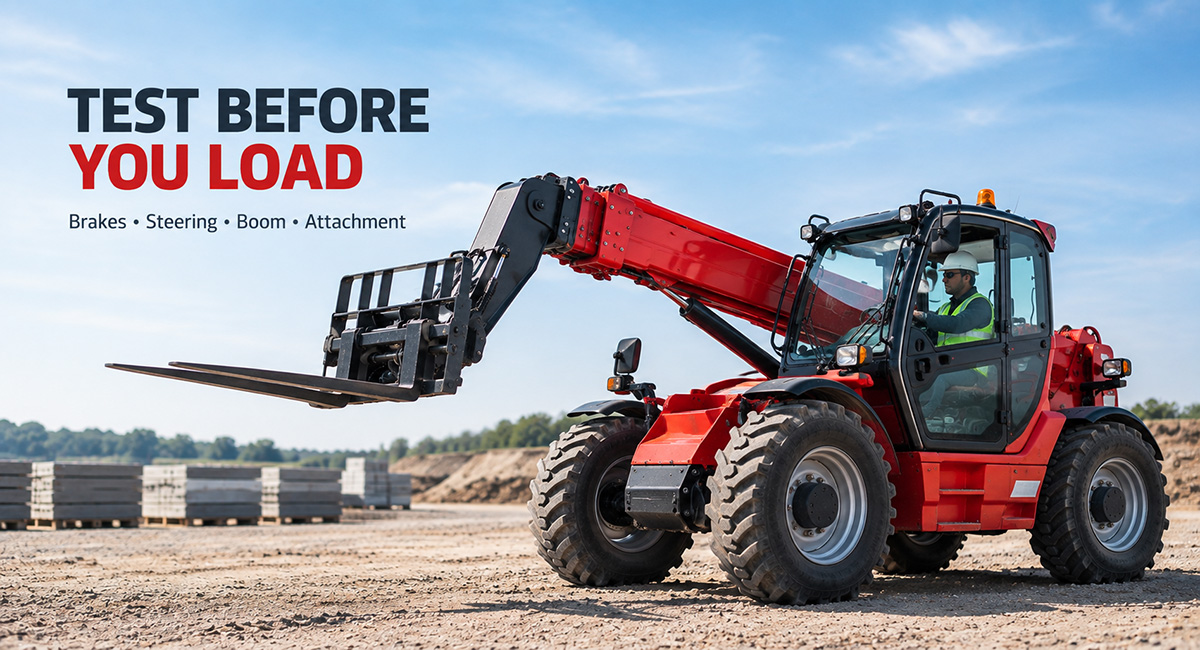
Perform the function test in a clear, controlled area at low speed and without a load. Confirm that all movements are smooth, controlled and free from unusual noise, vibration or delay.
The HAMAC HT3510 3.5 ton 10m telehandler uses 4x4 capability and multiple steering modes for changing site conditions. Operators should test steering, brakes, boom movements and attachment locking before working near buildings, scaffolding, trucks or stored materials.
Before the first lift, confirm the actual load weight, pallet or stillage weight, attachment weight, load centre, required lift height and forward reach. The rated capacity shown in a product specification is not the capacity available at every boom position.
Always use the official load chart for the exact telehandler model and approved attachment. The load chart must be present, readable and suitable for the attachment currently fitted to the machine. Available lifting capacity changes with boom height, forward reach and attachment configuration.
| Worksite Check | What to Confirm |
|---|---|
| Ground Condition | Firm, stable ground without soft areas, standing water, deep ruts or dangerous slopes. |
| Obstacles | Check for overhead power lines, scaffolding, building edges, fences and overhead structures. |
| Travel Route | Keep routes clear of pedestrians, loose debris, parked vehicles and unstable surfaces. |
| Load Information | Confirm total load weight, dimensions, load centre and correct attachment. |
| Exclusion Zone | Keep people away from the machine, forks, boom and suspended or elevated loads. |
A 2.5 ton telehandler does not automatically lift 2,500 kg at full height or maximum forward reach. A 3.5 ton telehandler does not automatically lift 3,500 kg at 10 m. The operator must follow the load chart for the exact machine, boom position and attachment configuration.
Do not continue operating a telehandler if a critical defect is found. Tag out the machine, report the issue and follow the site maintenance procedure.
| Stop Work If You Find... | Why It Is Unsafe |
|---|---|
| Brake, steering or parking-brake failure | The machine may not stop, steer or remain parked safely. |
| Visible hydraulic leak, damaged hose or damaged cylinder | Hydraulic failure can cause uncontrolled boom or attachment movement. |
| Cracked, bent or unsecured forks, boom, attachment or locking pins | The load or attachment can shift, fall or fail during lifting. |
| Damaged tire, wheel or loose wheel hardware | Stability, steering and traction can be affected, especially on uneven ground. |
| Faulty seat belt, alarm, warning light or safety system | The operator and nearby workers may not receive required protection or warning. |
| Unreadable load chart or wrong attachment configuration | The operator cannot verify the permitted capacity for the planned lift. |
| Soft ground, excessive slope, open trench or unsafe work area | The machine can slide, tip or lose ground support during travel or lifting. |
Daily inspection is the first step in safe telehandler operation. Use the checklist before every shift, after an attachment change, after transport and whenever the machine may have been damaged or exposed to abnormal conditions.
For compact-site work, explore the HAMAC HT2506 2.5 ton 6m telehandler. For medium-height construction and higher material placement, explore the HAMAC HT3510 3.5 ton 10m telehandler.
Contact HAMAC for telehandler product information, technical support and service consultation.
How often should a telehandler be inspected?
Inspect the telehandler before every shift and after an attachment change, transport move, incident or suspected damage. Follow the manufacturer manual and local site requirements.
What is the most important telehandler daily check?
There is no single check that replaces the others. Operators should inspect tires, hydraulics, boom, forks, attachment locks, brakes, steering, alarms, load chart and worksite conditions.
Can I operate if there is a small hydraulic leak?
No. Visible hydraulic leakage should be reported and repaired before operation because it can become a lifting, steering, fire or environmental hazard.
Why must I check the load chart every day?
Telehandler capacity changes with boom height, forward reach, attachment weight and load centre. The correct load chart must match the telehandler model and attachment currently in use.
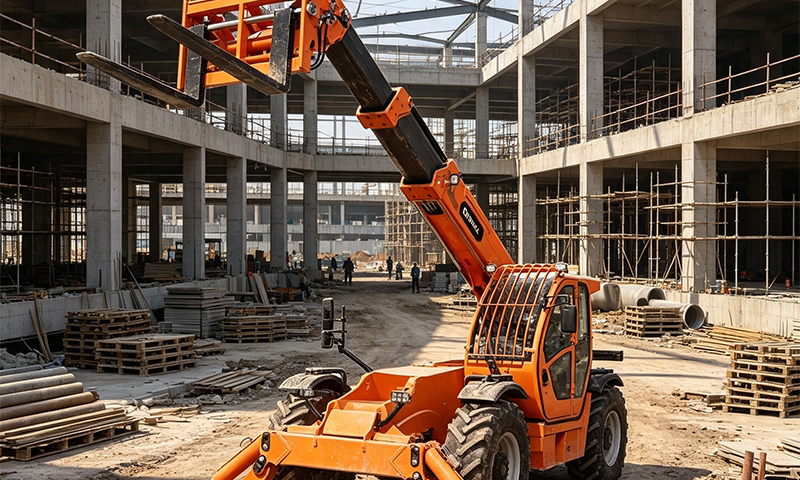
This case study describes how an HT5014 telehandler supports outdoor storage rack replenishment besid
Free Consultation >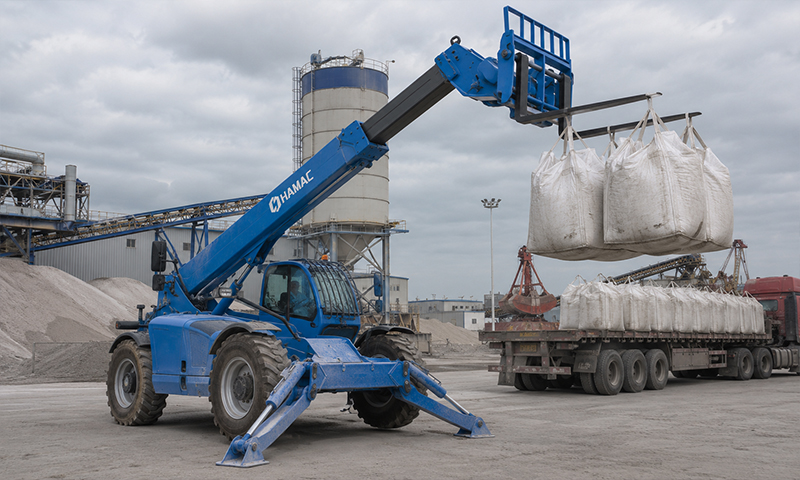
At inland port terminals, a high‑capacity telehandler is used to transfer bulk materials between tr
Free Consultation >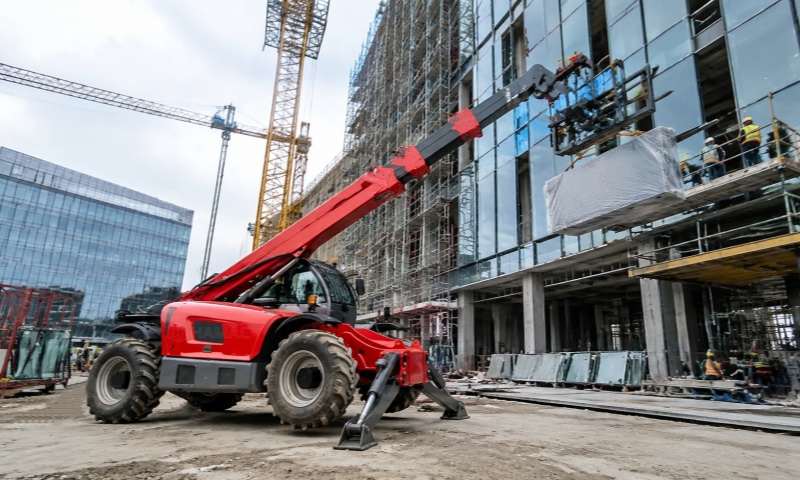
On a commercial building project, an HT4010 telehandler is used to assist facade and curtain wall ins
Free Consultation >Please fill out the form, and we can satisfy any of your needs including equipment selection, scheme design, technical support, or after-sales service. We will contact you as soon as possible.