Vertical Lifts
Aerial Work Platforms
Max Working Height:5.8–10.3 m
Platform Capacity:160–227 kg
Consult now






Choosing between the HAMAC HT2506 and HT3510 telehandler depends on more than whether you need 2.5 ton or 3.5 ton lifting capacity. The correct machine must match your heaviest normal load, required lift height, forward reach, attachment configuration, site access and ground conditions.
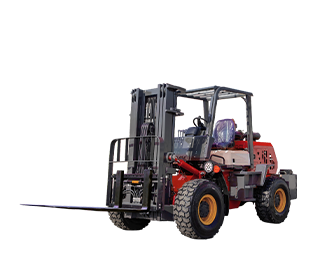
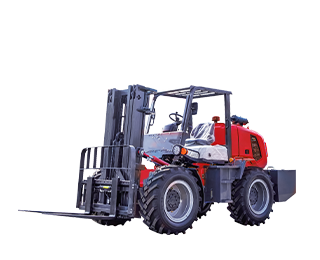
The HAMAC HT2506 telehandler is a compact 2.5 ton / 6 m rough terrain telehandler designed for tight construction sites, farms, building-material yards and everyday pallet handling. The HAMAC HT3510 telehandler is a 3.5 ton / 10 m model for customers who need more lifting capacity, more working height and more flexibility for medium-height construction, outdoor storage and industrial material handling.
If most of your work involves unloading cement, bricks, blocks, timber, feed bags or palletized goods in narrow work areas, the HT2506 may be the better value. If you regularly need to handle heavier loads, supply materials to second or third floor work areas, replenish higher outdoor storage racks or work around scaffolding and building edges, the HT3510 may be the more suitable choice.
This guide compares the HT2506 2.5 ton 6m telehandler and the HT3510 3.5 ton 10m telehandler for construction contractors, building-material suppliers, farm operators, warehouse managers, industrial yards and equipment dealers.
| If Your Main Requirement Is... | Recommended Model | Main Reason |
|---|---|---|
| Working in a tight construction site, narrow yard, barn or limited-access area | HT2506 | Compact 2.5 ton / 6 m design for practical daily handling and easier site access. |
| Unloading bagged cement, bricks, blocks, timber, feed pallets and general materials | HT2506 | Suitable for common pallet-handling tasks where 6 m lift height is sufficient. |
| Handling heavier pallets, steel components, scaffolding packs or large material bundles | HT3510 | Higher 3.5 ton capacity class offers more load-handling range, subject to the load chart. |
| Supplying materials to second-floor, third-floor or medium-height work areas | HT3510 | 10 m maximum lift height supports more elevated placement than a 6 m compact telehandler. |
| Operating in outdoor storage yards with higher racks or high-sided truck loading | HT3510 | Additional lift height and reach can improve material placement flexibility. |
| Need a machine mainly for daily low-level handling and want to control total equipment cost | HT2506 | A compact model can be more practical when higher lift height is not a regular requirement. |
The best telehandler is usually the smallest suitable model that can safely complete your most frequent and most important lifts. Do not select the machine only by maximum rated capacity: actual available lifting capacity changes with boom height, forward reach, load centre, attachment weight and ground conditions.
| Specification | HAMAC HT2506 | HAMAC HT3510 |
|---|---|---|
| Machine Type | Compact rough terrain telehandler | Medium-height rough terrain telehandler |
| Rated Lifting Capacity | 2,500 kg | 3,500 kg |
| Maximum Lift Height | 6 m | 10 m |
| Typical Work Area | Tight building sites, farms, small yards and routine pallet handling | Medium-height construction, higher storage, outdoor yards and heavier material handling |
| Typical Materials | Bagged cement, bricks, blocks, timber, feed bags, fertilizer and palletized supplies | Heavier pallets, scaffolding, roof materials, steel components, construction supplies and high-rack goods |
| Terrain Capability | 4x4 rough terrain configuration for outdoor site conditions | 4x4 rough terrain configuration for outdoor site conditions |
| Steering | Suitable for manoeuvring in compact work areas | Front-wheel, four-wheel and crab steering modes for flexible positioning |
| Best Fit | Low-rise work, frequent unloading and restricted access | More capacity, more lift height and medium-height material placement |
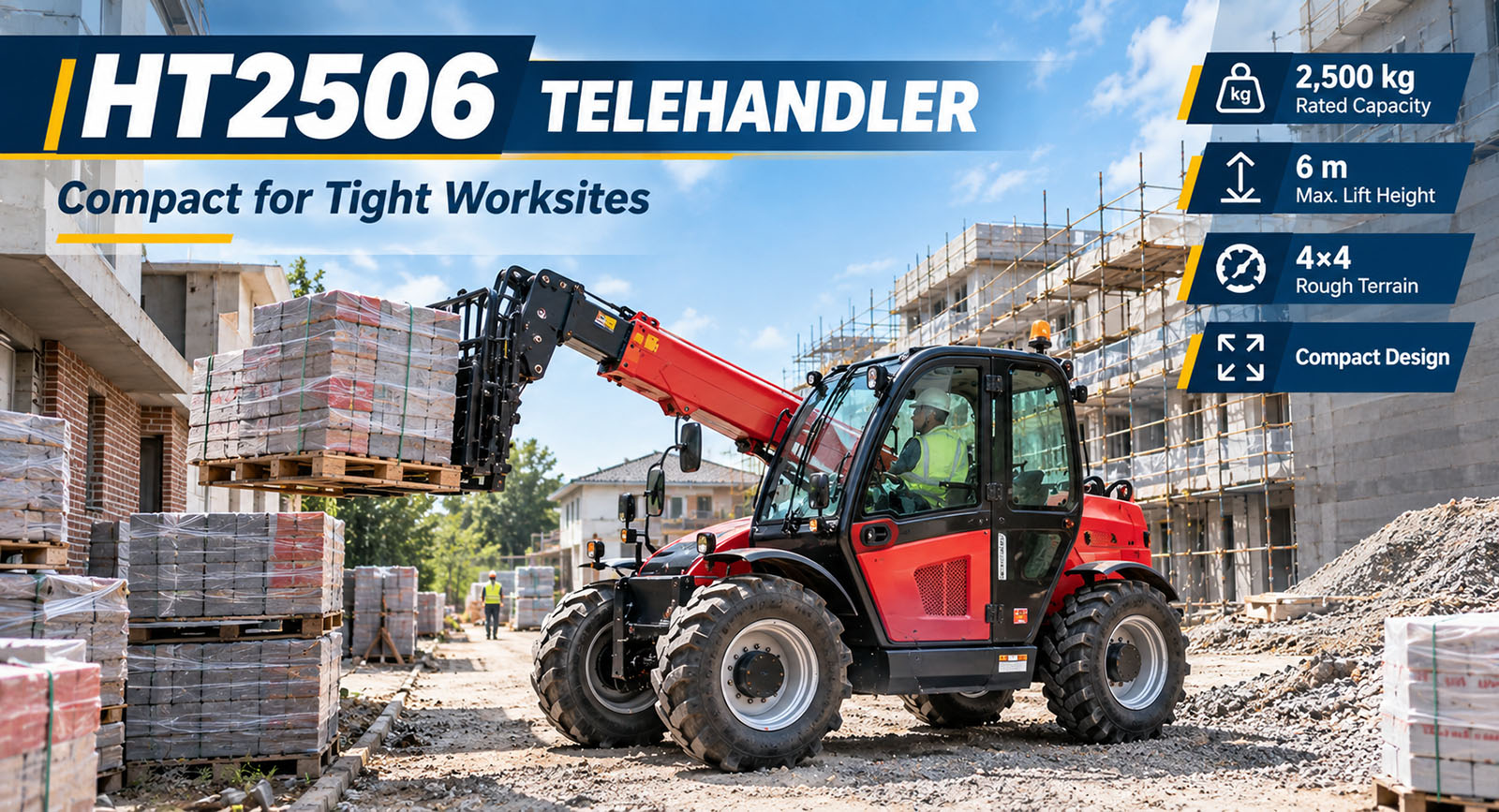
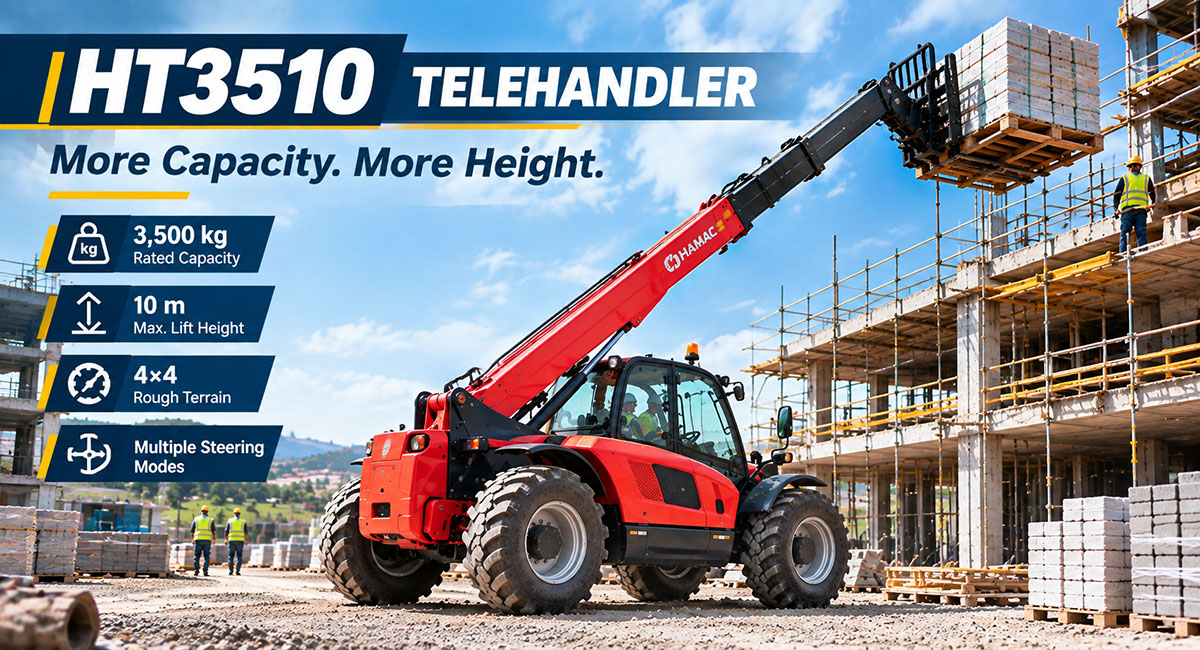
The HT2506 is positioned as a compact 2.5 ton, 6 m telehandler for tight building sites and farms. The HT3510 is a 3.5 ton, 10 m high-reach model with 4x4 capability and multiple steering modes, including crab steering, for more demanding construction and outdoor material-handling work.
The HT2506 is designed for customers who need a compact 2.5 ton telehandler for regular pallet movement, truck unloading and material staging. It is especially suitable for projects where space is limited and where the machine must move around buildings, gates, parked vehicles, material stacks, barns or warehouse outdoor storage zones.
A 6m telehandler can be an efficient solution for low-rise housing construction, renovation projects, rural infrastructure, farms, building-material distribution yards and general outdoor logistics. It can handle common materials such as cement pallets, concrete blocks, bricks, dry mortar, timber, feed bags, seed pallets, fertilizer and packaged site supplies, provided that the actual lift remains within the approved load chart.
The HT2506 can be used with approved pallet forks, buckets and other suitable attachments. This makes it practical for customers who need one machine to manage more than one type of work, such as unloading a truck in the morning, moving building materials during the day and cleaning or loading loose materials with a compatible bucket when required.
| Industry | Typical HT2506 Application | Why HT2506 Fits |
|---|---|---|
| Residential Construction | Unload cement, bricks, concrete blocks, timber and roofing materials | Compact dimensions and 6 m lift height support low-rise building tasks and tight site access. |
| Building Material Yard | Move cement pallets, dry mortar, tiles, insulation and packaged products | Suitable for repetitive loading, unloading and short-distance material movement. |
| Agriculture and Farming | Handle feed pallets, fertilizer, seed, hay bales and farm maintenance materials | Useful around barns, storage sheds, farm roads and uneven outdoor areas. |
| Warehouse Outdoor Yard | Transfer pallets between warehouse doors, storage areas and dispatch trucks | Adds rough-terrain mobility and forward reach beyond a conventional warehouse forklift. |
| Landscaping and Maintenance | Move pallets, timber, soil, gravel and maintenance supplies | Supports flexible daily tasks with approved forks and bucket attachments. |
Customers should select the HT2506 when compact access and routine work efficiency are more important than frequent high-level placement. If the project regularly requires material supply beyond 6 m, especially to higher building levels or outdoor storage racks, the HT3510 may provide a better long-term operating range.
The HT3510 is designed for customers who need more working range than a compact 6m telehandler. With a 3.5 ton rated lifting capacity and a 10 m maximum lift height, it is suitable for medium-height construction, building-material yards, industrial sites, warehouse outdoor storage areas and larger agricultural operations.
The main advantage of the HT3510 is not only the additional 1,000 kg rated capacity compared with the HT2506. It also provides an additional 4 m of maximum lift height. This can be important when supplying materials to second-floor or third-floor work areas, reaching higher storage positions, loading high-sided vehicles or placing materials near roof and façade work zones.
The HT3510 is suitable for pallets of cement, bricks, dry mortar, insulation, timber, pipe supports, scaffolding components, roofing materials, equipment accessories and other site supplies. The machine has 4x4 rough terrain capability and multiple steering modes, helping it manoeuvre around material stacks, scaffolding, trucks and changing site layouts.
| Industry | Typical HT3510 Application | Why HT3510 Fits |
|---|---|---|
| Commercial Construction | Supply bricks, mortar, scaffolding, insulation and construction pallets to elevated work zones | 10 m lift height helps support medium-height material placement and project logistics. |
| Multi-Storey Building Work | Move installation materials, packaged supplies and pallets to lower and middle building levels | Offers more height and load-handling range than a 6 m compact telehandler. |
| Outdoor Warehouse Storage | Replenish higher storage locations and load or unload high-sided trucks | Telescopic boom supports elevated pallet placement, subject to rack rating and load chart limits. |
| Industrial Yard | Handle steel components, packaged equipment, maintenance supplies and heavy pallets | 3.5 ton capacity class and rough-terrain mobility suit outdoor industrial logistics. |
| Large Farm or Feed Yard | Stack feed pallets, fertilizer, seed, hay bales and maintenance materials | Useful where higher stacking and more material-handling capacity are needed. |
The HT3510 is a practical choice when the project needs a better balance between compact site mobility and greater lift height. It can help reduce repeated manual material carrying and improve the delivery of supplies to elevated locations, but every lift must remain within the official load chart for the exact boom position and attachment configuration.
The difference between a 2.5 ton and a 3.5 ton telehandler is not simply one extra ton. In real work, the HT3510 may provide more useful load margin when handling heavier cement pallets, steel stillages, larger timber bundles, scaffolding packs, industrial components or attachments that add weight to the machine.
For example, a pallet of bagged cement may include the weight of the bags, a wooden or plastic pallet, stretch wrapping and sometimes a protective frame. A steel stillage for precast or building components also adds considerable weight. If the work requires higher placement or forward reach, the available capacity can reduce further. A 3.5 ton class telehandler may offer more room for these real operating conditions, but only the official load chart can confirm a specific lift.
| Work Requirement | Potential Benefit of HT2506 | Potential Benefit of HT3510 |
|---|---|---|
| Standard Cement and Brick Pallets | Efficient for normal loads where compact access is important. | Provides more potential capacity margin for heavier or larger pallet configurations. |
| Low-Rise Material Supply | 6 m height can suit ground-level and lower-level material placement. | 10 m height supports more elevated placement and broader site coverage. |
| Scaffolding and Roofing Materials | Suitable for lower placement where load and reach remain within limits. | More suitable for medium-height supply and heavier packaged material bundles. |
| High-Sided Truck Loading | Suitable where truck height and required reach are within 6 m working range. | Additional boom height and reach can improve loading flexibility. |
| Outdoor Rack Replenishment | Best for lower rack levels and compact storage areas. | Better suited for higher outdoor storage positions where conditions are appropriate. |
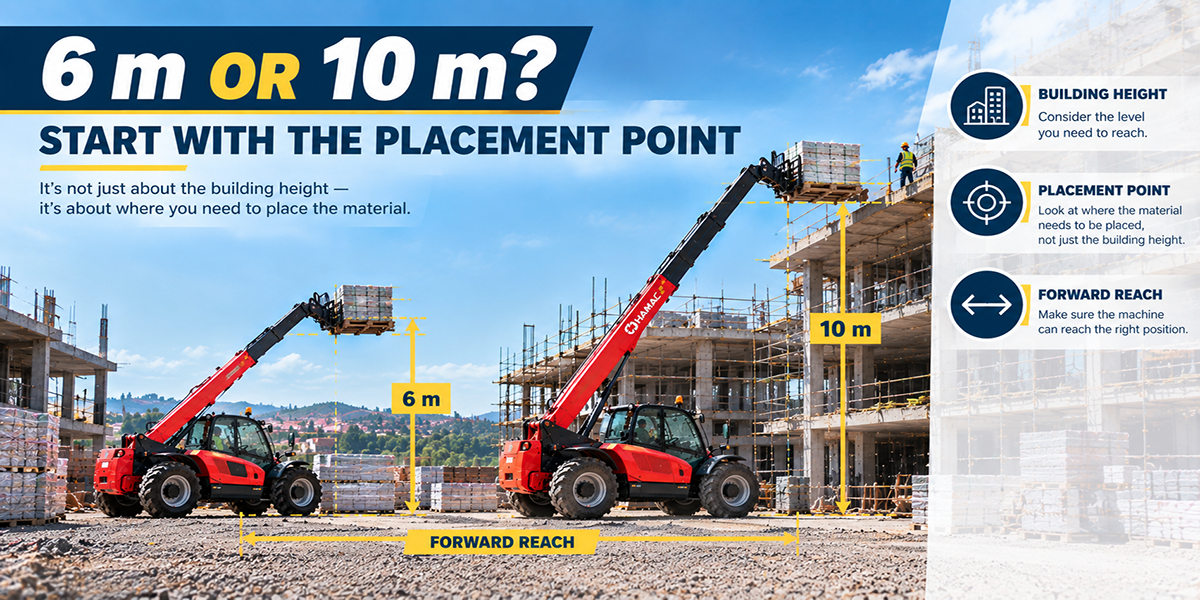
Choosing between a 6m telehandler and a 10m telehandler should begin with the actual position where the materials must be placed. Do not select a telehandler only by the number of building floors. A two-storey building may require more than 6 m if materials must be placed over scaffolding or onto a raised slab edge. A three-storey project may not need 10 m for every task if most materials are handled at ground level.
Measure the highest regular placement point, then consider the forward reach required from the machine to that point. For example, materials may need to be placed onto a loading platform, across a drainage channel, near a façade, behind scaffolding or into a high-sided truck.
| Question to Ask | Why It Matters |
|---|---|
| What is the highest regular material placement point? | This helps determine whether a 6 m or 10 m telehandler is required. |
| How far forward must the load be placed? | Forward reach affects the remaining available lifting capacity. |
| Will the machine work beside scaffolding, barriers or high-sided trucks? | Obstacles may require additional boom height or horizontal reach. |
| Will the lift happen occasionally or every day? | Frequent medium-height lifting can justify selecting the HT3510. |
| Does the site have enough space for the larger working range? | Machine access, turning and stable positioning must be planned before purchase. |
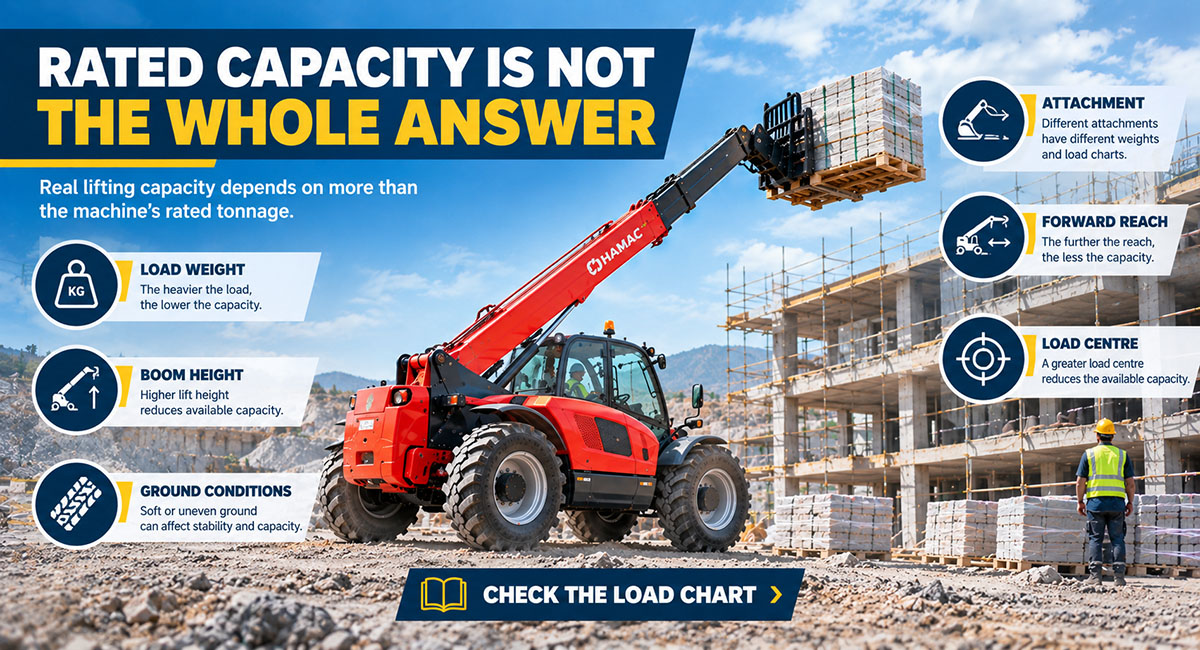
A 2.5 ton telehandler does not automatically lift 2,500 kg at full 6 m height or maximum forward reach. A 3.5 ton telehandler does not automatically lift 3,500 kg at full 10 m height or maximum boom extension. The rated capacity is normally the maximum lift under specified conditions.
As a telehandler boom rises and extends forward, the load creates greater leverage on the machine. The available safe lifting capacity normally changes. The official telehandler load chart shows the permitted load for different lift heights, forward reaches, load centres and attachment configurations.
| Factor | How It Changes the Lift |
|---|---|
| Actual Load Weight | The heaviest normal load must be used for equipment selection, not an average estimate. |
| Pallet or Stillage Weight | Wooden pallets, steel frames, crates, wrapping and transport stillages add to total lifted weight. |
| Fork and Attachment Weight | Pallet forks, buckets, lifting jibs, hooks and other attachments reduce the remaining capacity. |
| Load Centre | Long loads or loads positioned farther from the carriage may reduce available capacity. |
| Boom Height | Capacity normally changes as the boom is raised higher. |
| Forward Reach | Capacity normally changes as the boom extends farther forward. |
| Ground Condition | Soft, uneven, sloped or unstable ground may reduce stability and make a lift unsuitable. |
Always use the official manufacturer load chart for the exact telehandler model and approved attachment. Operators must also follow the machine manual, local safety rules, project lifting plan and site operating procedures. The load chart is the final reference for whether a specific lift is permitted.
Both compact and medium-height telehandlers can support different applications through approved attachments. Pallet forks are commonly used for bricks, blocks, bagged cement, dry mortar, timber, feed pallets and packaged industrial goods. Buckets can be used for sand, soil, gravel, grain, feed and loose material handling.
Lifting jibs, hooks, bale forks, bale clamps and grapple buckets may also be available for specific projects, subject to the approved telehandler configuration. Attachment weight and the new load centre must always be included in the lifting calculation.
| Attachment | Typical Application | Important Selection Check |
|---|---|---|
| Pallet Forks | Cement, bricks, blocks, dry mortar, timber, feed bags and palletized goods | Confirm fork length, fork spacing, fork capacity and actual load centre. |
| General Purpose Bucket | Soil, sand, gravel, grain, feed and loose materials | Check material density, bucket volume and available load-chart capacity. |
| Lifting Jib or Crane Arm | Approved components, frames, equipment and maintenance materials | Confirm attachment approval, lifting accessories and the project lifting procedure. |
| Hook Attachment | Specified suspended loads requiring controlled placement | Check compatibility, suspended-load weight and local site safety requirements. |
| Bale Fork or Bale Clamp | Hay bales, straw bales, silage bales and agricultural materials | Confirm bale weight, attachment suitability and load-chart limits. |
| Grapple Bucket | Biomass, crop residue, manure, bedding and loose irregular materials | Check auxiliary hydraulic requirements and attachment compatibility. |
Read the HAMAC telehandler attachments guide for construction and farming to learn more about forks, buckets, lifting jibs and agricultural attachments.
A telehandler must be able to enter the site, travel safely between work areas and position on stable ground before it can lift materials. This is why compact dimensions can be as important as lifting capacity.
The HT2506 is designed for tighter building sites, farm yards and restricted outdoor spaces. Customers should compare the machine dimensions with gate width, warehouse doors, barn entrances, access roads, turns between buildings and available operating space. The HT3510 adds capacity and height, but the customer should also allow enough room for boom movement, turning, material staging and safe lift positioning.
The HT2506 may offer better value if your main requirement is compact access, low-rise material handling and daily movement of normal pallets. It can be a practical choice for customers who need a 2.5 ton 6m telehandler for cement, bricks, blocks, timber, feed, fertilizer and general outdoor handling without paying for lift height they rarely use.
The HT3510 may offer better value when the extra 1 ton capacity and 10 m lift height are used regularly. It can reduce repeated material transfers, support elevated work areas, serve higher outdoor storage positions and manage heavier material packages. Its value comes from matching genuine working needs—not simply from having a bigger number on the specification sheet.
| Customer Priority | Better Starting Point |
|---|---|
| Lowest practical size for tight access and normal daily material handling | HT2506 |
| More lift height for medium-level construction and elevated supply | HT3510 |
| Standard pallets and routine truck unloading | HT2506, subject to actual load and lift requirements |
| Heavier pallets, larger material bundles or more demanding outdoor logistics | HT3510, subject to actual load chart and site conditions |
| Farm barns, tight yards and lower stacking requirements | HT2506 |
| High storage, second/third floor supply and more complex project logistics | HT3510 |
To recommend the right 2.5 ton or 3.5 ton telehandler, HAMAC needs to understand your actual working conditions. Providing complete information helps prevent over-specification, insufficient capacity and unnecessary project delays.
| Please Provide | Why It Helps |
|---|---|
| Maximum total load weight | Helps compare the real requirement against available capacity. |
| Load dimensions and load centre | Important for fork selection and load-chart verification. |
| Required lift height | Helps determine whether 6 m or 10 m is suitable. |
| Required forward reach | Helps confirm whether the load can be placed at the final location. |
| Site photos or videos | Shows access limits, ground conditions, storage layout and obstacles. |
| Required attachment | Helps match pallet forks, bucket, jib, hook, bale attachment or other approved tools. |
| Destination country and port | Helps prepare the appropriate export, delivery and quotation solution. |
HAMAC can help you compare the HT2506 and HT3510 based on your material weight, worksite access, lift height, forward reach, attachments and project environment. Explore the complete HAMAC telehandler range or contact our team for a model recommendation.
Contact HAMAC for HT2506 and HT3510 telehandler selection, technical information and quotation.
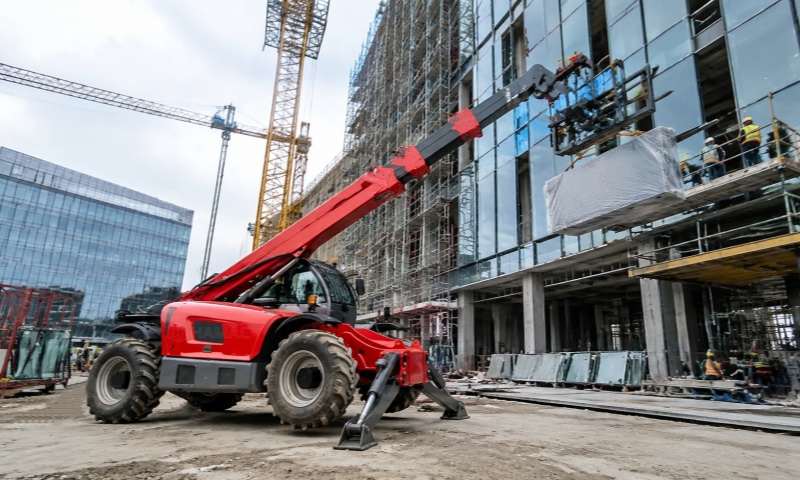
On a commercial building project, an HT4010 telehandler is used to assist facade and curtain wall ins
Free Consultation >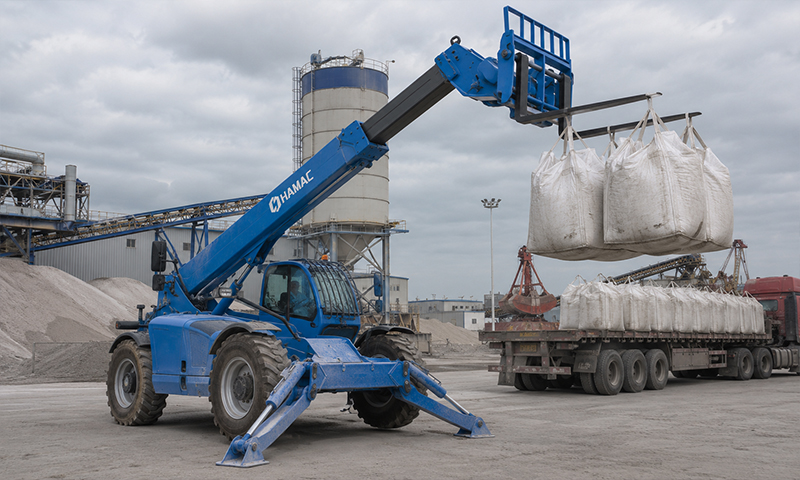
At inland port terminals, a high‑capacity telehandler is used to transfer bulk materials between tr
Free Consultation >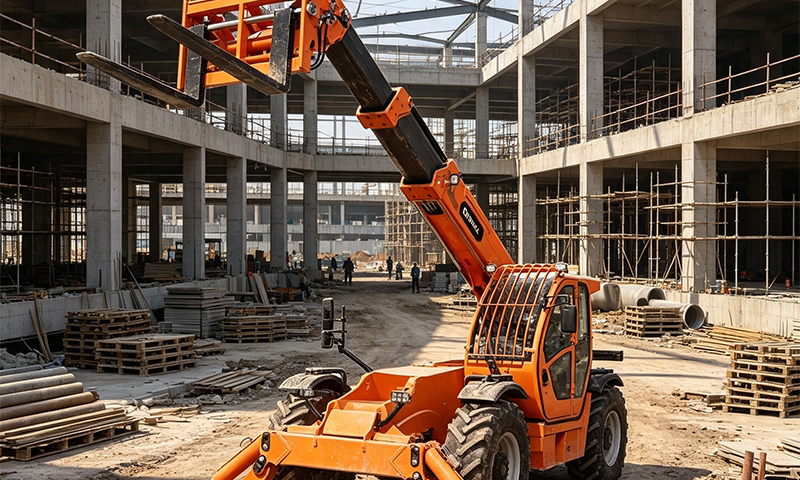
This case study describes how an HT5014 telehandler supports outdoor storage rack replenishment besid
Free Consultation >Please fill out the form, and we can satisfy any of your needs including equipment selection, scheme design, technical support, or after-sales service. We will contact you as soon as possible.