Vertical Lifts
Aerial Work Platforms
Max Working Height:5.8–10.3 m
Platform Capacity:160–227 kg
Consult now






Choosing between a compact telehandler and a high reach telehandler is one of the most important decisions for a construction contractor, building-material supplier, warehouse operator, farm owner or industrial project manager. The best machine is not always the one with the highest lift height or the largest rated capacity. It is the telehandler that can safely and efficiently handle your real loads at the actual height, forward reach and jobsite conditions of your project.
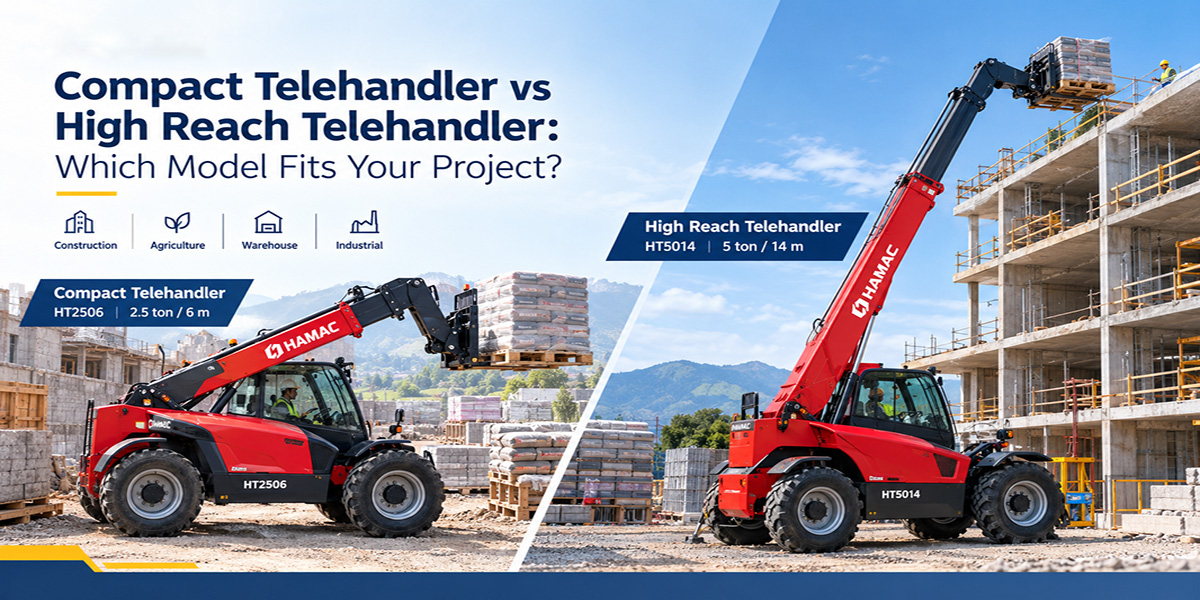
In simple terms, choose a compact telehandler when your work involves tight access, frequent pallet handling, truck unloading, low-rise construction, farms, small storage yards or everyday material movement. Choose a high reach telehandler when you regularly need to supply upper floors, rooftops, high outdoor racks, elevated work platforms or distant material placement points.
HAMAC offers a complete range of rough terrain telehandlers for construction, agriculture, warehousing, industrial logistics and outdoor material handling. This guide compares compact and high reach models by lift height, load capacity, forward reach, site access, attachments and common applications, helping you select the right telehandler for your project.
| Your Main Requirement | Recommended Telehandler Type | Typical Example |
|---|---|---|
| Tight building sites, narrow access, low-rise work and routine pallet handling | Compact Telehandler | 2.5 ton / 6 m class, such as the HT2506 |
| Balanced daily handling with regular medium-height placement | Mid-Range Telehandler | 3.5 ton / 10 m class, such as the HT3510 |
| Multi-storey construction, high outdoor racks, façade work and rooftop supply | High Reach Telehandler | 4–5 ton / 14 m class, such as the HT4014 or HT5014 |
| Large projects requiring upper-floor delivery, long reach and high operating height | 18 m High Reach Telehandler | 4–5 ton / 18 m class, such as the HT4018 or HT5018 |
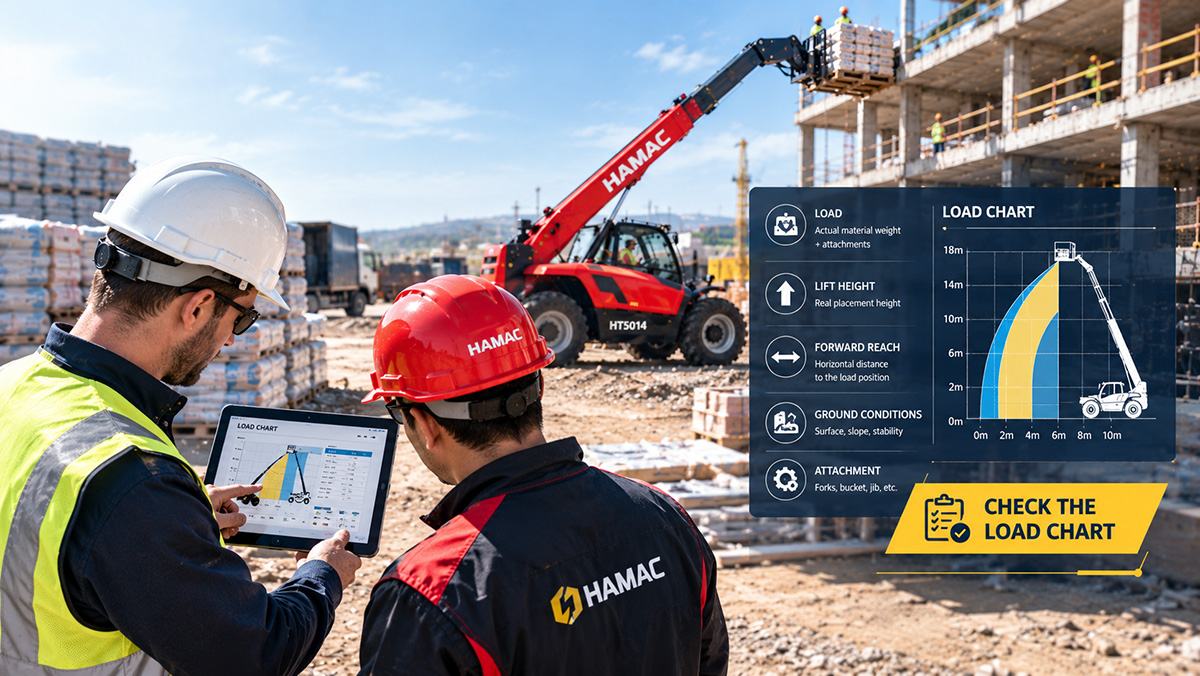
Before selecting any model, confirm your maximum total load, required lift height, forward reach, attachment weight, ground condition and site-access dimensions. A telehandler's available capacity changes as the boom rises or extends, so the machine's official load chart must be checked for the planned lift.
A compact telehandler is a telescopic handler designed for projects where manoeuvrability, restricted access and frequent material movement are more important than maximum boom height. Compact telehandlers are often used for low-rise building projects, residential construction, farms, equipment yards, warehouses with outdoor storage, landscaping work and truck loading.
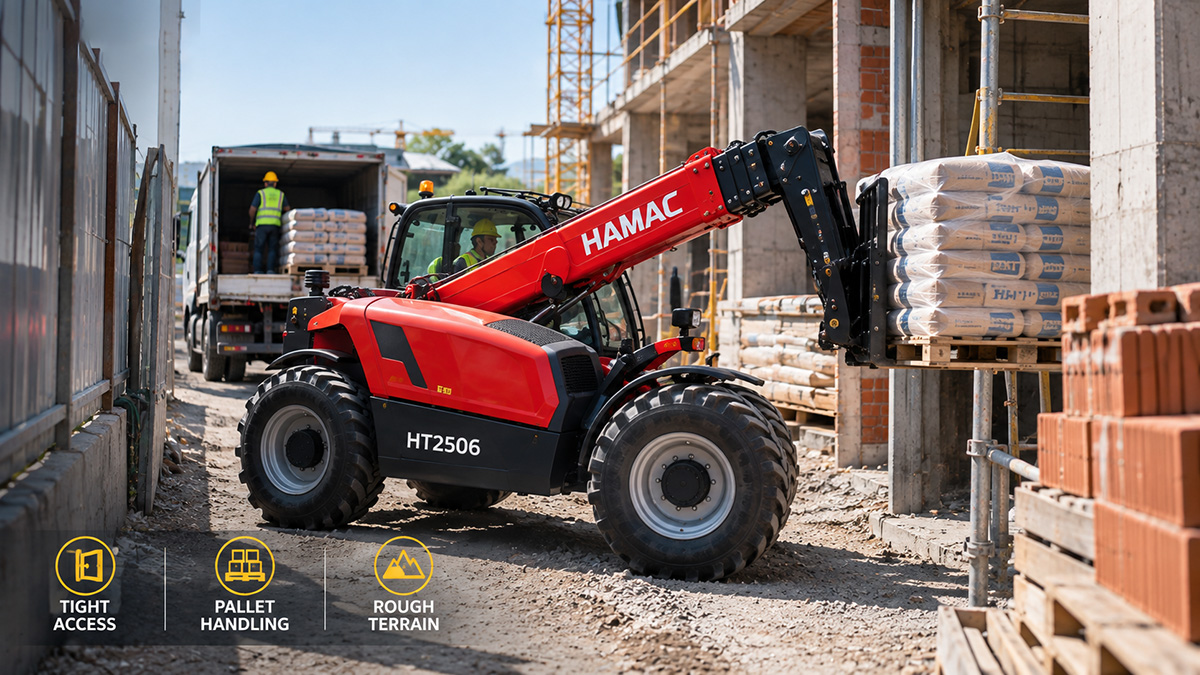
These machines combine forklift-style pallet handling with telescopic boom reach. Compared with a conventional forklift, a compact telehandler can often place pallets farther forward, work on rougher ground and handle materials in locations where access is limited. Compared with a larger high reach telehandler, it is generally easier to transport, position and operate in smaller work zones.
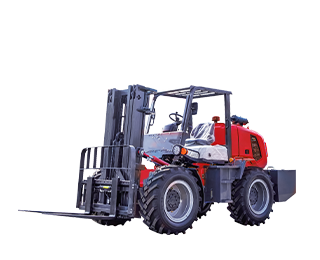
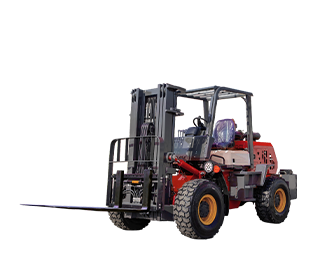
The HAMAC HT2506 compact telehandler is a typical example. It has a 2.5 ton rated lifting capacity and a 6 m maximum lift height. It is designed for tight building sites, farms and general outdoor material handling where customers need a practical combination of capacity, compact dimensions and rough-terrain mobility.
| Application | Typical Materials | Why a Compact Telehandler Fits |
|---|---|---|
| Low-Rise Residential Construction | Bricks, concrete blocks, bagged cement, dry mortar, timber and roofing materials | Supports truck unloading, ground-level staging and lower-level material placement in confined sites. |
| Small Commercial Building Projects | Palletized building supplies, tools, scaffolding components and insulation | Offers daily handling flexibility without the footprint of a larger high-reach machine. |
| Farm and Livestock Operations | Feed bags, fertilizer, seed pallets, hay bales and farm maintenance materials | Can work around barns, sheds, feed-storage areas and uneven agricultural yards. |
| Building Material Yards | Cement pallets, tiles, blocks, bagged products and packaged materials | Efficient for frequent loading, unloading, short-distance transport and lower-height stacking. |
| Warehouse Outdoor Storage Areas | Outdoor pallets, packaged products, timber, pipes and industrial supplies | Helps move goods between warehouse doors, trucks and outdoor storage locations. |
| Landscaping and Property Maintenance | Soil, stone, pallets, timber, plants and maintenance supplies | Supports multiple tasks with forks, buckets and other approved attachments. |
Compact telehandlers are not simply smaller machines. Their benefit is that they can increase equipment utilization on sites where larger machines may be difficult to access or unnecessary for most daily tasks.
A compact machine is often the most cost-effective solution when most work happens below approximately 6–7 m and the operator needs to move frequently around a busy site. However, a compact telehandler may not be suitable if the project regularly requires upper-floor supply, rooftop placement or high-rack replenishment.
A high reach telehandler is designed for projects where materials must be placed at greater height or farther forward from the machine. These telehandlers use longer booms and are commonly selected for multi-storey construction, high-rise building support, façade installation, roof work, outdoor high-rack storage, industrial facilities and infrastructure projects.
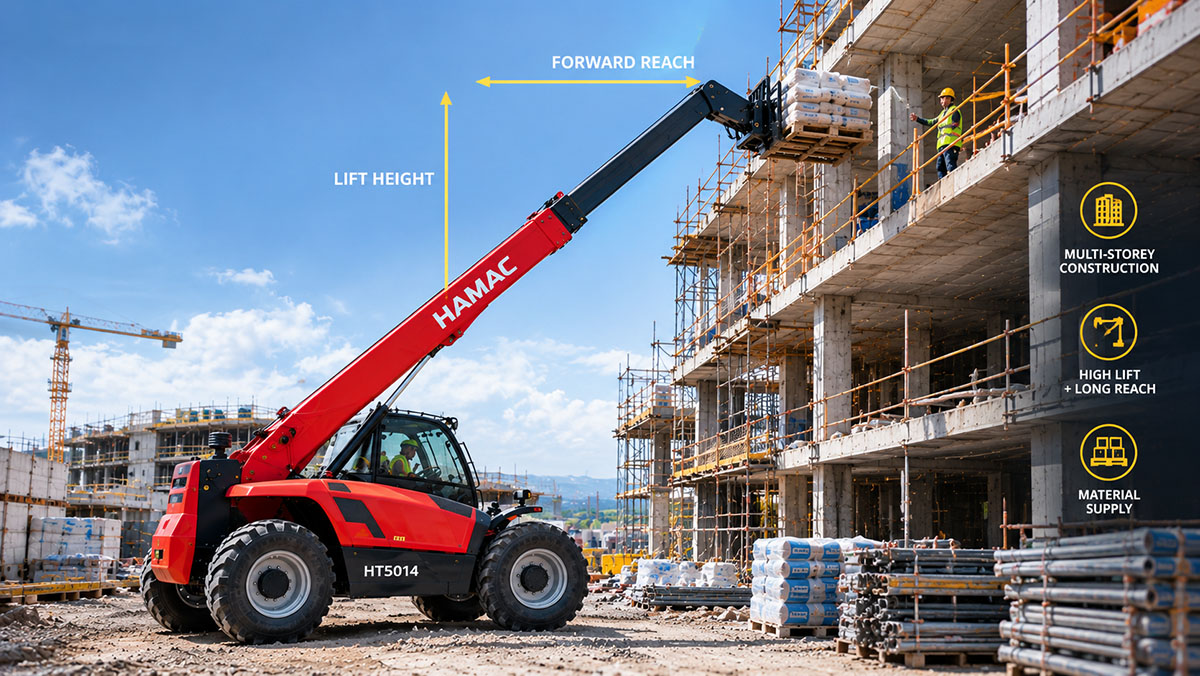
The value of a 14 m or 18 m telehandler is not only vertical height. It is the ability to position palletized materials, scaffolding, roof panels, façade materials, steel components and other loads at elevated work areas while the machine remains in a suitable ground-level operating position.
The HAMAC HT5014 telehandler is a 5 ton, 14 m high-reach model for demanding construction, industrial and outdoor logistics applications. For projects that require even greater operating height, the HAMAC HT5018 telehandler provides a 5 ton capacity class with an 18 m maximum lift height and is intended for larger construction and industrial sites.
| Application | Typical Materials | Why a High Reach Telehandler Fits |
|---|---|---|
| Multi-Storey Residential Construction | Palletized bricks, blocks, mortar, insulation, windows and internal finishing materials | Supplies lower and upper building levels more efficiently than ground-only equipment. |
| Commercial Building Construction | Façade materials, roofing packs, steel components, scaffolding and MEP supplies | Provides lift height and forward reach for elevated work zones and building edges. |
| Industrial Plant Construction | Pipe racks, steel frames, maintenance materials, pallets and equipment accessories | Supports elevated placement around industrial structures and restricted work areas. |
| Outdoor Storage Rack Replenishment | Building products, timber packs, industrial pallets and packaged goods | Helps place materials into high outdoor storage positions, subject to load-chart limits. |
| Roofing and Façade Support | Roof panels, insulation, cladding, scaffolding and installation supplies | Delivers materials closer to crews, reducing repeated manual carrying and intermediate handling. |
| Infrastructure and Large Projects | Formwork, bridge materials, steel items, tools and packaged construction supplies | Useful where height, reach, site mobility and flexible material placement are all required. |
| Comparison Factor | Compact Telehandler | High Reach Telehandler |
|---|---|---|
| Typical Lift Height | Approximately 6–10 m | Approximately 14–18 m |
| Typical Capacity Class | 2.5–3.5 ton | 4–6 ton, depending on model and boom position |
| Machine Size | More compact chassis for tighter access and smaller turning areas | Larger chassis and longer boom for elevated placement and greater forward reach |
| Best for Lift Height | Ground-level, truck height, lower-floor and moderate-height work | Upper floors, rooftops, high racks, tall structures and elevated platforms |
| Best for Jobsite Access | Narrow entrances, compact yards, small construction sites and farm buildings | Open construction sites, larger industrial yards and projects with adequate operating space |
| Daily Work Strength | Fast unloading, pallet transfer, routine material supply and short travel routes | High-level supply, long-reach placement and large-project logistics |
| Typical Cost Consideration | Often lower purchase, transport and operating requirements | Higher investment, but can create value when high-reach work is frequent and essential |
| Main Selection Risk | May not reach the required height or forward placement point | May be oversized for tight sites or underused if high-reach tasks are occasional |
The most reliable way to select a telehandler is to start with your working scenario rather than the machine's headline specification. The following table provides a practical guide for common project types.
| Project Scenario | Typical Task | Primary Challenge | Suggested Telehandler Direction |
|---|---|---|---|
| Small House Construction | Unload bricks, cement, blocks, timber and roofing materials | Tight access, limited turning space and frequent daily handling | Compact 2.5 ton / 6 m telehandler |
| Low-Rise Commercial Project | Move pallets, scaffolding, masonry materials and general supplies | Need more flexibility than a conventional forklift but limited site space | Compact or mid-range 2.5–3.5 ton / 6–10 m telehandler |
| Three- to Five-Storey Building | Supply mortar, blocks, insulation and equipment to elevated levels | Height and forward reach become important | Mid-range 3.5 ton / 10 m or high reach 4 ton / 14 m telehandler |
| Multi-Storey Apartment or Commercial Building | Lift pallets to upper floors, façade zones and roof-level work areas | Longer boom, high placement and safe remaining capacity | High reach 4–5 ton / 14 m telehandler |
| Large Industrial or Infrastructure Project | Support high structures, equipment installation and elevated material supply | High lift, long forward reach, heavy loads and variable terrain | High reach 4–6 ton / 18 m class telehandler |
| Farm, Feed Yard or Agricultural Storage | Handle pallets, fertilizer, bales, feed and maintenance supplies | Uneven terrain, barn access and multiple daily tasks | Compact or mid-range telehandler based on required stacking height |
| Warehouse with Outdoor Storage Yard | Unload trucks, replenish outdoor racks and move packaged goods | Outdoor surfaces, rack height, loading reach and yard traffic | Mid-range or high reach telehandler based on rack height and pallet weight |
Many buyers focus only on “How high can a telehandler lift?” but forget to ask, “How far forward does the load need to be placed?” In real projects, the machine may need to reach across scaffolding, over a drainage channel, beyond a fence, onto a loading platform, toward a roof edge or into a high-sided truck.
A longer boom can help solve these placement problems, but forward reach affects the remaining safe lifting capacity. As the boom extends farther from the front of the machine, the load creates greater leverage and the maximum allowable weight normally decreases. Load charts show this relationship by mapping lifting capacity against boom height and horizontal reach.
When requesting a telehandler quotation, do not only state “14 m lift height required.” Also provide the approximate horizontal distance from the machine to the final load position. This information helps HAMAC recommend the correct model and attachment configuration.
A common misunderstanding is that a 5 ton, 14 m telehandler can lift 5,000 kg at its full 14 m height. In practice, the headline rated capacity is the maximum capacity under specified conditions. It does not automatically apply at maximum boom height, maximum forward reach or with every attachment.
The correct question is not, “Is this a 5 ton telehandler?” The correct question is: “Can this exact telehandler, with this attachment, lift this total load to the required height and forward reach according to the official load chart?”
| Item to Check | Why It Affects Available Capacity |
|---|---|
| Actual Material Weight | The load must include the heaviest normal pallet, bundle, stillage or component—not only the average load. |
| Pallet and Packaging Weight | Wooden pallets, steel frames, wrapping, boxes and transport stillages add to the total lifted weight. |
| Attachment Weight | Forks, buckets, lifting jibs, hooks and other attachments reduce the remaining available capacity. |
| Load Centre | Long loads or loads positioned farther from the carriage increase leverage and can reduce available lifting capacity. |
| Lift Height | Capacity normally reduces as the boom is raised to greater height. |
| Forward Reach | Capacity normally reduces as the boom extends farther forward. |
| Ground Condition | Soft, sloped, uneven or unstable ground can affect machine stability and may make a lift unsafe. |
Every telehandler should be operated within the official manufacturer load chart for the specific model, attachment and planned boom position. Operators must also follow the applicable operating manual, site lifting plan, local safety rules and training requirements. Approved attachments are important because an attachment adds weight and may move the load farther forward, changing the telehandler's safe operating capacity.
The right telehandler attachment can help one machine support several project tasks. However, attachments should be selected according to the material, approved for the specific telehandler model and included in the total load calculation.
| Attachment | Typical Use | Selection Note |
|---|---|---|
| Pallet Forks | Bricks, blocks, bagged cement, dry mortar, timber, packaged goods and general pallets | Confirm fork length, fork spacing, fork capacity and load centre. |
| Bucket | Sand, soil, gravel, grain, feed, loose materials and yard-cleaning work | Bucket volume must match material density and available load-chart capacity. |
| Lifting Jib or Crane Arm | Approved lifting and positioning of selected components, frames and maintenance materials | Use only with approved lifting accessories and site lifting procedures. |
| Hook Attachment | Specified suspended loads requiring controlled positioning | Confirm compatibility, total suspended weight and relevant site safety requirements. |
| Bale Fork or Bale Clamp | Hay, straw, wrapped silage and agricultural materials | Use the appropriate attachment type for wrapped or unwrapped bale handling. |
| Grapple Bucket | Biomass, manure, bedding, crop residue, scrap and loose irregular materials | Check auxiliary hydraulic requirements and attachment approval before use. |
Learn more about compatible applications in the HAMAC guide to telehandler attachments for construction and farming. The most suitable attachment depends on the job, but compatibility, attachment weight and the applicable load chart should always be checked before operation.
Lift height and capacity are important, but a telehandler must also be able to enter the project, travel through the work area and position safely at the lifting location. This is where compact telehandlers can provide a major advantage.
Before selecting a model, measure gates, warehouse doors, barn entrances, site roads, turning zones and overhead obstructions. Review the route from the delivery point to the final work area, not only the location where the load will be placed.
Rough-terrain capability can improve travel on outdoor surfaces, but it does not make every ground condition safe. Lifting should not be attempted on unstable, excessively sloped or unsuitable ground. The equipment must be positioned on a surface that meets the manufacturer's operating limits and project safety requirements.
A detailed request helps HAMAC recommend the right compact, mid-range or high reach telehandler without unnecessary oversizing or the risk of selecting a machine that cannot complete the job.
| Question | Information to Provide |
|---|---|
| 1. What is your heaviest normal load? | Material weight plus pallet, packaging, steel stillage, fork, attachment and lifting-accessory weight. |
| 2. What are the load dimensions? | Length, width, height and approximate load centre. |
| 3. What maximum lift height is required? | Actual material placement height, not only the overall building height. |
| 4. What forward reach is required? | Distance from the machine to the final load location, especially if working across barriers or scaffolding. |
| 5. What are the site conditions? | Photos or video of entrances, roads, slopes, ground surfaces, work zones and storage areas. |
| 6. Which attachment do you need? | Pallet forks, bucket, jib, hook, bale attachment, grapple or another approved attachment. |
Use this quick guide as a starting point. Final selection should always be confirmed with the relevant model specification and official load chart.
| If Your Project Needs... | Consider... | Typical HAMAC Direction |
|---|---|---|
| Frequent unloading, ground-level work, tight access and lower lift height | A compact telehandler | HT2506 2.5 ton / 6 m telehandler |
| Daily pallet handling plus regular medium-height placement | A mid-range telehandler | HT3510 3.5 ton / 10 m telehandler |
| Multi-storey material supply, rooftop work or high outdoor racks | A 14 m high reach telehandler | HT5014 5 ton / 14 m telehandler |
| Large construction, industrial or infrastructure projects with very high placement requirements | An 18 m high reach telehandler | HT5018 5 ton / 18 m telehandler |
HAMAC helps customers select telehandler solutions based on real material handling requirements, not only catalogue capacity. Whether you need a compact telehandler for a small construction site or a high reach telehandler for multi-storey material placement, our team can help review your project conditions and recommend an appropriate equipment configuration.
You can also explore HAMAC application examples in Construction & Infrastructure, Agriculture & Farming and Industrial & Warehouse.
Choosing between a compact telehandler and a high reach telehandler becomes much easier when you begin with your actual load, working height, forward reach and site conditions. Sending complete project information allows HAMAC to recommend a model that fits your daily work while helping you avoid unnecessary equipment cost or insufficient lifting capability.
Please send HAMAC your maximum load weight, load dimensions, required lift height, forward reach, site photos, entrance dimensions, ground conditions, required attachments and destination country.
Contact HAMAC for telehandler selection, technical information and quotation.
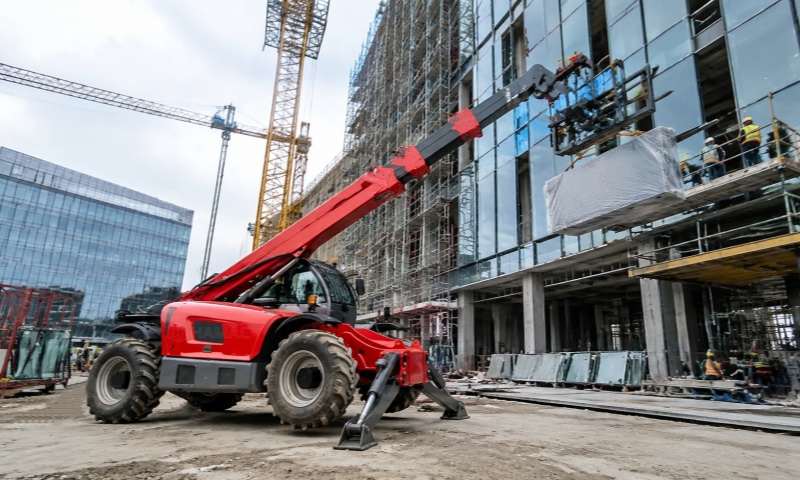
On a commercial building project, an HT4010 telehandler is used to assist facade and curtain wall ins
Free Consultation >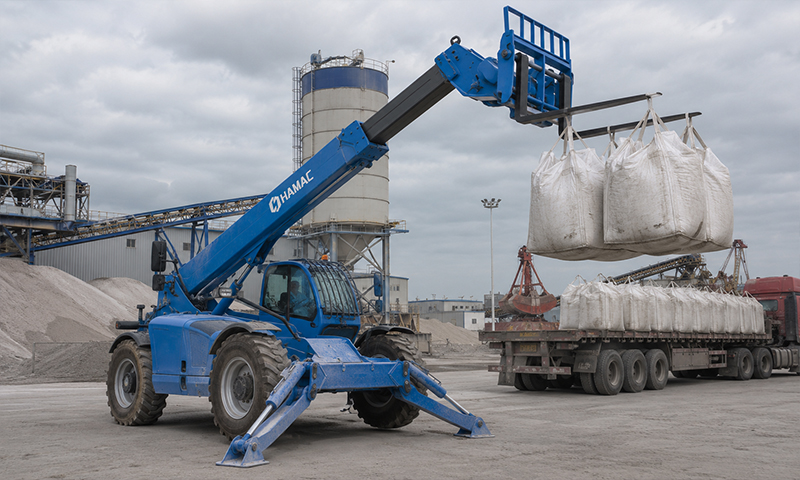
At inland port terminals, a high‑capacity telehandler is used to transfer bulk materials between tr
Free Consultation >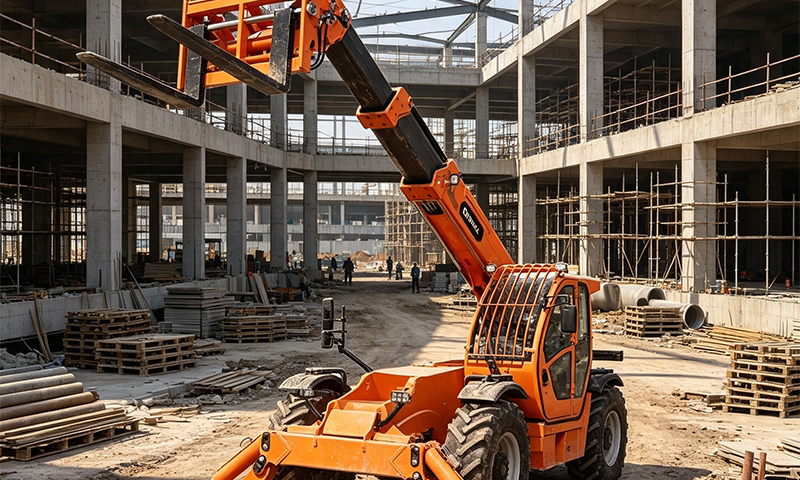
This case study describes how an HT5014 telehandler supports outdoor storage rack replenishment besid
Free Consultation >Please fill out the form, and we can satisfy any of your needs including equipment selection, scheme design, technical support, or after-sales service. We will contact you as soon as possible.