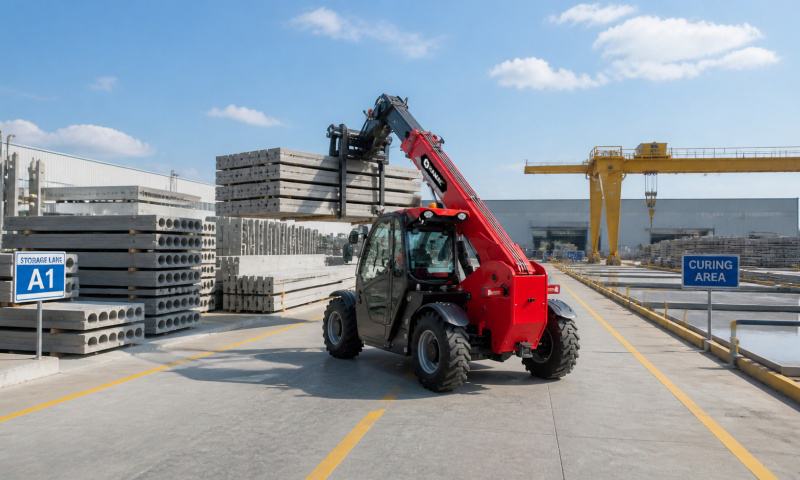
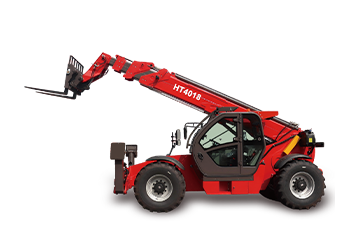
HT4018
Telehandlers
Lifting capacity: 4,000 kg
Max. lift height: ≈18.0 m
Consult now






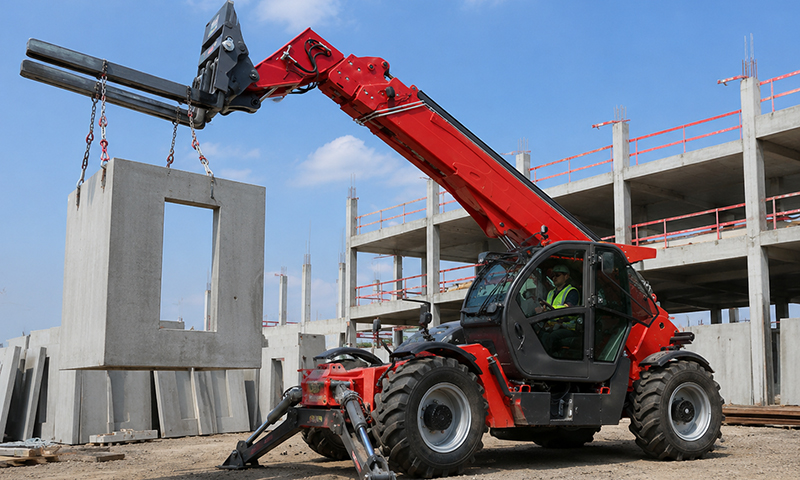
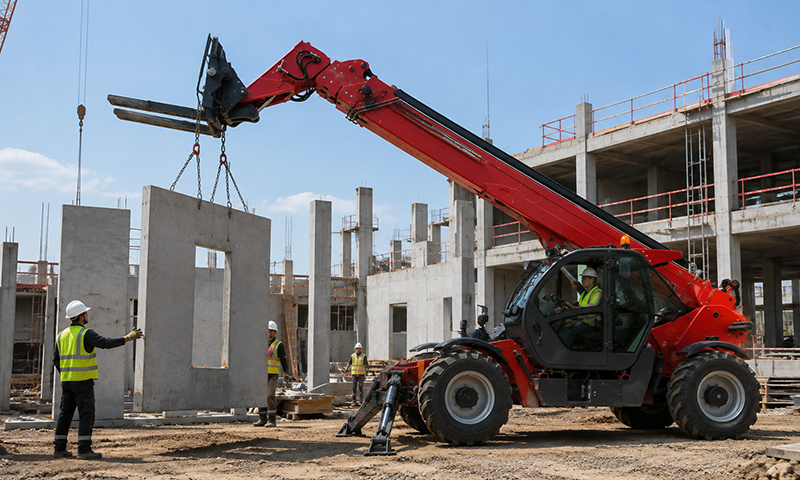
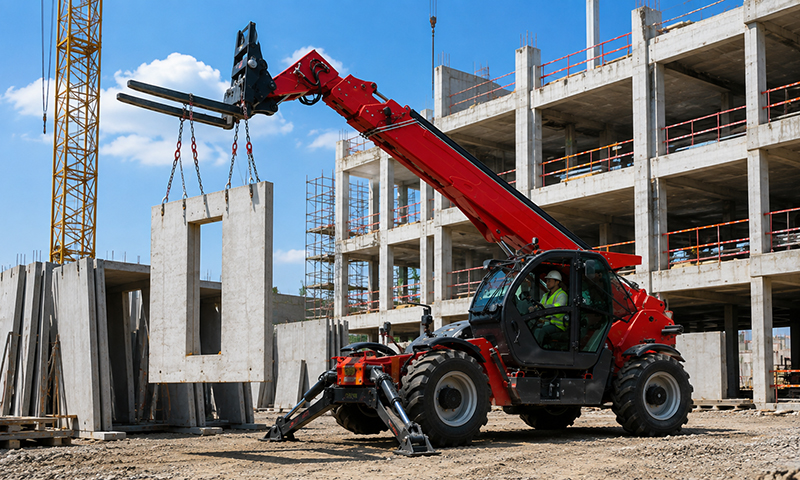
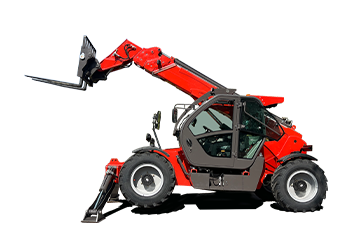
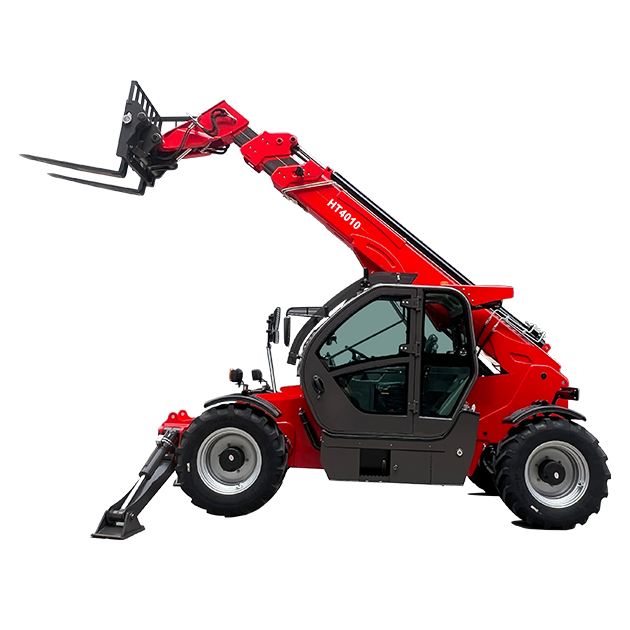
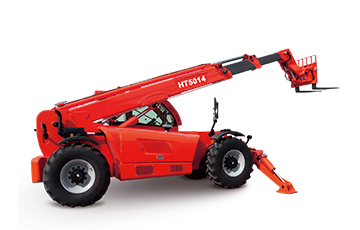
On multi-storey building projects, precast concrete panels, wall sections, stair elements and related structural components must be transported, staged and positioned efficiently. The HAMAC HT3510 telehandler provides a practical material-handling solution for contractors that need lifting capacity, boom reach and rough-terrain mobility in one machine.
With a rated lifting capacity of 3,500 kg and a maximum lift height of 10 m, the HT3510 can support the installation workflow for precast concrete panels on lower and middle building levels. Its telescopic boom, 4×4 drive system and multi-mode steering help site teams move heavy components between delivery areas, temporary storage zones and installation points.
The customer is a building contractor carrying out a multi-storey commercial and residential development. The project includes reinforced concrete frames, precast wall panels, façade elements, stair components, balcony sections and other prefabricated building materials that must be delivered to different work zones as construction progresses.
Precast concrete components arrived at the jobsite by truck and required fast unloading before they could be staged near the building. The contractor needed a flexible machine capable of moving panel stillages, installation accessories, pallets of grout and tools, and selected precast elements around a congested construction site.
Instead of using a crane for every routine handling task, the contractor selected the HT3510 3.5 ton, 10 m telehandler to support ground logistics, component staging and controlled material placement at accessible installation elevations. The telehandler worked alongside the project crane, helping reserve crane time for the largest structural lifts and high-elevation component installation.
HAMAC recommended the HT3510 as a balanced solution for medium-duty precast construction logistics. The machine combines the lifting function of a forklift, the forward reach of a telescopic boom and the site mobility needed for rough-terrain construction operations.
| Item | HT3510 Configuration | Benefit for Precast Panel Work |
|---|---|---|
| Rated Lifting Capacity | 3,500 kg | Suitable for handling approved precast-panel stillages, pallets and installation materials within the machine load chart. |
| Maximum Lift Height | 10 m | Provides access to lower and middle floor work areas, temporary platforms and elevated material staging points. |
| Telescopic Boom | Variable lift and forward reach | Helps position loads over obstacles and closer to slab edges, façade zones or working platforms. |
| Drive System | 4×4 rough-terrain drive | Supports travel across gravel, compacted soil, mud and partially prepared site surfaces. |
| Steering Modes | Front steering, four-wheel steering and crab steering | Improves manoeuvrability beside buildings, within staging yards and along restricted access routes. |
| Attachments | Pallet forks, lifting jib and approved lifting accessories | Allows the machine to adapt to pallets, panel accessories, bundled materials and approved lifting tasks. |
The HT3510 is part of the HAMAC telehandler range, which is designed for construction, agricultural and industrial material-handling work where conventional forklifts may not provide enough reach or terrain capability.
When delivery trucks arrived, the HT3510 used pallet forks and approved lifting accessories to unload panel stillages, installation brackets, grout pallets, reinforcement materials and packaged construction supplies. The telehandler transported these materials from the unloading zone to organized staging areas near the building.
By moving materials quickly away from the delivery route, the contractor kept truck turnaround times under control and reduced congestion around the main access road. Components could then be prepared for crane lifting or direct placement according to the daily installation schedule.
During panel installation, the telehandler delivered the supporting materials required by crews, including connection hardware, sealants, grout, formwork accessories, hand tools and pallets of building materials. This allowed the main crane to focus on critical heavy lifts while the HT3510 supported recurring logistics tasks throughout the shift.
For accessible lower and middle levels, the telescopic boom helped place materials onto temporary platforms, protected slab areas and designated loading points. Operators adjusted boom extension and lifting height according to the official load chart, actual load weight and required placement position.
The construction site changed continuously as concrete works, scaffolding, façade installation and utility activities progressed. With four-wheel drive and crab steering, the HT3510 could travel around obstructions and align with building edges more easily than machines with conventional steering.
This flexibility was particularly useful when materials had to be moved around temporary barriers, site fencing, scaffolding legs, storage containers and partially completed access roads. The telehandler could support several work zones during one shift without requiring a separate machine for every area.
Precast concrete handling requires a site-specific lifting plan, trained personnel and strict control of load weight, boom angle, forward reach and ground conditions. The telehandler was used only for lifts permitted by the machine load chart, the approved attachment configuration and the project safety procedures.
By using the HT3510 telehandler for daily precast logistics, the contractor created a more responsive handling workflow between truck deliveries, storage areas and installation zones. The machine reduced waiting time for routine material movement and supported crews without relying on the main crane for every pallet or accessory lift.
| Operational Area | Benefit Delivered |
|---|---|
| Delivery Logistics | Faster unloading and clearing of delivery vehicles helped maintain a more organized jobsite entrance. |
| Crane Utilization | The project crane could focus on major structural and high-elevation precast lifts rather than routine material handling. |
| Material Availability | Installation crews received brackets, grout, hardware and palletized supplies closer to their work areas. |
| Site Mobility | 4×4 drive and flexible steering supported movement across uneven, confined and continuously changing construction zones. |
| Equipment Versatility | One telehandler could unload trucks, transport materials, stage components and support elevated placement tasks with approved attachments. |
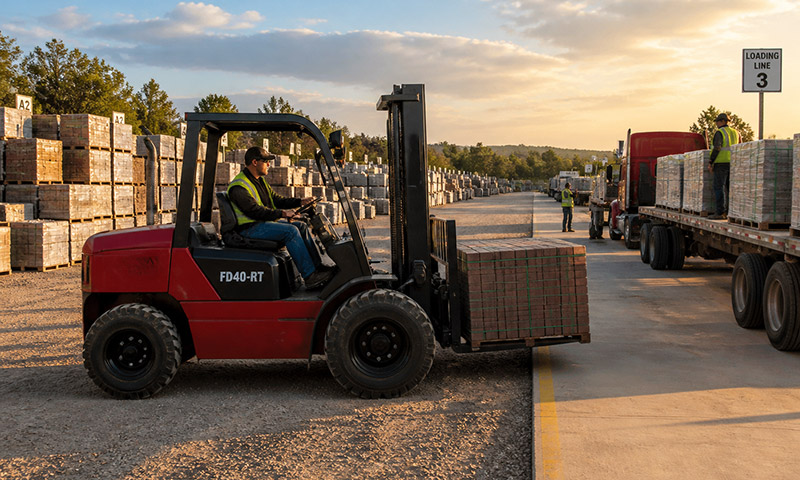
For projects requiring lower-height material placement in tighter urban areas, contractors can also consider the HT2506 telehandler application for high-rise building material placement. For heavy precast-yard material movement before components are delivered to the construction site, see the FD60-RT rough terrain forklift case for precast concrete yard handling.
A telehandler can support approved precast panel handling and placement tasks when the load weight, lifting point, attachment, boom position, ground condition and reach are within the machine manufacturer’s load chart and the project’s engineered lifting plan. Large or heavy panels, high-elevation lifts and critical structural installation tasks may require a crane.
A crane is often reserved for major panel erection and high-level structural lifts. A telehandler can manage truck unloading, ground transport, pallet handling, installation accessories and other recurring material movements, helping improve overall equipment utilization on the project.
A 10 m boom can serve lower and middle building levels, temporary loading platforms, façade work zones and elevated storage positions where a shorter telehandler may not reach. The available lifting capacity changes with boom height and extension, so operators must follow the official load chart.
Pallet forks are commonly used for stillages, pallets and packaged materials. A lifting jib, hook or other dedicated attachment may be used only when approved for the telehandler and suitable for the component and lifting plan. Attachment weight must always be included in the total lifted load.
Yes. The HT3510 has 4×4 rough-terrain capability and multiple steering modes, allowing it to work more effectively on gravel, compacted soil, temporary access roads and uneven ground than a standard indoor forklift. Safe operation still depends on verified ground bearing capacity, slope limits and proper site preparation.
HAMAC can recommend a telehandler configuration based on your panel weight, required lifting height, forward reach, attachment requirements, jobsite terrain and installation workflow. Our team can also help you compare suitable equipment for precast yards, multi-storey building projects, façade work and general construction material handling.
"If you have projects with similar lifting requirements, our team can recommend the right HAMAC telehandler or forklift configuration."
Please fill out the form, and we can satisfy any of your needs including equipment selection, scheme design, technical support, or after-sales service. We will contact you as soon as possible.